Background
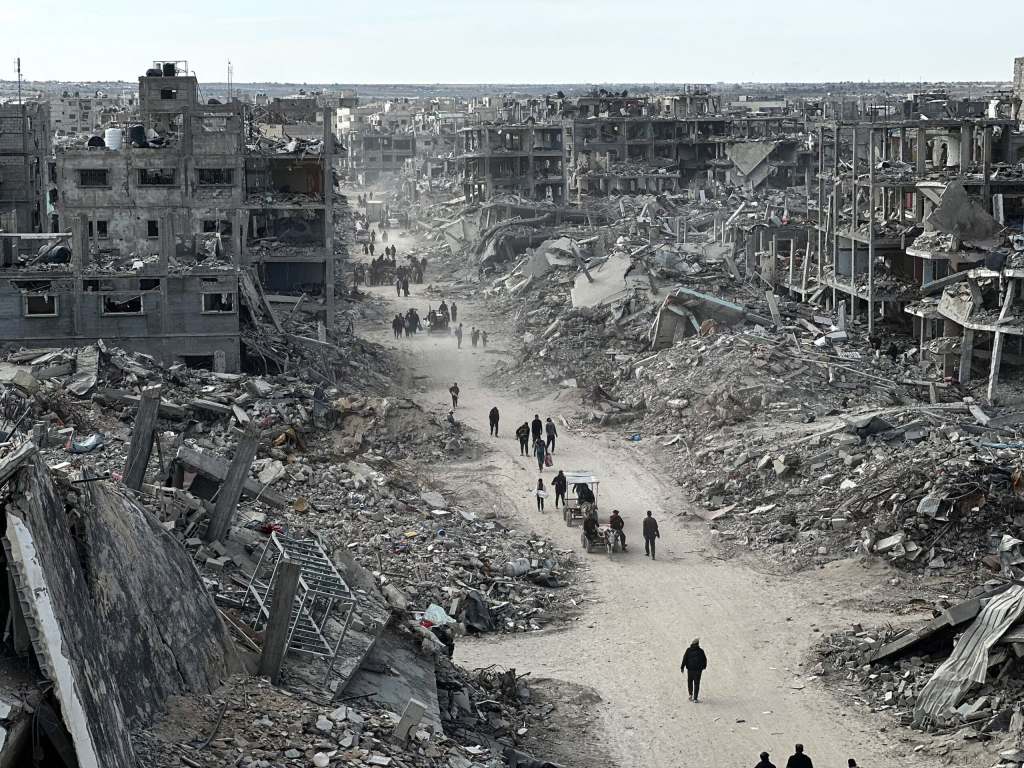
Israel has been occupying and fragmenting Palestinian land for decades, enforcing an apartheid and racial regime on Palestinians – whether in the interior, the West Bank or Gaza. Israel’s genocide in Gaza is not a rupture but a brutal escalation in the ongoing Nakba of Palestine.
But Palestinians have always resisted. Through resistance they affirm their collective right to the land and to self-determination. Palestinians are not passive “humanitarian victims”; their suffering has organisers, profiteers and political backers in the West and in the East.
BDS (Boycott, Divestment and Sanctions) emerged as a Palestinian-led coalition to confront Israeli apartheid and genocide with economic pressure, using three main tools:
- Boycott – refusing to buy from, cooperate with or legitimise Israeli institutions and companies complicit in the oppression and dispossession of Palestinians.
- Divestment – pressuring banks, universities, churches, unions, pension funds and other institutions to pull their investments from Israel and from all corporations that sustain its regime of occupation and apartheid.
- Sanctions – demanding that states end their political, military and economic support for Israel’s regime by cutting arms deals, trade privileges and diplomatic cover, and by excluding Israel from international forums.
Together, these tactics aim to isolate Israel’s apartheid regime, cut off the nearly unconditional international support it receives, and help open the road to Palestinian liberation.
In the BDS call, this takes three concrete political goals:
- End the occupation and apartheid system on all Palestinian lands.
- End the regime of second-class citizenship imposed on Palestinians inside the 1948 territories.
- Win the right of return for Palestinian refugees to their homes and lands.
Read more: BDS website (english), BDS-kampagne (deutsch)
Antizionism and Antiracim
At its core, BDS is an antiracist, antizionist movement built on the understanding that Zionism is a racist project: it organises domination over Palestinians, fragments their land and turns them into expendable, rightless subjects. The principles of BDS are simple: racism in all its forms – including antisemitism – must be opposed, and a political project that builds Jewish supremacy over Palestinians cannot be separated from racism.
In Germany, this logic is flipped upside down. A state-backed doctrine of “anti-antisemitism” has emerged that is itself paradoxically antisemitic: it does not seriously centre Jewish lives or listen to the many Jewish voices opposed to Zionism, but instead narrows the whole question of antisemitism to the defence of the Israeli state. This is codified in the dominant “Holocaust remembrance” / IHRA-style definitions of antisemitism, which treat criticism of Zionism and solidarity with Palestinian liberation as suspect by default, while downplaying the very real threats coming from the far right.
From within this framework, it is almost predictable that an antiracist, antizionist campaign like BDS is branded “antisemitic”, a narrative particularly cherished by liberal parties and the right. In May 2019 this was formalised when the Bundestag passed a resolution labelling BDS as antisemitic and calling for its exclusion from public institutions, supported by CDU/CSU, SPD, FDP and most of the Greens, while AfD argued for an even harsher outright ban and Die Linke officially distanced itself from BDS but refused to support the government’s motion.
Although formally non-binding, this resolution has in practice been used to legitimise media censorship, police repression and, in some cases, even deportations, as well as to deny public spaces for Palestinian solidarity events. At the same time, those same institutions often welcome explicitly Zionist or liberal-Zionist voices that do not challenge the underlying power structure, but present Israel as a “democracy” that has merely made mistakes under Netanyahu – carefully avoiding any analysis of Zionism as racism or colonialism.
Read more: Racism and Racial Discrimination are the Antithesis of Freedom, Justice & Equality, German Propaganda Equating BDS with Antisemitism, Bundestag verurteilt Boykottaufrufe gegen Israel
Co-Resistance NOT Co-Existence
BDS is built on a clear anti-normalisation principle: solidarity means co-resistance, not feel-good “co-existence” with a Zionist apartheid system. Projects that put “both sides” in a room to talk, as if they were simply equal partners in a misunderstanding, erase the basic fact that one side controls the borders, the prisons and the bombardments, and the other lives under occupation, siege and exile. Co-existence in this framework is the language of the coloniser: it asks the oppressed to adapt to oppression a little more peacefully, while the privileged keep their power and safety intact.
Real solidarity requires something very different. It means supporting Palestinians in resisting the Zionist system, not trying to reduce its harm just enough to make it bearable. Co-resistance is Palestinians and Jews, migrants and white Germans organising together to dismantle structures of racism and apartheid – not to manage or “soften” them. That always comes with a cost: solidarity means giving up privileges, breaking with the comfort that comes from staying on the “safe” side of power. No genuine solidarity has ever begun from a desire to conserve existing power relations.
Liberal Zionism is so attractive to many liberals in Germany precisely because it promises the opposite: to keep the power structure intact while changing the tone. It speaks the familiar language of “Netanyahu’s mistakes”, “the bad right wing”, “Israel as a democracy”, “Islamic terrorism”, “making the desert bloom” and the ever-receding “two-state solution”. For BDS, this is not a “moderate” alternative but simply another face of the same Zionist project, and therefore it is rejected just as clearly as openly right-wing Zionism. BDS rejects all forms of Zionism – liberal, centrist or far-right – because they all rest on maintaining a racist regime of domination over Palestinians, and because none of them commit to dismantling the structures of colonial power that real solidarity must confront.
Read more: The BDS Movement’s Anti-Normalization Guidelines Explained
Boycott, Divestment and Sanctions
BDS is often reduced, especially in mainstream debate, to a simple consumer boycott – as if it were just about individuals choosing different products at the supermarket. But consumer boycotts are the weakest part of BDS: on their own, they barely touch the financial and strategic foundations of the Zionist regime. The core targets of BDS are not only supermarket shelves, but the tech, surveillance and arms industries that make apartheid and genocide possible in the first place.
Palestine has long been used as a laboratory for high-tech repression: drones, AI-driven targeting systems, smart walls, biometric databases and crowd-control weapons are developed, tested on Palestinians, and then exported as “battle-tested” – in reality, genocide-tested – technologies. Israel sits at the cutting edge of this industry, especially in drone warfare, but it does not act alone. The USA, Germany and the EU are key financiers and arms suppliers, while the ongoing domination of Palestine would be unthinkable without Israel’s growing normalization as an economic and security partner for Arab regimes across the region.
Challenging this system cannot be done simply as individual consumers. It requires organised action: campaigns to force universities and pension funds to divest from arms and surveillance firms, struggles to cancel city contracts with companies that equip Israel’s army and police, and union organising to refuse cooperation with corporations that arm or profit from the Zionist project. BDS is about building that organised power against the global infrastructure of repression that runs through Palestine and into the rest of the world.
Read more: Strategy, Profit Dank Genozid, Elbit: Genocide Proven Systems








 tadamun