Israel has been occupying and fragmenting Palestinian land for decades, enforcing an apartheid and racial regime on Palestinians – whether in the interior, the West Bank or Gaza. Israel’s genocide in Gaza is not a rupture but a brutal escalation in the ongoing Nakba of Palestine.
But Palestinians have always resisted. Through resistance they affirm their collective right to the land and to self-determination. Palestinians are not passive “humanitarian victims”; their suffering has organisers, profiteers and political backers in the West and in the East.
BDS (Boycott, Divestment and Sanctions) emerged as a Palestinian-led coalition to confront Israeli apartheid and genocide with economic pressure, using three main tools:
Boycott – refusing to buy from, cooperate with or legitimise Israeli institutions and companies complicit in the oppression and dispossession of Palestinians.
Divestment – pressuring banks, universities, churches, unions, pension funds and other institutions to pull their investments from Israel and from all corporations that sustain its regime of occupation and apartheid.
Sanctions – demanding that states end their political, military and economic support for Israel’s regime by cutting arms deals, trade privileges and diplomatic cover, and by excluding Israel from international forums.
Together, these tactics aim to isolate Israel’s apartheid regime, cut off the nearly unconditional international support it receives, and help open the road to Palestinian liberation.
In the BDS call, this takes three concrete political goals:
End the occupation and apartheid system on all Palestinian lands.
End the regime of second-class citizenship imposed on Palestinians inside the 1948 territories.
Win the right of return for Palestinian refugees to their homes and lands.
At its core, BDS is an antiracist, antizionist movement built on the understanding that Zionism is a racist project: it organises domination over Palestinians, fragments their land and turns them into expendable, rightless subjects. The principles of BDS are simple: racism in all its forms – including antisemitism – must be opposed, and a political project that builds Jewish supremacy over Palestinians cannot be separated from racism.
In Germany, this logic is flipped upside down. A state-backed doctrine of “anti-antisemitism” has emerged that is itself paradoxically antisemitic: it does not seriously centre Jewish lives or listen to the many Jewish voices opposed to Zionism, but instead narrows the whole question of antisemitism to the defence of the Israeli state. This is codified in the dominant “Holocaust remembrance” / IHRA-style definitions of antisemitism, which treat criticism of Zionism and solidarity with Palestinian liberation as suspect by default, while downplaying the very real threats coming from the far right.
From within this framework, it is almost predictable that an antiracist, antizionist campaign like BDS is branded “antisemitic”, a narrative particularly cherished by liberal parties and the right. In May 2019 this was formalised when the Bundestag passed a resolution labelling BDS as antisemitic and calling for its exclusion from public institutions, supported by CDU/CSU, SPD, FDP and most of the Greens, while AfD argued for an even harsher outright ban and Die Linke officially distanced itself from BDS but refused to support the government’s motion.
Although formally non-binding, this resolution has in practice been used to legitimise media censorship, police repression and, in some cases, even deportations, as well as to deny public spaces for Palestinian solidarity events. At the same time, those same institutions often welcome explicitly Zionist or liberal-Zionist voices that do not challenge the underlying power structure, but present Israel as a “democracy” that has merely made mistakes under Netanyahu – carefully avoiding any analysis of Zionism as racism or colonialism.
BDS is built on a clear anti-normalisation principle: solidarity means co-resistance, not feel-good “co-existence” with a Zionist apartheid system. Projects that put “both sides” in a room to talk, as if they were simply equal partners in a misunderstanding, erase the basic fact that one side controls the borders, the prisons and the bombardments, and the other lives under occupation, siege and exile. Co-existence in this framework is the language of the coloniser: it asks the oppressed to adapt to oppression a little more peacefully, while the privileged keep their power and safety intact.
Real solidarity requires something very different. It means supporting Palestinians in resisting the Zionist system, not trying to reduce its harm just enough to make it bearable. Co-resistance is Palestinians and Jews, migrants and white Germans organising together to dismantle structures of racism and apartheid – not to manage or “soften” them. That always comes with a cost: solidarity means giving up privileges, breaking with the comfort that comes from staying on the “safe” side of power. No genuine solidarity has ever begun from a desire to conserve existing power relations.
Liberal Zionism is so attractive to many liberals in Germany precisely because it promises the opposite: to keep the power structure intact while changing the tone. It speaks the familiar language of “Netanyahu’s mistakes”, “the bad right wing”, “Israel as a democracy”, “Islamic terrorism”, “making the desert bloom” and the ever-receding “two-state solution”. For BDS, this is not a “moderate” alternative but simply another face of the same Zionist project, and therefore it is rejected just as clearly as openly right-wing Zionism. BDS rejects all forms of Zionism – liberal, centrist or far-right – because they all rest on maintaining a racist regime of domination over Palestinians, and because none of them commit to dismantling the structures of colonial power that real solidarity must confront.
BDS is often reduced, especially in mainstream debate, to a simple consumer boycott – as if it were just about individuals choosing different products at the supermarket. But consumer boycotts are the weakest part of BDS: on their own, they barely touch the financial and strategic foundations of the Zionist regime. The core targets of BDS are not only supermarket shelves, but the tech, surveillance and arms industries that make apartheid and genocide possible in the first place.
Palestine has long been used as a laboratory for high-tech repression: drones, AI-driven targeting systems, smart walls, biometric databases and crowd-control weapons are developed, tested on Palestinians, and then exported as “battle-tested” – in reality, genocide-tested – technologies. Israel sits at the cutting edge of this industry, especially in drone warfare, but it does not act alone. The USA, Germany and the EU are key financiers and arms suppliers, while the ongoing domination of Palestine would be unthinkable without Israel’s growing normalization as an economic and security partner for Arab regimes across the region.
Challenging this system cannot be done simply as individual consumers. It requires organised action: campaigns to force universities and pension funds to divest from arms and surveillance firms, struggles to cancel city contracts with companies that equip Israel’s army and police, and union organising to refuse cooperation with corporations that arm or profit from the Zionist project. BDS is about building that organised power against the global infrastructure of repression that runs through Palestine and into the rest of the world.
We witnessed a live streamed genocide in Gaza. We saw the bodies of children hanging on fences and babies shot in the head. Parents losing the soul of their souls. We must ask ourselves how this can be possible. How can this kind of violence exist? Let alone be justified?
It happens with the full consent of our politicians. They are not misinformed. These politicians know better than you and me—better than all of us—the extent of the suffering and destruction in Palestine. And they know something else:
Normalizing the violence in Palestine is necessary in order to import this violence here.
These same politicians in Germany and America also know the role Palantir plays in the genocide. Palantir also openly admitted that its technology kills people in Gaza:
“Mostly terrorists,” as Palantir’s CEO admitted.
But who is a terrorist and who is not? Who deserves to live and who does not? Over 70,000 people killed. Mostly women and children. Genocide.
The same platform is used by ICE to decide who belongs and who does not. Who stays and who is removed.
Over 2 million people deported in the first 250 days of the Trump administration.
We have to ask: why did the Baden-Württemberg state pay 25 million euros to bring Palantir into the police? For Palantir’s surveillance and AI platform?
To help decide who is a “problem in the Stadtbild”?
Who is a “dangerous migrant”?
Who is an “antisemite”?
The reason we do not feel safe in Germany is because we know:
The violence in Gaza, in Sudan, in Congo is what normalizes the violence here.
The fascists of today no longer wear brown shirts. They wear blue (police) uniforms.
Palantir sits at the intersection of our struggles: against surveillance, against capitalism, against Zionism, against racism, against police violence and against deportations.
Alone, we cannot do much against these systems of oppression—but together we have a chance. As long as borders exist, our freedom here is a privilege.
From Gaza to Sudan. From Congo to Ecuador. From Brazil to the West Bank.
For justice.
For Lorenz, for Rahma, for Nelson.
For Hanau. For Solingen.
Get organized. On 13th december we are planning demonstrations throughout Baden-Württemberg against Palantir.
Die für eine der Solidarität verpflichteten Bewegung teilweise unerträgliche Kritik an unseren Kolleginnen von der Histadrut auch in gewerkschaftlichen Bünden verurteilen wir scharf. Nirgendwo anders werden Gewerkschaften mit dem Handeln ihrer Regierung gleichgesetzt und dafür verantwortlich gemacht. Die Histadrut steht immer wieder an der Spitze von Protesten gegen die israelische Regierung und setzt sich für ein friedliches Miteinander und den Austausch zwischen allen Beschäftigten ein.
In English:
We sharply condemn the at times unbearable criticism of our colleagues from the Histadrut, even within trade union federations, which claim to be committed to solidarity. Nowhere else are trade unions equated with the actions of their government and held responsible for them. The Histadrut has repeatedly been at the forefront of protests against the Israeli government and advocates for peaceful coexistence and exchange among all workers.
Taking a step back: why is the Histadrut subject to criticism at all? This article addresses that question by examining the Histadrut’s role, practices, political positioning, and its role in Israeli the war machine. On this basis, it argues that criticism is not only well-founded but necessary. Moreover, if the DGB is genuinely committed to “peace in the Middle East,” it must fundamentally reassess—and ultimately sever—its partnership with the Histadrut.
Founded in December 1920, the Histadrut—the General Federation of Hebrew Workers in Palestine—was established to secure the economic foundations of the Zionist project. Its core mission was not simply to organize workers, but to create and protect a Jewish labor force by excluding Palestinian Arab labor from key sectors of the economy. Through the doctrine of avodah ivrit (“Hebrew labor”), the Histadrut turned labor organization into a mechanism of colonization, linking employment to national belonging and transforming the workplace into a frontier of settlement.
From the outset, the Histadrut was both a union and an employer, owning enterprises, land, and industries that advanced Zionist colonization. Its companies—most prominently Solel Boneh—constructed roads, military outposts, and settlements, embedding the federation in the material infrastructure of the emerging Jewish state. As a central pillar of the Yishuv’s economic system, the Histadrut coordinated with the Jewish Agency and other state-building organs to exclude Palestinian workers, dismantle mixed unions, and monopolize employment through Jewish-only cooperatives and hiring halls.
After 1948, the Histadrut’s dual role as labor federation and development agency deepened. It became one of Israel’s largest employers, controlling major industrial, construction, and financial firms under its holding company Hevrat HaOvdim. These enterprises built the new state’s infrastructure while entrenching a racially segmented labor market that privileged Jewish citizens and relegated Palestinians—whether citizens of Israel or residents of the occupied territories—to precarious, low-wage positions outside collective representation.
By 1967, this institutional model had merged seamlessly with Israel’s occupation regime, subordinating Palestinian labor to Israeli regulatory power. Histadrut-affiliated firms such as Solel Boneh and Bank Yahav extended their activities into settlements in the West Bank and annexed East Jerusalem, while Palestinian workers in these same areas remained unrepresented. The federation’s continued integration with the settlement economy made it a direct participant in the consolidation of occupation.
The Military Role of the Histadrut
The Histadrut anchors organized labor inside Israel’s military-industrial complex, chiefly through its Metal, Electrical and High-Tech Workers Union, which represents employees at Israel Aerospace Industries (IAI), Rafael Advanced Defense Systems, and Elbit Systems. These firms produce core war-fighting systems—IAI’s missiles, UAVs, and C2 platforms; Rafael’s air and missile-defense and precision munitions; and Elbit’s electro-optics and battlefield electronics—central to Israel’s genocide in Gaza.
In this capacity, the Histadrut does not merely coexist with Israel’s war economy; it enables and sustains it, ensuring that labor power remains fully mobilized in the service of Israel’s continuing assault on Gaza.
The DGB has never been blind to the Histadrut’s historic role in the colonization of palestine, or its role in the . In its brochure “50 Jahre Partnerschaftsabkommen zwischen DGB und Histadrut”, it notes that “the Histadrut was practically a ‘state within the state.’” The federation’s support for Israel’s labor movement was not merely symbolic but consistently material—especially at pivotal moments. During the 1967 Six-Day War, for example, the DGB purchased an additional 3 million DM in development-aid bonds (Israel Bonds), publicly expressing confidence in Israel’s survival and democracy.
As the DGB Youth explicitly stated in Motion E011 “Boykotte boykottieren”, they branded BDS “anti-Israeli,” reaffirmed a two-state line, and distanced themselves from cultural, political, scientific, and economic boycotts of Israel. In practice, that stance delegitimized a key non-violent accountability tool and helped sideline BDS in labor forums. Coupled with defending the Histadrut while Palestinian workers remain excluded, and with German industry’s ongoing ties to Israeli firms (including war- and settlement-linked sectors), this posture shields the institutions underpinning Israeli apartheid—criticizing only its most visible violence while leaving its foundations intact.
Conclusion
What began as a gesture of postwar reconciliation has long since turned into complicity with a colonial project. The DGB’s partnership with the Histadrut — an institution that functions not as a vehicle of workers’ liberation but as a pillar of Zionist state power — embodies a deep contradiction at the heart of German labor internationalism. The Histadrut has never been a neutral trade union. From its founding, it has operated as an instrument of Jewish settlement, exclusion, and militarization. It is part of the political and economic structure that sustains Israel’s apartheid regime and its war economy.
By bargaining for the well-being of soldiers and reservists, by stabilizing Israeli civil society amid war, repression, and global outrage, and through its silence on the ongoing Gaza genocide, the Histadrut actively reinforces the occupation and the colonial order it depends upon. It negotiates not for the emancipation of all workers, but for the maintenance of privilege within an ethno-national state. To continue cooperation with such an institution — while Palestinian workers remain dispossessed, unrepresented, and exploited — is to abandon the principle of class solidarity in favor of nationalist loyalty.
It simply goes against the very concept of international worker solidarity to stand with a colonial labor federation that denies labor rights to those under occupation. It is not enough to condemn “extremism” or criticize “individual settlers” while ignoring the systemic role of Zionism and the Histadrut in perpetuating Palestinian exclusion and dispossession. The struggle for justice demands a break with this complicity.
If the DGB is serious about its proclaimed commitment to peace, it must act accordingly. That means ending its partnership with the Histadrut, supporting the Boycott, Divestment, and Sanctions (BDS) movement, and exerting pressure on German industry to sever all ties with Israel’s military-industrial complex and companies profiting from occupation and settlement. This is not simply a suggestion — it is an imperative of international worker solidarity.
To remain silent or neutral in the face of colonial and genocidal violence is to side with the oppressor. True solidarity lies with the Palestinian working class — those whose land, labor, and lives have been stolen, and who continue to resist against overwhelming power. Breaking with the Histadrut would not betray the principles of labor internationalism — it would restore them, aligning the German labor movement with the global struggle for justice, liberation, equality, and decolonization, from the Jordan to the Mediterranean.
This article compares Histadrut (Israel), DGB (Germany), and NUMSA (South Africa) to show how unions navigate between state alignment and emancipatory solidarity. NUMSA practiced material leverage—sanctions, disinvestment, mass shop-floor action—while Histadrut built exclusionary labor regimes and the DGB favored regulation that softened boycotts. Read against Palestine today, the contrast is decisive: “codes of conduct” accommodate power, but disrupting profits and state strategy advances rights. The piece argues unions should center Palestinian unions’ demands and revive an internationalism grounded in enforceable pressure, not commemorative rhetoric.
I. Introduction: Labor Unions and Global Solidarity
Labor unions have historically been conceived as collective organizations designed to defend workers’ rights, improve working conditions, and embody the principle that “an injury to one is an injury to all.” Beyond the national arena, unions often present themselves as vehicles of international solidarity, linking workers’ struggles across borders against systems of exploitation, colonial domination, and authoritarian repression.1 Yet in practice, labor unions’ international engagements have been uneven, shaped not only by class struggle but also by nationalism, state power, and global geopolitical alignments.
This article examines three major labor federations: the Histadrut, the DGB, and NUMSA. Each represents a distinct historical trajectory and illustrates the broader tensions between solidarity and complicity.
The Histadrut (General Federation of Labor in the Land of Israel), founded in 1920 under the British Mandate, was unique among labor unions in that it functioned simultaneously as a union and as one of the largest employers in the country. It became integral to Zionist state-building, structuring a system of labor market exclusion that marginalized Palestinian workers while consolidating settler-colonial institutions.2
The Deutscher Gewerkschaftsbund (DGB), established in West Germany in 1949, consolidated most postwar German unions into a single umbrella federation. Built on the “social partnership” model of the Federal Republic, the DGB positioned itself as a stabilizing force for capitalist democracy and aligned closely with the West German state. Its approach to international relations was strongly conditioned by Cold War imperatives, often subordinating solidarity with workers abroad to the priorities of anti-communism and transatlantic loyalty.3
By contrast, the National Union of Metalworkers of South Africa (NUMSA), founded in 1987 through the merger of metal and engineering unions, quickly became one of the largest and most militant labor organizations on the African continent. Explicitly Marxist in orientation, NUMSA played a central role in the struggle against apartheid, linking economic exploitation to racial oppression and situating its politics within a broader anti-imperialist and internationalist framework.4
Taken together, these cases raise a central framing question: how have labor unions navigated the tension between international solidarity with oppressed peoples and loyalty to state power and capital? This inquiry is particularly urgent today, as contemporary struggles—most notably the Palestinian question—once again test the credibility of the labor movement’s universalist claims.
II. Apartheid and Labor Internationalism
Miners stand by two mine cars on their track at one of the De Beers mines, Kimberley, South Africa, early 20th Century. (Photo by FPG/Getty IMages)
Apartheid in South Africa was a state-engineered system of racial domination built on the control and super-exploitation of Black labour: pass laws and migrant-labour compounds restricted movement and family life; job reservation and colour bars rationed skilled work; and strikes by African workers were criminalised for decades. Only after the 1979 Wiehahn reforms did the state begin to legally recognise Black trade unions—still under heavy registration controls—so even “reform” reproduced coercion in the workplace.5
Inside the country, unions were central to breaking apartheid’s labour order. The 1973 Durban strike wave ignited a modern, Black-led union movement that built shop-steward structures in strategic sectors; it coalesced into FOSATU (1979) and later COSATU (1985), linking plant-level struggles to township mobilisations and broader democratic fronts despite bannings and repression. This “from the shop floor up” organising made key workplaces ungovernable without conceding worker rights and turned labour into a national force against the regime. 6
Internationally, union power helped translate apartheid’s labour regime into a global target. Multilateral pressure mounted—from the UN’s mandatory arms embargo (UNSC 418, 1977) to U.S. economic sanctions (Comprehensive Anti-Apartheid Act, 1986)—while labour and anti-apartheid networks coordinated boycotts, disinvestment, and supply-chain actions. European governments promoted “codes of conduct” for firms operating in South Africa, improving some shop-floor conditions but also keeping many multinationals in place—highlighting the strategic split between regulation and rupture as COSATU/NUMSA and allies pressed for comprehensive sanctions. 78
i. Histadrut
The Histadrut in Israel developed significant and long-standing ties to the apartheid regime in South Africa, both as a labor federation and as an economic conglomerate. Although Israeli officials sometimes claimed that the Histadrut “refused to have any dealings with the South African regime,” in reality several of its enterprises were central to Israeli–South African economic relations. The most prominent case was the Histadrut-owned Koor Industries, which entered a 51 percent joint venture with the South African Steel Corporation to create Iskoor, a manufacturer of steel products including armor plating for tanks used by apartheid security forces.9 Similarly, the construction company Solel Boneh, another Histadrut enterprise, became active not only in South Africa but also in the Bantustans — the so-called “tribal reserves” that the apartheid state used as a cornerstone of racial segregation and dispossession. In supporting these institutions, the Histadrut and the Israeli Foreign Ministry acted as “open benefactors” of one of apartheid’s most notorious instruments of domination.10
This economic partnership was embedded in the broader convergence of Israel’s and South Africa’s settler-colonial projects. In 1948, the year of Israel’s establishment, South Africa’s Afrikaner-dominated National Party came to power and began codifying apartheid; despite the antisemitic history of many of its leaders, the National Party quickly adopted a pragmatic policy of supporting Israel and accommodating South Africa’s Jewish population.11 The relationship intensified after 1976, when Israeli Prime Minister Yitzhak Rabin and South African Prime Minister John Vorster signed agreements that expanded military and industrial cooperation. A particularly sensitive dimension was nuclear collaboration, in which Israel provided technical expertise in exchange for South African uranium and access to open spaces for weapons testing; the infamous 1979 “double flash” in the South Atlantic was widely understood as the result of this cooperation.12
Taken together, this record shows that the Histadrut functioned less as a vehicle of worker solidarity than as an institution embedded in, and servicing, a racialized labor order—most clearly in South Africa. Through its conglomerates, it was not a passive shareholder but an active partner in apartheid’s war-economy and “separate development”: Koor/Iskoor supplied strategic steel, including armor plate, and Solel Boneh took contracts in the Bantustans, lending material capacity and political legitimacy to one of apartheid’s core instruments of control.13
These ties helped cushion the regime against growing isolation and undercut the impact of sanctions and disinvestment campaigns led by the ANC and COSATU. Seen in this light, the Histadrut’s role in South Africa was an external extension of the same institutional logic it honed at home—Zionism’s “conquest of labor,” Hebrew-only employment, and tight state–capital–union entanglements that organized the settler workforce while excluding colonized labor. Framed within contemporary legal analysis of apartheid as a system of institutionalized domination, the Histadrut’s South African ventures appear continuous with its colonizing project in Palestine, standing as a stark counterpoint to any claim that it represented universal worker solidarity.14
ii. DGB
The Deutscher Gewerkschaftsbund (DGB) occupied a contradictory position during the struggle against apartheid. Within its ranks, IG Metall, the powerful German metalworkers’ union, played the most active role in South Africa. In the late 1970s and 1980s, IG Metall established direct relations with black trade unions at the Volkswagen plant in Uitenhage, where many militant workers later joined NUMSA. Through these contacts, the union helped develop the “Minimum Standards” agreement, a set of 14 points adopted in 1987 that addressed wages, health and safety, union recognition, and workplace segregation. The adoption of Minimum Standards represented a significant intervention: it strengthened the position of NUMSA in German-owned plants, forced companies like Volkswagen to acknowledge black unions, and created mechanisms to circumvent restrictions imposed by South Africa’s labor relations system.15
Yet the policy also reflected ambivalence. By negotiating codes of conduct for German firms rather than pushing for outright withdrawal, IG Metall and the DGB avoided costly disinvestment that might have led to job losses in both South Africa and Germany. This raised the question of whether such agreements undermined the international sanctions and disinvestment campaigns spearheaded by the African National Congress (ANC) and COSATU. NUMSA officials who negotiated the Minimum Standards sought to resolve the tension by insisting that the code was not a substitute for sanctions, but rather a tool to secure immediate gains for black workers while remaining fully committed to COSATU’s policy of comprehensive disinvestment.16
In retrospect, the ambivalence of IG Metall’s approach becomes clearer when placed against the backdrop of West German business interests in South Africa. While the union sought to improve conditions for black workers through Minimum Standards, German corporations deepened their ties to the apartheid regime at the very moment when US companies were divesting.17 The arms industry even violated the UN embargo, with firms such as Daimler-Benz described as “vital partners” of South Africa’s war machine.18 That these same corporations now face lawsuits for supporting apartheid crimes underscores the limits of a purely reformist strategy.19 IG Metall’s initiatives brought tangible gains on the shop floor, but they coexisted with a wider pattern of German economic collaboration that blunted the impact of international sanctions and raised enduring questions about the boundaries of solidarity.
iii. NUMSA
NUMSA was a cornerstone of the anti-apartheid fight in the strategic auto and metal sectors: founded in May 1987 through a merger of metal and motor unions, it built dense, black-led shop-steward structures that turned wage, safety, and grading disputes into mass leverage against employers and the state. 2021 Anchored in COSATU, it linked factory struggles to township stay-aways and national defiance, helping make production “ungovernable” without conceding worker rights. 22 Internationally, NUMSA pressed for sanctions and disinvestment—insisting that codes of conduct could not substitute for material pressure—while coordinating with allies in global auto supply chains (notably around Volkswagen’s Uitenhage plant). 23 Scholars have captured this orientation as “social-movement unionism”: a fusion of shop-floor power and community mobilization that treated workplace victories as part of a broader project to dismantle racial-capitalist rule. 24
iv. Remarks
JOHANNESBURG, SOUTH AFRICA: Supporters of South Africa’s African National Congress (ANC), wearing on their sleeves the colors of their party, gather 12 August 1952 in Johannesburg as part of a civil disobedience campaign to protest the apartheid regime of racial segregation. The protesters were later arrested. (Photo credit should read AFP via Getty Images)
In sum, the record reveals a sharp divergence in labor internationalism. NUMSA treated unions as instruments of liberation—pressing for sanctions and disinvestment—while the Histadrut, through enterprises like Koor/Iskoor and Solel Boneh, materially serviced apartheid’s political economy. IG Metall’s Minimum Standards fit uneasily between these poles: they delivered tangible shop-floor gains and, as NUMSA emphasized, were never meant to replace sanctions, yet in practice they helped German firms remain in South Africa and thereby softened the bite of the broader boycott. The DGB’s and IG Metall’s choice to regulate rather than rupture reflects a strategic ambivalence—stabilizing employment and corporate operations even as the ANC/COSATU campaign sought to isolate the regime. The contrast is instructive: solidarity measured by codes of conduct tends to accommodate power, whereas solidarity measured by the willingness to disrupt profits and state strategy aligns with emancipatory struggle.
III. Palestine and the Question of Solidarity
TOPSHOT – A Palestinian youth stands on a street strewn with rubble following an explosion in the Saftawi neighbourhood, west of Jabalia in the northern Gaza Strip on August 25, 2025. Israeli Defence Minister Israel Katz vowed on August 22, to destroy Gaza City if Hamas did not agree to disarm, release all remaining hostages in the territory and end the „war“ on Israel’s terms. (Photo by BASHAR TALEB / AFP) (Photo by BASHAR TALEB/AFP via Getty Images)
Palestine concentrates the central dilemmas of labor internationalism in a concrete labor regime. Historically, the Zionist labor movement organized the “conquest of labour,” promoting Hebrew-only employment and institutional links between state, capital, and the dominant union—foundations that structured later relations with Palestinian workers.25 A permit and surveillance apparatus has governed Palestinian access to Israeli labor markets, producing dependence, precarity, and selective incorporation without equal civic or industrial rights.26 The broader political economy—marked by de-development in Gaza, subcontracting and outsourcing across the West Bank, and the entanglement of “ordinary” commerce with settlement infrastructure and security industries—has fragmented workforces while normalizing business ties to occupation.27 The Oslo era did not resolve these contradictions; rather, it codified an “imposed integration” that kept Palestinian labor subordinate to Israeli regulatory, fiscal, and spatial power.28
Against this backdrop, the next three subsections examine how major labor actors position themselves vis-à-vis Palestine: the Histadrut (its historic role in exclusion and settlement integration), the DGB (partnership diplomacy framed as reconciliation, and its silences on occupation), and NUMSA (an explicitly anti-colonial internationalism aligning with boycott, divestment, and sanctions). The question throughout is whether unions mobilize their transnational power to confront systems of domination—or default to national and corporate alignments when principles meet geopolitical constraint.
i. Histadrut
JERUSALEM:David Gryn, better known as David Ben-Gurion, in file picture dated 1948. Ben-Gurion, the Israeli first Prime Minister who signed the proclamation of Israel’s creation on 14 May 1948, was born in Plonsk (Poland) 16 October 1886. Zionist, he immigrated to Palestine in September 1906. Young socialist farmer, Ben-Gurion founded in 1919 a labour party, Mapai and in 1922 the first trade union, Histadrut. (Photo credit should read AFP via Getty Images)
From the late nineteenth century into the Mandate era, a European idea of Jewish “productivization” was translated onto colonial ground as the conquest of labor (avodah ivrit): employment policy became an instrument of nation-building through the organized exclusion of Palestinian Arab workers. Read through Patrick Wolfe’s thesis—settler colonialism as a structure that seeks the elimination and replacement of the native—this was not a marginal tactic but a constitutive technology of rule. In Palestine, the imperative was to create a Jewish workforce for a Jewish economy, even when this ran against market efficiency.29
Empirically, early plantation and settlement economies experimented with a tiered labour market—higher-priced Jewish labour alongside lower-priced Palestinian labour—but Jewish employers could not compete with the skills and subsistence base of Palestinian peasants. The result, as Gershon Shafir and Michael Burawoy both emphasize, was a strategic move toward exclusion: the consolidation of cooperatives such as the kibbutzim, and, in December 1920, the founding of the Histadrut to fence off jobs, organize hiring, and embed Hebrew labour across sectors.3031
Across the Mandate and into statehood after 1948, the Histadrut fused union, employer, and developmental roles. Its enterprises—most notably Solel Boneh—built core infrastructures while entrenching segmented labour markets that privileged Jews and marginalized Palestinians. By the time Israel occupied the West Bank and Gaza in 1967, this institutional pattern meshed with a territorial regime that subordinated Palestinian workers to Israeli regulatory power and settlement expansion. As trade-union advocates later summarized, the Histadrut’s record includes dismantling mixed unions, discriminating against Palestinian workers, and intertwining its firms with the settlement project (e.g., Solel Boneh’s settlement construction; Bank Yahav’s operations in annexed East Jerusalem and West Bank settlements; membership extended to settlers while their Palestinian neighbours remained excluded). These practices underpinned Palestinian trade-union calls for international labour to boycott the Histadrut until it ended complicity and recognized Palestinian workers’ rights.32
Internationally, Israel’s Labour-Zionist institutions also forged partnerships that reflected this internal logic. As Jane Hunter documents, Histadrut-owned conglomerates such as Koor took a controlling stake in the Iskoor venture with the South African Steel Corporation, while Solel Boneh worked in the Bantustans—arrangements that echo the racialized segmentation at home and show how a colonizing labour regime could be externalized. Antony Loewenstein’s account of the broader Israeli–South African relationship in the 1970s underscores the strategic, not merely commercial, character of these ties—context that helps explain why Palestinian unions later framed their struggle within an anti-apartheid, anti-colonial horizon.3334
In the present, this institutional orientation remains visible in the Histadrut’s public positioning. Its 2011 critics drew a straight line from Mandate-era exclusion to contemporary complicity in occupation; legal analysis by John Dugard and John Reynolds situates the ongoing system as one of institutionalized domination that meets the international-law threshold of apartheid. Against rising union solidarity with Palestine, the Histadrut’s August 2025 statement reframes settlement-trade bans and related measures as “selective” or “partisan,” recoding rights-based accountability as bias and urging a depoliticized “consistency” that leaves the material structures of domination intact. The through-line, from conquest of labour to today’s diplomacy, is labour power mobilized to build and shield a settler project—and a counter-current in international unionism insisting that effective solidarity requires material pressure, not managed engagement.353637
For over fifty years, the DGB and the Histadrut have cultivated a celebrated partnership—formalized in 1975 and publicly renewed in April 2025 with speeches, awards, and plans for further cooperation. Framed by remembrance and youth exchange, this history shapes a public posture that leans on universalist language about “peace,” “democracy,” and “diversity” while eliding occupation, settlement expansion, and Palestinian workers’ rights; the DGB’s October 2023 letter to the Histadrut exemplifies that register, invoking Nie wieder, praising essential workers, and welcoming Berlin’s “unconditional support,” but naming none of the structural asymmetries Palestinians face. 3839
The pattern was underscored by the February 2025 delegation: a wreath-laying at Yad Vashem—“otherwise reserved for heads of state”—a meeting with President Isaac Herzog, and announced talks with Histadrut leadership, all presented as continuity rather than rights-based scrutiny of labor under occupation. This embrace came even as the International Criminal Court had issued arrest warrants for sitting members of Israel’s government (Benjamin Netanyahu and Yoav Gallant); yet there was no hesitation to meet Israel’s president.4041
That stance dovetails with Histadrut’s August 2025 argument that measures like settlement-trade bans “single out” Israel and risk making unions “partisan”—a reframing that casts accountability tools (boycott, divestment, targeted trade measures) as bias. Falling in line with that narrative also fits Germany’s climate, where BDS is already institutionally shunned: the Bundestag’s 2019 resolution—and subsequent reaffirmations—urge withholding public funding and space from groups backing BDS. The effect is to normalize a status quo from which Palestinian workers derive few enforceable rights, while the DGB’s preferred “engagement and balance” tracks state priorities more than it advances internationalist solidarity. 424344
iii. NUMSA
SOWETO, SOUTH AFRICA – JUNE 21: Mural at the first ever solidarity walk for Palestine on June 21, 2025 in Soweto, South Africa. The group is calling for the promotion of Palestinian people human rights, self-determination, and an end to the Israeli occupation of Palestinian territories. (Photo by Fani Mahuntsi/Gallo Images via Getty Images)
NUMSA frames Palestine through the lens of South Africa’s own anti-apartheid struggle, explicitly naming Israel an apartheid state and endorsing boycott, divestment, and sanctions as unions’ proper instruments of solidarity. In statements over the last decade, the union has backed BDS and urged allied movements “on the continent and around the world” to do the same; during earlier assaults on Gaza it coupled that stance with calls for diplomatic rupture, including expelling the Israeli ambassador.45
In the current cycle, NUMSA has pressed for concrete state action: sanctions on Israel, the severing of diplomatic ties, and a permanent ceasefire—positioning these demands as the logical extension of South Africa’s historical experience with international pressure against apartheid. It has also reiterated solidarity language that centers Palestinian rights and accountability for Israeli state violence. These commitments appear consistently in NUMSA’s public communiqués and campaigns across 2023–2025. 46
Beyond statements, NUMSA has worked to translate solidarity into trade-union praxis: advancing motions in international union fora, encouraging workers to resist complicity in the logistics of war, and aligning with calls to escalate targeted economic measures until Palestinian rights are realized. In this register, Palestine is not an abstract “conflict” to be neutrally managed but a living test of labor’s willingness to deploy disruptive power against a system identified—by South African unionists themselves—as apartheid. 4748
iv. Remarks
In closing, the roles are stark: the Histadrut functions as a gatekeeper that recodes rights-based pressure (BDS, settlement-trade bans, conditionality) as “partisanship,” the DGB largely mirrors that register through ceremonial partnership and “engagement and balance,” and NUMSA models a different labor internationalism grounded in material leverage—sanctions, divestment, procurement exclusions, and arms embargoes—rooted in an anti-apartheid tradition. If solidarity with Palestine is to mean more than symbolism, unions should center Palestinian unions’ demands, make any cooperation with the Histadrut contingent on clear rights benchmarks (ending complicity in settlements, defending Palestinian workers’ organizing and mobility), and adopt enforceable measures rather than neutral language that treats an unequal regime as a conflict between equals.
IV. Conclusion: Lessons for Today
BETHLEHEM, PALESTINE – 2018/02/12: Nelson Mandela drawing seen on the separation wall in Bethlehem. (Photo by Jana Cavojska/SOPA Images/LightRocket via Getty Images)
International solidarity is a practice, not a posture. Read across a century of labor politics, the contrast is instructive: Histadrut and, in Germany, the DGB show how unions can be folded into state priorities and remembrance rituals that depoliticize structural domination; NUMSA shows that labor can still act as a protagonist of emancipation. Palestine is today’s touchstone. To meet it honestly, unions must move from symbolism to leverage: center Palestinian trade-union demands, condition relations with Israeli institutions on enforceable rights benchmarks, and adopt concrete measures—settlement-trade bans, divestment, procurement exclusions, and arms embargoes—alongside shop-floor organizing and cross-border coordination. The record is clear in miniature: NUMSA wielded sanctions and disinvestment; the Histadrut materially serviced apartheid through corporate ventures; IG Metall’s “Minimum Standards” won workplace gains yet kept firms in place and softened boycotts; and the DGB/IG Metall choice to regulate rather than rupture exemplified the limits of managerial “engagement.”
Returning to labor’s emancipatory core—“an injury to one is an injury to all”—means refusing neutrality between unequal parties. It means aligning international work with universal worker rights rather than national alignments, and treating anti-racism at home and anti-colonialism abroad as one struggle. Solidarity measured by codes of conduct tends to accommodate power; solidarity measured by a willingness to disrupt profits and state strategy aligns with emancipatory struggle. Anything less is commemoration without consequence.
“If you are neutral in situations of injustice, you have chosen the side of the oppressor.” — Desmond Tutu
V. Footnotes
Silver, B. J. (2003). Forces of Labor: Workers’ Movements and Globalization since 1870. Cambridge University Press. ↩︎
Shafir, Gershon. Land, Labor and the Origins of the Israeli-Palestinian Conflict, 1882–1914. ↩︎
Dribbusch, H., & Birke, P. (2011). Gewerkschaften in der Bundesrepublik Deutschland. Bundeszentrale für politische Bildung. ↩︎
Anas Jamal Mahmoud Al-Sharif (1996–2025) war ein palästinensischer Journalist und Korrespondent von Al Jazeera Arabic, bekannt für seine furchtlose Berichterstattung aus dem nördlichen Gazastreifen während des Krieges.
Monatelang wurde er von der israelischen Armee bedroht, ohne Beweise als „Hamas“ verleumdet und zur Zielscheibe für eine gezielte Tötung gemacht. Anas weigerte sich, den Norden zu verlassen – selbst nachdem sein Vater bei einem israelischen Luftangriff getötet worden war – fest entschlossen, weiterhin die Realität Gazas zu dokumentieren.
Am 10. August 2025 bombardierte Israel ein Zelt vor dem Al-Schifa-Krankenhaus in Gaza-Stadt und tötete Anas sowie vier weitere Journalisten: Mohammed Qreiqeh, Ibrahim Zaher, Mohammed Noufal und Moamen Aliwa. Al Jazeera bezeichnete dies als „geplante Ermordung“, um die letzten Stimmen aus Gaza zum Schweigen zu bringen.
Zum Zeitpunkt seiner Tötung hatte Israel bereits über 200 Journalisten im Gazastreifen getötet. Anas war „der letzte überlebende Journalist von Al Jazeera im nördlichen Gazastreifen“.
Anas lebte und starb, um der Welt zu zeigen, was Israel zu verbergen versucht. Wir erinnern uns an ihn – und wir werden nicht schweigen.
Letzter Wille und letzte Botschaft
هذه وصيّتي، ورسالتي الأخيرة. إن وصلَتكم كلماتي هذه، فاعلموا أن إسرائيل قد نجحت في قتلي وإسكات صوتي. بداية السلام عليكم ورحمة الله وبركاته
يعلم الله أنني بذلت كل ما أملك من جهدٍ وقوة، لأكون سندًا وصوتًا لأبناء شعبي، مذ فتحت عيني على الحياة في أزقّة وحارات مخيّم جباليا للاجئين،…
— أنس الشريف Anas Al-Sharif (@AnasAlSharif0) August 10, 2025
Dies ist mein Wille und meine letzte Botschaft. Wenn euch diese Worte erreichen, dann wisst, dass Israel es geschafft hat, mich zu töten und meine Stimme zum Schweigen zu bringen. Friede sei mit euch und Gottes Barmherzigkeit und Segen.
Gott weiß, dass ich all meine Kraft und Mühe gegeben habe, um eine Stütze und eine Stimme für mein Volk zu sein – seit ich im Flüchtlingslager Jabalia in den engen Gassen und Straßen meine Augen zum Leben öffnete. Meine Hoffnung war, dass Gott mir ein langes Leben schenkt, damit ich mit meiner Familie und meinen Liebsten in unsere ursprüngliche Stadt zurückkehren kann – in das besetzte Aschkelon (al-Majdal). Aber Gottes Wille kam zuerst, und sein Beschluss wurde vollzogen.
Ich habe den Schmerz in all seinen Einzelheiten gelebt. Ich habe Kummer und Verlust immer wieder gekostet. Dennoch habe ich nie gezögert, die Wahrheit so zu übermitteln, wie sie ist – ohne Verfälschung oder Verzerrung. In der Hoffnung, dass Gott Zeugnis ablegt gegen jene, die geschwiegen haben, gegen jene, die unsere Tötung akzeptiert haben, die uns den Atem abgeschnitten haben, deren Herzen unberührt blieben von den zerfetzten Körpern unserer Kinder und Frauen, und die das Massaker, dem unser Volk seit über eineinhalb Jahren ausgesetzt ist, nicht gestoppt haben.
Ich vertraue euch Palästina an – das Juwel in der Krone der Muslime und den Herzschlag jedes freien Menschen auf dieser Welt. Ich vertraue euch sein Volk an und seine unterdrückten kleinen Kinder, denen die Jahre nicht gegönnt waren, um zu träumen und in Sicherheit und Frieden zu leben. Ihre reinen Körper wurden von Tausenden Tonnen israelischer Bomben und Raketen zerschmettert, auseinandergerissen, ihre Überreste an den Wänden verstreut.
Ich ermahne euch, euch nicht durch Ketten zum Schweigen bringen oder durch Grenzen aufhalten zu lassen. Seid Brücken zur Befreiung des Landes und seiner Menschen, bis die Sonne der Würde und der Freiheit über unserem geraubten Land aufgeht.
Ich vertraue euch meine Familie an. Ich vertraue euch den Augapfel meines Lebens an – meine geliebte Tochter Sham, die ich nicht aufwachsen sehen durfte, wie ich es mir erträumt hatte. Ich vertraue euch meinen geliebten Sohn Salah an, dem ich beistehen und zur Seite gehen wollte, bis er stark genug ist, meine Last zu tragen und die Botschaft fortzusetzen. Ich vertraue euch meine geliebte Mutter an, deren gesegnete Gebete mich dorthin gebracht haben, wo ich heute bin, deren Bittgebete meine Festung waren und deren Licht meinen Weg erhellte. Ich bete zu Gott, dass Er ihr Herz stärkt und sie für mich reichlich belohnt.
Ich vertraue euch auch meine Lebensgefährtin an – meine geliebte Ehefrau Umm Salah, Bayan – von der mich der Krieg für lange Tage und Monate getrennt hat. Sie blieb standhaft wie der Stamm eines Olivenbaums, der sich nicht beugt. Geduldig und im Vertrauen auf Gott hat sie die Verantwortung in meiner Abwesenheit mit Kraft und Glauben getragen.
Steht ihnen bei, seid ihnen eine Stütze – nach Gott, dem Allmächtigen.
Wenn ich sterbe, dann sterbe ich fest auf meinem Prinzip. Ich rufe Gott zum Zeugen, dass ich mit Seinem Beschluss zufrieden bin, überzeugt von der Begegnung mit Ihm und gewiss, dass das, was bei Gott ist, besser und ewig währt.
O Gott, nimm mich unter den Märtyrern an, vergib mir meine vergangenen und zukünftigen Sünden, und mache mein Blut zu einem Licht, das den Weg der Freiheit für mein Volk und meine Familie erhellt.
Vergebt mir, wenn ich versagt habe, und bittet für mich um Barmherzigkeit. Denn ich bin dem Bund treu geblieben, ich habe nicht geändert und nicht verraten.
Vergesst Gaza nicht… Und vergesst mich nicht in euren aufrichtigen Gebeten um Vergebung und Annahme.
Anas Jamal Al-Sharif 06. April 2025
Dies ist, was unser geliebter Anas zur Veröffentlichung bei seinem Märtyrertod bestimmt hat. — Seitenteam
This article argues that genuine solidarity with Palestine must be rooted in an antiracist framework. It traces the history of Zionism from its colonial origins to the present genocide in Gaza and the entrenched apartheid in the West Bank, revealing how racial narratives underpin and sustain Western — and especially German — political support for these crimes. By exposing the global nature of these racial logics, it makes the case that confronting Zionism abroad is inseparable from dismantling racism wherever it operates.
Early Zionist Thought and Colonial Self-Identification
UNSPECIFIED – CIRCA 1897: Theodor Herzl at the balcony of the hotel in Basel where he stayed during the Zionist congress overlooking the Rhine river, Switzerland, Photograph, 1897 (Photo by Imagno/Getty Images)
Theodor Herzl, regarded as the father of political Zionism, articulated the movement’s colonial orientation from its inception. Writing in the context of European imperial expansion and the so-called “Scramble for Africa,” Herzl drew directly on the language and logic of settler colonialism. In his 1896 pamphlet Der Judenstaat1, he referred to “important experiments in colonization” already underway in Palestine and argued that Jews “should form a portion of a rampart of Europe against Asia, an outpost of civilization as opposed to barbarism”2. Such framing positioned the Zionist project not only as a nationalist endeavor but as a contribution to the broader “civilizing mission” of European colonial powers.
We should form a portion of a rampart of Europe against Asia, an outpost of civilization as opposed to barbarism.
Theodor Herzl, The Jewish State (Der Judenstaat)
Herzl also sought to align Zionism with prominent imperial figures of his time. In 1902, he wrote to Cecil Rhodes—the British imperialist, mining magnate, and Prime Minister of the Cape Colony whose colonization of southern Africa became emblematic of settler colonialism—explicitly describing the Zionist project as “something colonial”3. By appealing to Rhodes, Herzl signaled that Zionism was not opposed to colonialism, but rather saw itself as part of its global expansionist framework. This willingness to situate the Jewish national movement within the strategic and ideological currents of European imperialism would later shape the alliances Zionist leaders pursued with colonial powers, most notably Britain during the Mandate period.
This self-identification with colonialism was not limited to Theodor Herzl; it was shared across the early leadership of the Zionist movement. Vladimir Jabotinsky, the founder of Revisionist Zionism, openly characterized the movement as “a colonization adventure”4. A staunch advocate of a maximalist territorial vision, Jabotinsky argued that Jewish settlement in Palestine required the open and unapologetic application of colonial methods, including the use of force to overcome Indigenous resistance—a view famously articulated in his 1923 essay “The Iron Wall”5. For Jabotinsky, the aim was not merely agricultural colonization but the establishment of an ethnonational state secured through demographic transformation and military strength.
Max Nordau, Herzl’s close collaborator and vice president of the World Zionist Organization, likewise rejected gradualist or small-scale approaches. Speaking in 1905, he dismissed “all colonization on a small scale” in favor of a large, organized settler enterprise capable of transforming Palestine’s demographic and political realities6. Nordau’s position reflected a broader consensus among Zionist leaders that the project required systematic planning, substantial financial backing, and political sponsorship from imperial powers.
Building the Colonial Infrastructure through the Kibbutzim
Merhavia (kibbutz) in the Jezreel Valley. Palestine (later Israel) 1920. (Photo by: Universal History Archive/Universal Images Group via Getty Images)
Such statements reveal that the terms “colonial” and “colonization” were not, in this context, derogatory labels applied by critics, but self-ascriptions embraced within the Zionist movement. This rhetorical openness illustrates both the deep integration of Zionist thought within the imperial culture of the late 19th and early 20th centuries and the extent to which its leaders viewed their aims as part of the broader project of European settler colonialism7.
Major Zionist institutions embedded this colonial identity in their very names and organizational mandates. The Jewish Colonisation Association, founded in 1891 by Baron Maurice de Hirsch, financed agricultural settlement for Jews in Palestine and other territories as part of a broader colonization program8. The Jewish Colonial Trust, established in 1899 as the financial arm of the World Zionist Organization, served as the central bank for settlement activities9. The Jewish Agency, which emerged from the Palestine Office of the Zionist Organization, maintained a dedicated colonization department responsible for land purchase, agricultural planning, and demographic engineering10. Land acquired through these bodies—whether purchased or allocated—was held under restrictive covenants administered by the Jewish National Fund (JNF), which prohibited transfer or lease to non-Jews, thereby ensuring permanent Jewish control over territory11.
By the early 20th century, Zionist policy extended beyond land acquisition to the regulation of labor. In 1905, elements within the movement formalized the principle of avoda ivrit (Hebrew labor), which required that Jewish-owned enterprises employ exclusively Jewish workers12. This doctrine was explicitly designed to displace Palestinian Arab labor from the agricultural sector, restructure the rural economy to favor Jewish settlers, and cultivate self-sufficient agricultural communities capable of sustaining the Zionist national project13. The policy was enforced both economically—through preferential allocation of land and resources—and politically, via the institutional authority of Zionist labor organizations such as the Histadrut after its founding in 192014.
On the ground, these interlinked policies materialized most visibly in the creation of kibbutzim—collectivist, all-Jewish agricultural settlements. Established from the early 20th century onwards, kibbutzim were deliberately located in strategic-only settlements beyond Israel’s pre-1967 borders, embodying the combination of agricultural production, demographic exclusivity, and military preparedness that characterized the Zionist approach to colonization15. In many cases, the establishment of a kibbutz directly displaced Palestinian communities, appropriated cultivated fields, and integrated the land into the settler economy, further consolidating Jewish demographic dominance in targeted regions16.
These practices were not incidental byproducts of settlement but integral components of a deliberate strategy to create what Gershon Shafir has termed an “ethnic labor economy,” in which access to both land and employment was racially delimited in order to foster a self-contained settler society17. The insistence on avoda ivrit and the kibbutz model not only excluded Palestinian Arab labor, but also severed the economic interdependence that had historically existed between Arab and Jewish communities in Palestine18. This separation reinforced a dual economic structure: a relatively capital-intensive, mechanized, and subsidized Jewish sector oriented toward export markets, and an increasingly marginalized Arab sector subject to land dispossession, wage depression, and restricted access to resources19. By embedding these exclusions into the institutional framework of the Yishuv, Zionist leaders laid the groundwork for a system of spatial and economic segregation that would persist—and later be codified in law—well beyond the establishment of the State of Israel20.
The Nakba and the Settler-Colonial Structure
The 1948 Palestinian exodus, known in Arabic as the Nakba (Arabic: an-Nakbah, lit.’catastrophe‘), occurred when more than 700,000 Palestinian Arabs fled or were expelled from their homes, during the 1947Ð1948 Civil War in Mandatory Palestine and the 1948 ArabÐIsraeli War. The exact number of refugees is a matter of dispute, but around 80 percent of the Arab inhabitants of what became Israel (50 percent of the Arab total of Mandatory Palestine) left or were expelled from their homes. Later in the war, Palestinians were forcibly expelled as part of ‚Plan Dalet‘ in a policy of ‚ethnic cleansing‘. (Photo by: Pictures From History/Universal Images Group via Getty Images)
As historian Rashid Khalidi has noted, Zionism was both a colonial and a national project. In a Vox interview, he explained: “Zionism, of course, has a national aspect, but as early Zionists all understood and accepted and were not ashamed of, it was a colonial project. It was a settler-colonial movement to bring persecuted Jews from Europe to Palestine, where they would establish a Jewish majority state”21. In a separate Current Affairs interview, Khalidi emphasized the distinctiveness of the Zionist project: unlike English settlers in North America or Australia, or French settlers in Algeria, Zionist settlers were not the direct emanation of a “mother country.” Rather, it was an independent nationalist enterprise whose success depended on sustained support from European imperial powers, particularly Britain during the Mandate period. Khalidi stressed that “without the backing of great European colonial powers [it] would never have been able to succeed”22.
The settler-colonial nature of Zionism became fully evident in 1948 during the Nakba (“catastrophe”), when an estimated 750,000 Palestinians were expelled or fled from their homes in present-day Israel. An Israeli Defense Forces intelligence report from that year acknowledged that “without a doubt, hostilities were the main factor in the population movement”23. These refugees and their descendants were denied the right to return, even as the 1950 Law of Return granted automatic citizenship to Jews worldwide24.
Patrick Wolfe’s influential model of settler colonialism helps explain this trajectory. In contrast to classical colonialism, which focuses on exploiting Indigenous labor and resources, settler colonialism is “a structure, not an event,” aimed at eliminating the native population and replacing it with a settler society25. This elimination can occur through direct expulsion, assimilation, segregation, and legal disenfranchisement. Israel’s ongoing settlement expansion—currently including nearly 700,000 settlers in the occupied West Bank—alongside its control over Palestinian movement, land, and resources, has led numerous scholars and human rights organizations to classify it as a continuing form of settler colonialism26.
Genocide in Gaza
GAZA STRIP – AUGUST 5: Palestinians struggle with hunger amid Israeli attacks as the people rush to an aid distribution point near the Zikim Crossing in northwestern Gaza Strip on August 5, 2025. (Photo by Mahmoud Issa/Anadolu via Getty Images)
The Israeli military campaign in the Gaza Strip since October 2023 has been characterized by numerous human rights organizations, UN experts, and legal scholars as meeting the criteria for genocide under the 1948 Genocide Convention27. By early 2024, the death toll in Gaza had exceeded 30,000, with thousands more unaccounted for under rubble, the vast majority being civilians, including a disproportionately high number of children28. The destruction extended to hospitals, schools, water and sanitation infrastructure, and the deliberate blocking of humanitarian aid — measures explicitly prohibited under international humanitarian law29.
The International Court of Justice (ICJ), in provisional measures ordered on 26 January 2024 in South Africa v. Israel, found that there was a plausible risk of genocide in Gaza and instructed Israel to prevent genocidal acts and allow humanitarian access30. Despite this, reports from the UN and NGOs such as Amnesty International and Human Rights Watch indicate that Israel intensified its military operations, including indiscriminate bombardments and the weaponization of siege conditions to induce famine31.
Indeed, mounting evidence shows that Israel has been using starvation as a deliberate tool of genocide. Amnesty International has documented that “Israel’s continued blocking of aid and attacks on food supplies point to the use of starvation to destroy the Palestinian population in Gaza.”32 B’Tselem has described Israel’s policy as “manufacturing famine” and committing “the war crime of starvation in the Gaza Strip.”33 Médecins Sans Frontières reports that their staff and patients are “wasting away as mass starvation spreads across Gaza,”34 describing the siege as a “death trap” and part of a campaign of total destruction.35
Reactions from Western political elites have largely failed to acknowledge or act upon these findings. In the United States, military aid and diplomatic cover at the UN Security Council continued unabated36. In the European Union, while some member states expressed concern over humanitarian conditions, leading powers such as Germany, France, and the UK maintained arms exports to Israel and publicly defended its military actions as self-defense37. The German government, in particular, not only rejected accusations of genocide but also filed to intervene on Israel’s behalf at the ICJ38. This alignment with Israeli policy occurred despite Germany’s international legal obligations under the Genocide Convention to prevent and not be complicit in such crimes39.
These responses reveal a consistent pattern: Western states, while often championing human rights in other contexts, have shielded Israel from accountability. This selective application of international law reflects entrenched geopolitical alliances and, as numerous scholars have argued, a racialized hierarchy in which Palestinian life is systematically devalued40.
Germany between Genocide and Staatsräson
BERLIN, GERMANY – APRIL 09: The Israeli flag flies between the European Union and German flags outside the Reichstag on April 09, 2024 in Berlin, Germany. (Photo by Sean Gallup/Getty Images)
Germany’s political establishment has been one of Israel’s most steadfast defenders during the ongoing war on Gaza, even as the International Court of Justice (ICJ) found a plausible risk of genocide in January 202441. Across the political spectrum, from the center-left Social Democratic Party (SPD) to the conservative Christian Democratic Union (CDU) and the Greens (Bündnis 90/Die Grünen), senior leaders have framed unconditional support for Israel as a matter of “Staatsräson” — a core principle of German state policy42. This consensus even extends to Die Linke, a party once more critical of Israeli policy, whose parliamentary group in 2019 introduced the motion BDS-Bewegung ablehnen – Friedliche Lösung im Nahen Osten befördern in the Bundestag, explicitly rejecting the Boycott, Divestment, and Sanctions (BDS) movement and framing it as incompatible with a peaceful resolution of the Israeli–Palestinian conflict.43
(To clarify: In May 2019, the German Bundestag debated two motions regarding the BDS movement. The motion by Die Linke titled „BDS-Bewegung ablehnen – Friedliche Lösung im Nahen Osten befördern“44 was rejected. In contrast, a joint motion by Bündnis 90/Die Grünen, CDU/CSU, SPD und FDP titled „Der BDS-Bewegung entschlossen entgegentreten – Antisemitismus bekämpfen“45 was adopted, marking the official parliamentary stance against BDS)
In public statements, SPD Chancellor Olaf Scholz, CDU leader Friedrich Merz, and Green Foreign Minister Annalena Baerbock have consistently defended Israel’s military actions in Gaza, framing them as self-defense, despite mounting evidence of war crimes and the use of starvation as a weapon of war46. This political posture is reinforced by broad parliamentary support: in November 2023, the Bundestag passed a resolution condemning Hamas, affirming Israel’s right to military action, and making no mention of the ICJ proceedings or calls for a ceasefire47.
Even as footage from Gaza revealed mass civilian deaths, the destruction of entire neighborhoods, and UN warnings of famine, German Chancellor Friedrich Merz reaffirmed Germany’s alignment with Israel’s war policy. In an official statement on 8 August 2025, Merz maintained that “Israel has the right to defend itself against Hamas’ terror” while announcing only a temporary halt to exports of military equipment that could be used in the Gaza Strip48. By insisting on Israel’s “right to defend itself” even amidst allegations of genocide before the International Court of Justice—and having previously described Israel’s campaign as “the dirty work that Israel is doing for us all”49—the German government reinforced the Staatsräson doctrine, ensuring political protection for Israeli policies despite mounting evidence of atrocity crimes.
Das ist die Drecksarbeit, die Israel macht für uns alle. [This is the dirty work, that Israel does for us.]
Friedrich Merz, 17.06.2025
Public opinion in Germany has shifted notably under the impact of the war in Gaza. While decades of state policy have framed unconditional support for Israel as a moral imperative rooted in Holocaust remembrance, surveys now indicate a growing divergence from this official line. An ARD-DeutschlandTREND poll released on 7 August 2025 found that 66% of Germans wanted their government to put more pressure on Israel to change its conduct in Gaza, up from 57% in April 2024 according to a Forsa survey.50 Nearly half (47%) believe Berlin is doing too little for Palestinians, and only 31% still feel Germany bears a “special responsibility” toward Israel because of its history, while 62% reject this core tenet of Staatsräson.51 These numbers reflect a hardening mood among the public, particularly among younger demographics and migrant communities, even as the political establishment remains committed to defending Israel’s military actions and limiting criticism to humanitarian appeals.
Central to Germany’s political and media discourse has been the weaponization of the term “antisemitism” to silence criticism of Israeli policy. The 2019 Bundestag resolution labeling the BDS movement as antisemitic52 has since been used to justify the cancellation of events, denial of public funding, and defamation of Palestinian activists and their allies53. This expansive and politically charged definition conflates antisemitism — hostility toward Jews as Jews — with legitimate critique of a state’s policies. As scholars and human rights organizations have noted, such conflation undermines the fight against actual antisemitism by instrumentalizing it for foreign policy purposes54.
In this context, Germany’s response to the Gaza genocide reflects a broader pattern in which solidarity with Palestinians is marginalized through legal, political, and rhetorical means. This dynamic not only shields Israeli policy from accountability but also reinforces a racialized hierarchy in which Palestinian lives are systematically devalued55.
From Culture of Regret to a Racial Order of “Justice for Some”
Participants hold up placards reading ‚Fascists out‘ (L) and ‚ Fuck Nazis‘ during a demonstration against racism and far-right politics in Munich, southern Germany on January 21, 2024. (Photo by MICHAELA STACHE / AFP) (Photo by MICHAELA STACHE/AFP via Getty Images)
Germany’s celebrated Erinnerungskultur—its culture of regret and remembrance—has produced important reckonings with the Nazi past, yet it has also hardened into a civil religion that often equates moral rectitude with state loyalty to Israel56. In this frame, “antisemitism” is increasingly defined not as hostility toward Jews as Jews but as criticism of Israeli state policy, a shift codified politically (e.g., the 2019 Bundestag BDS resolution) and operationalized through cancellations, funding bans, and policing of Palestinian advocacy.575859The result is a narrowing of anti-racism into a state doctrine that, paradoxically, reproduces racial hierarchy: Palestinians, Arabs, and Muslims are rendered suspect publics whose speech is presumptively criminalized, while Jewish and non-Jewish critics of Israeli policy are surveilled or excluded. This is how a culture of regret, filtered through raison d’état, generates racial structures in the present.60
This narrowing also helps explain the social acceptability of mass civilian destruction in Gaza: when the vocabulary to condemn state violence is pre-emptively pathologized as “antisemitic,” the legal and moral tools that would otherwise trigger prevention duties (under the Genocide Convention and reflected in the ICJ’s provisional measures) are blunted.61 In practice, Germany’s stance performs what Noura Erakat calls “justice for some”: international law and memory are mobilized selectively to shield allies and discipline dissenters, rather than to constrain power consistently.62
Comparative memory sharpens the point. Germany’s 2021 declaration recognizing the genocide against the Herero and Nama was widely criticized by descendant communities as inadequate and negotiated without full representation, exposing the limits of contrition when it meets geopolitical and fiscal interests.6364 At home, the enduring antigypsyism faced by Sinti and Roma—documented by European rights bodies—shows how racial orders persist beneath commemorative surfaces, even toward groups central to the Nazi genocide.6566 Set against these patterns, the exceptionalism extended to Israel—despite findings and warnings by leading human rights organizations and UN bodies—reveals a continuity: remembrance becomes a national alibi, not an ethical constraint.
Conclusion
German riot police officers push back Pro-Palestinian demonstrators as they protest against the bombing in Gaza outside the Foreign Ministry in Berlin on October 18, 2023. (Photo by John MACDOUGALL / AFP) (Photo by JOHN MACDOUGALL/AFP via Getty Images)
If solidarity with Palestine is to be principled and effective, it must be antiracist by design. As Angela Davis reminds us, “Injustice anywhere is a threat to justice everywhere” — a call that resonates across movements confronting racial domination and state violence.67 Palestinian activist and scholar Noura Erakat argues that “Palestine is a litmus test for the international order — whether law serves as an instrument of justice or a tool of domination”68, insisting that liberation requires dismantling racial hierarchies both in Palestine and in the countries that sustain Israeli apartheid. The 2016 platform of the Movement for Black Lives declares: “The US justifies and advances the global war on terror through its alliance with Israel, which is a key partner in the global militarization of police, border security, and the export of weapons”69 — explicitly tying anti-Black state violence in the US to the Israeli occupation.
Injustice anywhere is a threat to justice everywhere
Angela Davis, Freedom Is a Constant Struggle
International Indigenous and decolonial movements have long affirmed these connections. In 2014, Idle No More and Defenders of the Land stated: “We recognize the deep connections between the struggles of Indigenous peoples here and the Palestinian people’s fight against colonial dispossession and racial apartheid”70. In a 2014 communiqué on Gaza, the Zapatista Army of National Liberation (EZLN) condemned Israel’s assault as “a war of extermination against the Palestinian people” and affirmed that, “as the Indigenous that we are, we know the people of Palestine will resist and rise up again… the Zapatistas embrace you now as we did before, as we always will, with our collective heart.”71 By framing Palestinian liberation as part of the global struggle of Indigenous and oppressed peoples against colonialism, the EZLN located Gaza’s resistance within a shared fight against dispossession and racism worldwide.
European anti-racist networks have underscored that the same political culture which criminalizes criticism of Israel in Germany also fuels the marginalization of Roma, Sinti, and Muslim communities, showing that remembrance, when weaponized, reproduces racial ordering at home.72
Principled solidarity means naming and opposing this racial ordering — one that turns remembrance into a tool of exclusion, recasts critique as bigotry, and normalizes catastrophe. Fighting Zionism “there” requires dismantling the racial logics “here” that make justice for some thinkable.
References
Theodor Herzl, Der Judenstaat (Leipzig & Vienna: M. Breitenstein’s Verlags-Buchhandlung, 1896). ↩︎
Theodor Herzl to Cecil Rhodes, January 11, 1902, in The Complete Diaries of Theodor Herzl, ed. Raphael Patai, vol. 4 (New York: Herzl Press and Thomas Yoseloff, 1960), pp. 1501–1502. ↩︎
Vladimir Jabotinsky, quoted in Walter Laqueur, A History of Zionism (New York: Schocken Books, 2003), p. 220. ↩︎
Vladimir Jabotinsky, “The Iron Wall (We and the Arabs),” Rassvyet (November 4, 1923), reprinted in Lenni Brenner, The Iron Wall: Zionist Revisionism from Jabotinsky to Shamir (London: Zed Books, 1984), pp. 33–40. ↩︎
Max Nordau, speech to the Seventh Zionist Congress, Basel, 1905, in Proceedings of the Zionist Congresses, vol. 2 (Basel: Zionist Organization, 1911), pp. 72–74. ↩︎
Derek Penslar, Zionism and Technocracy: The Engineering of Jewish Settlement in Palestine, 1870–1918 (Bloomington: Indiana University Press, 1991), pp. 16–19. ↩︎
Alex Bein, The Jewish Colonization Association (Jerusalem: Yad Izhak Ben-Zvi, 1961). ↩︎
The Jewish Colonial Trust, “Prospectus,” 1899, Central Zionist Archives (CZA), L3/27. ↩︎
Anita Shapira, Land and Power: The Zionist Resort to Force, 1881–1948 (Oxford: Oxford University Press, 1992), pp. 45–47. ↩︎
Kenneth W. Stein, “The Land Question in Palestine, 1917–1939,” International Journal of Middle East Studies 14, no. 2 (1982): 197–223. ↩︎
Gur Alroey, “The Concept of Hebrew Labor in the Second Aliyah,” Jewish Social Studies 17, no. 3 (2011): 1–28. ↩︎
Gershon Shafir, Land, Labor and the Origins of the Israeli-Palestinian Conflict, 1882–1914 (Cambridge: Cambridge University Press, 1989), pp. 92–110. ↩︎
Zachary Lockman, Comrades and Enemies: Arab and Jewish Workers in Palestine, 1906–1948 (Berkeley: University of California Press, 1996), pp. 53–60. ↩︎
Walid Khalidi, All That Remains: The Palestinian Villages Occupied and Depopulated by Israel in 1948 (Washington, D.C.: Institute for Palestine Studies, 1992). ↩︎
Gershon Shafir, Land, Labor and the Origins of the Israeli-Palestinian Conflict, 1882–1914 (Berkeley: University of California Press, 1996), 15–17. ↩︎
Zachary Lockman, Comrades and Enemies: Arab and Jewish Workers in Palestine, 1906–1948 (Berkeley: University of California Press, 1996), 45–50. ↩︎
Rashid Khalidi, The Iron Cage: The Story of the Palestinian Struggle for Statehood (Boston: Beacon Press, 2006), 30–33. ↩︎
Tom Segev, One Palestine, Complete: Jews and Arabs under the British Mandate (New York: Henry Holt, 2000), 102–104. ↩︎
Quoted in Benny Morris, The Birth of the Palestinian Refugee Problem Revisited (Cambridge: Cambridge University Press, 2004), p. 239; original document available in English via Akevot Institute for Israeli-Palestinian Conflict Research, IDF Intelligence Branch, The Emigration of the Arabs of Palestine, June 1948, https://www.akevot.org.il/wp-content/uploads/2019/07/1948ISReport-Eng.pdf. ↩︎
Law of Return, 5710–1950, State of Israel, passed July 5, 1950. ↩︎
Patrick Wolfe, “Settler Colonialism and the Elimination of the Native,” Journal of Genocide Research 8, no. 4 (2006): 387–409. ↩︎
See, for example, Amnesty International, Israel’s Apartheid Against Palestinians: Cruel System of Domination and Crime Against Humanity (London: Amnesty International, 2022); Human Rights Watch, A Threshold Crossed: Israeli Authorities and the Crimes of Apartheid and Persecution (New York: HRW, 2021). ↩︎
United Nations Office of the Special Advisers on the Prevention of Genocide and the Responsibility to Protect, “Statement on the Situation in Gaza,” 15 November 2023. ↩︎
UN Office for the Coordination of Humanitarian Affairs (OCHA), “Hostilities in the Gaza Strip and Israel,” Situation Report, 5 March 2024. ↩︎
Amnesty International, Gaza: Israeli Attacks on Medical Facilities and Blockade Amount to War Crimes, 23 October 2023. ↩︎
International Court of Justice, Application of the Convention on the Prevention and Punishment of the Crime of Genocide in the Gaza Strip (South Africa v. Israel), Order of 26 January 2024. ↩︎
Human Rights Watch, Israel: Starvation Used as Weapon of War in Gaza, 18 December 2023. ↩︎
Congressional Research Service, U.S. Foreign Aid to Israel, updated 7 February 2024. ↩︎
European Council on Foreign Relations, “Europe’s Reactions to the Gaza War,” Policy Brief, February 2024. ↩︎
Federal Republic of Germany, “Declaration of Intervention in the Case South Africa v. Israel,” ICJ, 12 February 2024. ↩︎
William A. Schabas, Genocide in International Law: The Crime of Crimes, 2nd ed. (Cambridge: Cambridge University Press, 2009), pp. 345–347. ↩︎
Noura Erakat, Justice for Some: Law and the Question of Palestine (Stanford: Stanford University Press, 2019), pp. 217–223. ↩︎
International Court of Justice, Application of the Convention on the Prevention and Punishment of the Crime of Genocide in the Gaza Strip (South Africa v. Israel), Order of 26 January 2024. ↩︎
Federal Government of Germany, Press Statement by Chancellor Olaf Scholz, 12 October 2023; Foreign Office, “Statement by Foreign Minister Annalena Baerbock on the Situation in the Middle East,” 20 October 2023; CDU Press Release, “Merz: Israel hat das Recht auf Selbstverteidigung,” 13 October 2023. ↩︎
Deutscher Bundestag, Drucksache 20/9195, 16 November 2023. ↩︎
“Statement by Federal Chancellor Friedrich Merz on the development in Gaza,” Press and Information Office of the Federal Government, 8 August 2025, bundeskanzler.de. ↩︎
Friedrich Merz, interview with ZDF, 17 June 2025, zdf.de↩︎
Deutscher Bundestag, Drucksache 19/10191, 17 May 2019. ↩︎
European Legal Support Center, Suppressing Palestinian Advocacy Through the Misuse of Antisemitism Definitions in Germany, 2021. ↩︎
Kenneth Stern, “I Drafted the Definition of Antisemitism. Rightwing Jews Are Weaponizing It,” The Guardian, 13 December 2019. ↩︎
Noura Erakat, Justice for Some: Law and the Question of Palestine (Stanford: Stanford University Press, 2019), pp. 217–223. ↩︎
Aleida Assmann, The Long Shadow of the Past: Memory Culture and Historical Responsibility (Göttingen: Vandenhoeck & Ruprecht, 2006); Susan Neiman, Learning from the Germans: Race and the Memory of Evil (New York: Farrar, Straus and Giroux, 2019). ↩︎
Deutscher Bundestag, Drucksache 19/10191, 17 May 2019. ↩︎
European Legal Support Center, Suppressing Palestinian Advocacy Through the Misuse of Antisemitism Definitions in Germany (2021). ↩︎
Kenneth Stern, “I Drafted the Definition of Antisemitism. Rightwing Jews Are Weaponizing It,” The Guardian, 13 December 2019. ↩︎
European Legal Support Center, Suppressing Palestinian Advocacy Through the Misuse of Antisemitism Definitions in Germany (2021). ↩︎
International Court of Justice, Application of the Convention on the Prevention and Punishment of the Crime of Genocide in the Gaza Strip (South Africa v. Israel), Order of 26 January 2024. ↩︎
Noura Erakat, Justice for Some: Law and the Question of Palestine (Stanford: Stanford University Press, 2019), pp. 217–223. ↩︎
German Federal Foreign Office, “Joint Declaration by Germany and Namibia,” 28 May 2021. ↩︎
Jürgen Zimmerer, “German Colonial Genocide: The Case of the Herero and Nama,” in The Oxford Handbook of Genocide Studies, ed. Donald Bloxham and A. Dirk Moses (Oxford: Oxford University Press, 2010), 403–422; Reinhart Kößler, Namibia and Germany: Negotiating the Past (Windhoek: University of Namibia Press, 2015). ↩︎
European Union Agency for Fundamental Rights, Roma and Travellers in Six Countries (2019); Council of Europe, ECRI, Report on Germany (2020) on antigypsyism. ↩︎
Zentralrat Deutscher Sinti und Roma, Antigypsyism Report (various years). ↩︎
Angela Y. Davis, Freedom Is a Constant Struggle: Ferguson, Palestine, and the Foundations of a Movement (Chicago: Haymarket Books, 2016), p. 15. ↩︎
Noura Erakat, Justice for Some: Law and the Question of Palestine (Stanford: Stanford University Press, 2019), p. 228. ↩︎
Movement for Black Lives, “A Vision for Black Lives: Policy Demands for Black Power, Freedom & Justice,” 2016, https://m4bl.org/policy-platforms/. ↩︎
This speech was delivered by the Freiburg Initiative for Decoloniality (FRID) at a Palestine demonstration on 9 August 2025 in Freiburg. FRID is a collective committed to actively dismantling coloniality in all its forms and challenging the structures that sustain it.
Colonialism, coloniality, and decoloniality might seem like something of the past or academic words, but they can help us understand the roots of the horrors we see in Palestine today – and also how to act on it.
Colonialism
We are all familiar with the term colonialism: when a foreign state or group exercises control over another people’s land — like many European countries have done throughout history, and as they did with Palestine.
During the First World War, imperial powers divided land between them, and Britain claimed control over Palestine.
Not only did Britain impose their rule on the population with military power, they also supported the establishment of the state of Israel and helped lay the foundation for Zionist settler colonialism.
Settler Colonialism
Settler colonialism is a form of colonialism that is not just about exploiting the people and resources of the area, but about settling permanently on the land by evicting, expelling, and eliminating the original inhabitants — and replacing them and their culture with settlers.
We’ve seen examples of this in New Zealand, Canada, Australia, and the US — and this is also what we’ve seen in Palestine since the Nakba of 1948, when Zionist militias massacred and expelled thousands of Palestinians from their homeland.
But that was just the starting point. Since its founding, Israel has employed a range of settler colonial tactics:
Land theft
Destruction of homes
Expelling of the people
Destruction of cultural and natural heritage
Control over water
Apartheid and occupation
And now, genocide
Coloniality
While settler colonialism describes the acts of Israel, coloniality explains why the Western powers allow and enable it.
Coloniality is the power patterns and structures that were designed to support colonialism and that still shape our social, political, and economic systems today. It is like a virus — infecting how we see the world.
It is the differentiation between us and them — between the white and Western and the so-called “others”. It is the notion that some people’s lives are more visible, more valuable, more grievable than others.
Coloniality is:
In our media, where Palestinian voices are sidelined and silenced, and Israeli officials are cited uncritically.
In our language, when a genocide is called a “conflict” and when bombing schools and starving children is called “self-defense”.
When Palestinian resistance is called “terrorism” — although occupied people have the right to resist occupation under international law.
Simply put: coloniality is what dehumanises Palestinians and allows the ongoing genocide in Gaza to be tolerated, justified, and even supported by the so-called “civilized” Western governments.
Why this matters
What is happening in Gaza, as grotesque and unbearable as it is, is unfortunately not unique. It’s the working of settler colonialism and coloniality that we know far too well.
I am not saying this to diminish the seriousness of what we see — I am saying it because identifying commonalities in systems of oppression can help identify common paths forward and types of action.
Decoloniality
This is where decoloniality comes into the picture.
Decoloniality is the antidote to the virus of coloniality. It is a fight to dismantle its structures – not just physically, but in culture, politics, economy, and thought.
It is:
A refusal to accept coloniality as natural or neutral.
A refusal of the narratives we are fed.
We can practice decoloniality by:
Honoring, listening to, and uplifting Palestinian voices.
Speaking the truth — calling things by their names:
Occupation, not “defense”
Genocide, not “conflict”
Learning, unlearning, speaking up, and acting
Because decoloniality is not just a metaphor – for many, it is about survival. And for you and me, it’s a political commitment.
Our commitment
It’s a commitment that we owe the people of Palestine and all other oppressed people around the world.
Because the Palestinian struggle is not just theirs — it is connected to all struggles against oppression and injustice.
So let’s fight together — against colonialism, apartheid, and genocide. We won’t be silenced or stand aside.


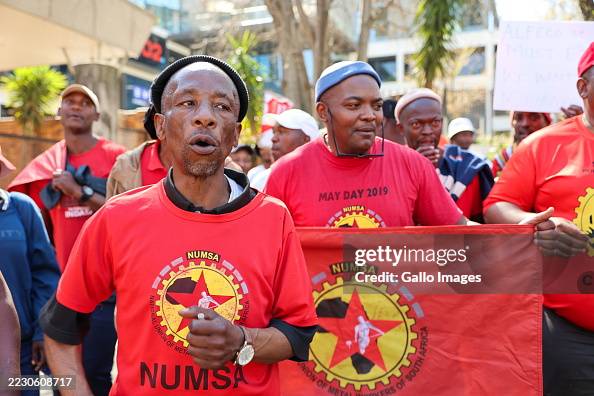
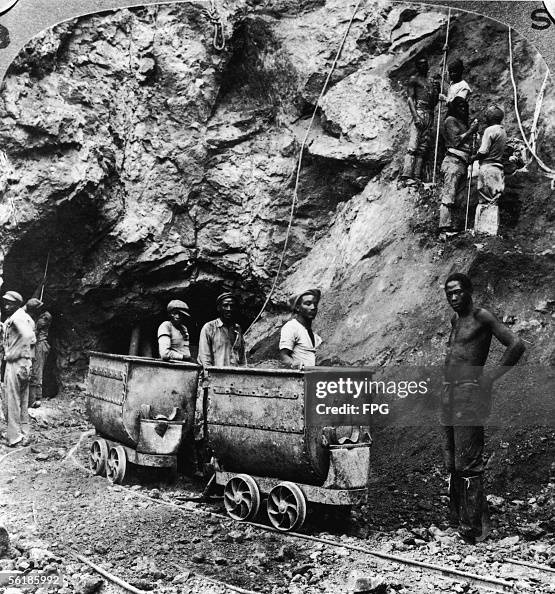

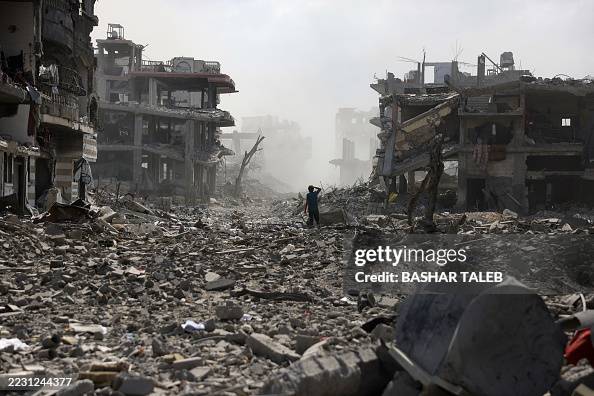


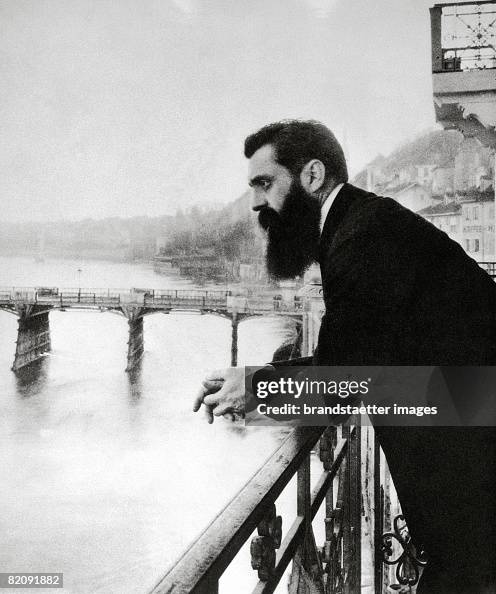
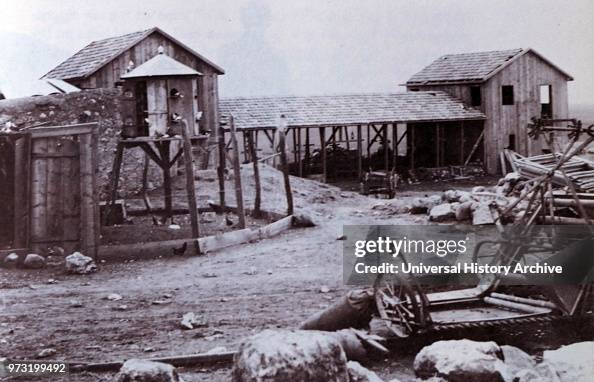

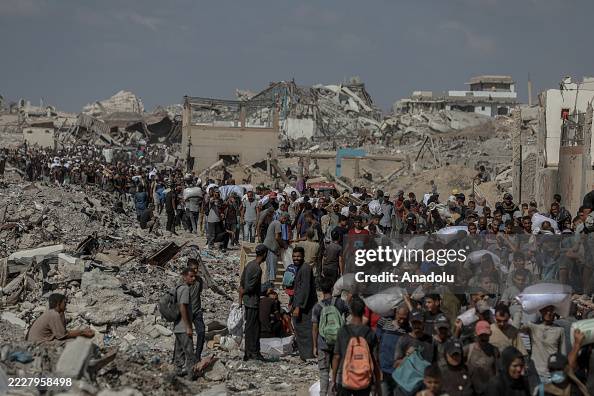


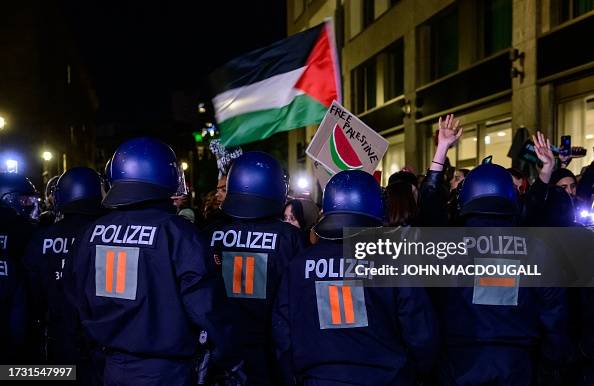

 tadamun