Die für eine der Solidarität verpflichteten Bewegung teilweise unerträgliche Kritik an unseren Kolleginnen von der Histadrut auch in gewerkschaftlichen Bünden verurteilen wir scharf. Nirgendwo anders werden Gewerkschaften mit dem Handeln ihrer Regierung gleichgesetzt und dafür verantwortlich gemacht. Die Histadrut steht immer wieder an der Spitze von Protesten gegen die israelische Regierung und setzt sich für ein friedliches Miteinander und den Austausch zwischen allen Beschäftigten ein.
In English:
We sharply condemn the at times unbearable criticism of our colleagues from the Histadrut, even within trade union federations, which claim to be committed to solidarity. Nowhere else are trade unions equated with the actions of their government and held responsible for them. The Histadrut has repeatedly been at the forefront of protests against the Israeli government and advocates for peaceful coexistence and exchange among all workers.
Taking a step back: why is the Histadrut subject to criticism at all? This article addresses that question by examining the Histadrut’s role, practices, political positioning, and its role in Israeli the war machine. On this basis, it argues that criticism is not only well-founded but necessary. Moreover, if the DGB is genuinely committed to “peace in the Middle East,” it must fundamentally reassess—and ultimately sever—its partnership with the Histadrut.
Founded in December 1920, the Histadrut—the General Federation of Hebrew Workers in Palestine—was established to secure the economic foundations of the Zionist project. Its core mission was not simply to organize workers, but to create and protect a Jewish labor force by excluding Palestinian Arab labor from key sectors of the economy. Through the doctrine of avodah ivrit (“Hebrew labor”), the Histadrut turned labor organization into a mechanism of colonization, linking employment to national belonging and transforming the workplace into a frontier of settlement.
From the outset, the Histadrut was both a union and an employer, owning enterprises, land, and industries that advanced Zionist colonization. Its companies—most prominently Solel Boneh—constructed roads, military outposts, and settlements, embedding the federation in the material infrastructure of the emerging Jewish state. As a central pillar of the Yishuv’s economic system, the Histadrut coordinated with the Jewish Agency and other state-building organs to exclude Palestinian workers, dismantle mixed unions, and monopolize employment through Jewish-only cooperatives and hiring halls.
After 1948, the Histadrut’s dual role as labor federation and development agency deepened. It became one of Israel’s largest employers, controlling major industrial, construction, and financial firms under its holding company Hevrat HaOvdim. These enterprises built the new state’s infrastructure while entrenching a racially segmented labor market that privileged Jewish citizens and relegated Palestinians—whether citizens of Israel or residents of the occupied territories—to precarious, low-wage positions outside collective representation.
By 1967, this institutional model had merged seamlessly with Israel’s occupation regime, subordinating Palestinian labor to Israeli regulatory power. Histadrut-affiliated firms such as Solel Boneh and Bank Yahav extended their activities into settlements in the West Bank and annexed East Jerusalem, while Palestinian workers in these same areas remained unrepresented. The federation’s continued integration with the settlement economy made it a direct participant in the consolidation of occupation.
The Military Role of the Histadrut
The Histadrut anchors organized labor inside Israel’s military-industrial complex, chiefly through its Metal, Electrical and High-Tech Workers Union, which represents employees at Israel Aerospace Industries (IAI), Rafael Advanced Defense Systems, and Elbit Systems. These firms produce core war-fighting systems—IAI’s missiles, UAVs, and C2 platforms; Rafael’s air and missile-defense and precision munitions; and Elbit’s electro-optics and battlefield electronics—central to Israel’s genocide in Gaza.
In this capacity, the Histadrut does not merely coexist with Israel’s war economy; it enables and sustains it, ensuring that labor power remains fully mobilized in the service of Israel’s continuing assault on Gaza.
The DGB has never been blind to the Histadrut’s historic role in the colonization of palestine, or its role in the . In its brochure “50 Jahre Partnerschaftsabkommen zwischen DGB und Histadrut”, it notes that “the Histadrut was practically a ‘state within the state.’” The federation’s support for Israel’s labor movement was not merely symbolic but consistently material—especially at pivotal moments. During the 1967 Six-Day War, for example, the DGB purchased an additional 3 million DM in development-aid bonds (Israel Bonds), publicly expressing confidence in Israel’s survival and democracy.
As the DGB Youth explicitly stated in Motion E011 “Boykotte boykottieren”, they branded BDS “anti-Israeli,” reaffirmed a two-state line, and distanced themselves from cultural, political, scientific, and economic boycotts of Israel. In practice, that stance delegitimized a key non-violent accountability tool and helped sideline BDS in labor forums. Coupled with defending the Histadrut while Palestinian workers remain excluded, and with German industry’s ongoing ties to Israeli firms (including war- and settlement-linked sectors), this posture shields the institutions underpinning Israeli apartheid—criticizing only its most visible violence while leaving its foundations intact.
Conclusion
What began as a gesture of postwar reconciliation has long since turned into complicity with a colonial project. The DGB’s partnership with the Histadrut — an institution that functions not as a vehicle of workers’ liberation but as a pillar of Zionist state power — embodies a deep contradiction at the heart of German labor internationalism. The Histadrut has never been a neutral trade union. From its founding, it has operated as an instrument of Jewish settlement, exclusion, and militarization. It is part of the political and economic structure that sustains Israel’s apartheid regime and its war economy.
By bargaining for the well-being of soldiers and reservists, by stabilizing Israeli civil society amid war, repression, and global outrage, and through its silence on the ongoing Gaza genocide, the Histadrut actively reinforces the occupation and the colonial order it depends upon. It negotiates not for the emancipation of all workers, but for the maintenance of privilege within an ethno-national state. To continue cooperation with such an institution — while Palestinian workers remain dispossessed, unrepresented, and exploited — is to abandon the principle of class solidarity in favor of nationalist loyalty.
It simply goes against the very concept of international worker solidarity to stand with a colonial labor federation that denies labor rights to those under occupation. It is not enough to condemn “extremism” or criticize “individual settlers” while ignoring the systemic role of Zionism and the Histadrut in perpetuating Palestinian exclusion and dispossession. The struggle for justice demands a break with this complicity.
If the DGB is serious about its proclaimed commitment to peace, it must act accordingly. That means ending its partnership with the Histadrut, supporting the Boycott, Divestment, and Sanctions (BDS) movement, and exerting pressure on German industry to sever all ties with Israel’s military-industrial complex and companies profiting from occupation and settlement. This is not simply a suggestion — it is an imperative of international worker solidarity.
To remain silent or neutral in the face of colonial and genocidal violence is to side with the oppressor. True solidarity lies with the Palestinian working class — those whose land, labor, and lives have been stolen, and who continue to resist against overwhelming power. Breaking with the Histadrut would not betray the principles of labor internationalism — it would restore them, aligning the German labor movement with the global struggle for justice, liberation, equality, and decolonization, from the Jordan to the Mediterranean.
Before Auschwitz, Germany perpetrated its first genocide (1904–08) in South West Africa against the Herero and Nama—desert expulsions, poisoned waterholes, concentration camps, starvation, sexual violence, forced labor, identity badges, land seizure, and leadership suppression. This article centers the Namibia genocide, situates it in its colonial background, and traces its mechanisms and enduring legacies in land, memory, and reparations.
Together with many other groups, the Herero and Nama contribute to Namibia’s diverse heritage—while many individuals choose to identify first and foremost simply as Namibian, given the sensitivities shaped by the apartheid past.
The Herero are a historically cattle-herding society that developed from peoples, cultures, and economies already present in Namibia before European arrival in the 16th century1. Never a monolith, Herero politics included internal divisions that German colonial authorities later exploited to facilitate conquest2. Cattle remain central to social life and concepts of wealth, a symbolism reflected in the distinctive women’s attire—Victorian-influenced gowns and a horn-shaped headpiece often interpreted as evoking cattle horns.3
The Nama are among Namibia’s oldest population groups and one of more than a dozen ethnic, cultural, and linguistic communities. Traditionally pastoralist, they historically occupied wide areas in the country’s south and center4. Interactions with neighboring Herero included periods of conflict, after which German colonial authorities confined both peoples to reserves. Music, poetry, and storytelling are central to Nama cultural life, sustained by a rich oral tradition5.
Among Herero and Nama pastoral communities, land and vital resources like waterholes were held in common under customary authority, with seasonal movement of herds and households between pastures and water sources based on flexible, overlapping use rights. Colonial appropriation imposed private freehold and rigid, officially surveyed property lines, reinterpreting temporary permissions as permanent “sales” and restricting access to those with registered title—often on contested claims. This shift, foreign to local tenure, dismantled seasonal herd mobility and its ecological adaptation, making private ownership central to dispossession6.
The Bremen merchant Adolf Lüderitz hoisted the German flag in the bay of Angra Pequena and thus acquired Deutsch Southwest Africa, today Namibia, Historic, digitally restored reproduction of an original artwork from the early 20th century, exact original date not known. (Photo by: Bildagentur-online/Universal Images Group via Getty Images)
Initial contact between Germans and the Herero and Nama came via missionaries, followed by traders, concession hunters, and other colonial ventures. Even before formal colonization, these ventures undermined Herero and Nama socio-economic life through fraudulent trading practices, coercive “protection” treaties, and land deals that dispossessed communities7. In 1884–85, Bismarck directly convened the Berlin Conference to codify European claims and manage rivalries during the “Scramble for Africa.” Excluding African representatives, the conference legitimized the partition and expropriation of African territories— described as the organized commission of a crime against Africa’s peoples8.
Colony
On 30 April 1885, the German South West Africa Company (Deutsche Kolonialgesellschaft für Südwestafrika) was founded and soon absorbed earlier private concessions in the territory9. Its shareholders included some of Germany’s wealthiest magnates—Hansemann, Bleichröder, the Duke of Ujest, and Count Henckel von Donnersmarck—and finance capital was prominently represented by the Disconto-Gesellschaft, Deutsche Bank, Delbrück, Leo & Co., Dresdner Bank, and Bankhaus Oppenheim10.
The main factions of the Herero and Nama were led by Samuel Maherero, and Hendrik Witbooi respectively.
After nearly a century of conflict between the Herero and Nama, a peace concluded in November 1892—spurred by the growing threat of German and Boer expansion—realigned forces and, by early 1893, presented a united African front that alarmed German colonial authorities, who could no longer exploit inter-African divisions. In the early hours of 12 April 1893, German troops reached Hornkranz (a Nama encampement)—described by Captain François as tranquil—and, on his orders, opened fire from three directions, expending roughly 16,000 rounds from 200 rifles in about thirty minutes; seventy-eight women and children were killed. When the incident was raised in the Reichstag, the government advanced a fabricated claim that Witbooi fighters had used women as cover to explain the high civilian toll.
Theodor Leutwein standing with Samuel Maharero and Hendrik Witbooi circa 1900. (Photo by Fotosearch/Getty Images).
Subsequently, Nama leader Hendrik Witbooi waged a vigorous campaign against German forces, inflicting significant losses and contributing to the recall of Major Curt von François, who was replaced in 1894 by Theodor Leutwein11. On 15 September 1894—after roughly eighteen months of fighting and confronted by German superiority in firearms—Witbooi was compelled to sign a “treaty of protection and friendship.” The war left the Witbooi impoverished, a condition Leutwein exploited by lending them 150 head of cattle for three years to bind them more closely to colonial authority12.
In 1896, the rinderpest epidemic reached Namibia just as colonial pressure was confining the Herero to ever smaller quarters, crowding herds and making them acutely vulnerable13; moreover, German vaccination campaigns were misused to hasten the destruction of Herero cattle and to acquire land14. Socially, rinderpest transformed Herero society: the collapse of the cattle economy forced commoners into wage or indentured labor, while chiefs sold large tracts to traders and land companies, opening more territory to settler occupation and deepening dispossession15. In its wake the Herero lost land, people, and herds, sank further into debt, and became dependent on the colonial state for reserves, food, and employment; on traders and settlers for credit and work; and on missions for religious guidance1617.
With an approximate 90 per cent of cattle wiped out by the pandemic many pastoralists in the central and southern parts of the territory were forced into wage labour for the first time. By 1904, Herero communities had become scattered groupings clustered around garrison towns under German control and their associated chiefs—effectively stripped of independence as the colonial state prevailed.18
In 1904, the Herero, led by Samuel Maherero rose up in resistance19.
German authorities manufactured atrocity propaganda—especially lurid, unproven claims that Herero had raped or “butchered” white women—to furnish a moral pretext for annihilation; internal cables show pressure on Governor Leutwein to label vague “ill-treatment” as rape despite no evidence, and even after missionary J. Irle publicly debunked named cases the narratives persisted. This drumbeat conditioned soldiers and the public, normalizing calls for collective reprisals, encirclement and destruction by artillery, and even poisoning wells. Amid a jingoistic settler climate—and with the Kaiser Wilhelm II’s endorsement—Berlin ordered an immediate offensive, forbade negotiations with the Herero, removed Leutwein, and installed Lieutenant-General Lothar von Trotha to prosecute an exterminationist campaign20.
While Leutwein did not “want to see the Herero destroyed altogether”; beyond the practical difficulty of annihilating “a people of 60,000 or 70,000,” he deemed such a course “a grave mistake from an economic point of view,” insisting that “we need the Herero as cattle breeders, though on a small scale, and especially as laborers,” and that “it will be quite sufficient if they are politically dead.” By contrast, Lothar von Trotha set out a different procedure: “to encircle the masses of Hereros at Waterberg, and to annihilate these masses with a simultaneous blow,” then establish stations “to hunt down and disarm the splinter groups who escaped,” “lay hands on the captains by putting prize money on their heads,” and “finally to sentence them to death.”21
In early August 1904, von Trotha issued battle orders to his troops. What followed is genocide…
Genocide
NON SPECIFIE – 1905: Portrait de Lothar von Trotha, général allemand des forces coloniales, en Afrique en 1905. (Photo by Keystone-France\Gamma-Rapho via Getty Images)
The Herero are no longer German subjects. They have murdered and stolen, they have cut off the ears, noses and other bodyparts of wounded soldiers, now out of cowardice they no longer wish to fïght. I say to the people anyone who delivers a captain will receive 1000 Mark, whoever delivers Samuel will receive 5000 Mark. The Herero people must however leave the land. If the populace does not do this I will force them with the Groot Rohr [Cannon]. Within the German borders every Herero, with or without a gun, with or without cattle, will be shot. I will no longer accept women and children, I will drive them back to their people or I will let them be shot at. These are my words to the Herero people.
General von Trotha, Sunday 2 October 1904 (der Vernichtungsbefehl) 22
Men, women, and children were forced into concentration camps; starved and malnourished; whipped, raped, and compelled to perform backbreaking labor. Many were “tattooed and forced to wear identity badges”; the Herero were coerced to change religion, their land was seized and sold to German settlers, and their ruling structures were banned. Waterholes were poisoned, and people were hunted and lynched. Herero prisoners of war—and later Nama prisoners—were deployed across civilian firms (from laundries and transport contractors to breweries and shipping companies), while military units used prisoners, often children, to maintain livestock—building kraals, pumping water, cutting fodder, and herding—and to build railway lines232425.
it has been and remains my policy to exercise the violence with gross terrorism and even with cruelty. I annihilate the African tribes by floods of money and floods of blood; it is only by such sowings that a [new permanent German state] will be there to stay.
By early 1905, Herero society as it had existed prior to 1904 was destroyed, the majority were confined to camps and left propertyless, landless, and leaderless, and legislation sought to perpetuate this condition; when the camps were abolished in 1908, Imperial Germany aimed to reshape the survivors of the genocide into a single, amorphous Black working class27.
Germany established a network of concentration camps in South West Africa; Shark Island—opened first for Herero prisoners whose forced labor was exploited for colonial infrastructure, including the Lüderitz–Aus railway and harbor—later received Nama inmates in 190628. Between 1,000 and 3,000 people died there, chiefly from exposure, disease, and exhaustion under brutal conditions, while terror practices included rape, torture, poisoning, medical experiments, and public executions; captive women were forced to clean the skulls of the dead for shipment to Germany for pseudo-scientific research29. Among those who perished was the Nama Cornelius Fredericks, decapitated on 16 February 1907, his skull sent to Germany. When the camp closed in April 1907, survivors were transferred to a “Burenkamp” at Radford Bay30.
(Eingeschränkte Rechte für bestimmte redaktionelle Kunden in Deutschland. Limited rights for specific editorial clients in Germany.) German South-West Africa: Herero rebellion, captives in chaines – 1904/5 (Photo by ullstein bild/ullstein bild via Getty Images)
Between 75 and 80 per cent of the Herero and about 50 per cent of the Nama were exterminated by the German forces31.
Resistance
From the standpoint of Ovaherero and Nama communities, German rule meant near-total rightlessness. Openly racist dehumanization normalized violence—from routine whipping to killings—often excused as “tropical frenzy.” Courts rarely punished German perpetrators, discounted African testimony (even proposing ratios that devalued it), and imposed only light sentences when cases proceeded at all. Stripped of legal protection and credibility, Herero and Nama experienced life as slavery in their own country32.
All our obedience and patience with the Germans is of little avail, for each day they shoot someone dead for no reason at all. Hence I appeal to you, my Brother, not to hold aloof from the uprising, but to make your voice heard so that all Africa may take up arms against the Germans. Let us die fighting rather than die as a result of maltreatment, imprisonment or some other calamity. Tell all the kapteins down there to rise and do battle.
Letter of Samuel Maherero to Hendrik Witbooi, 11 January 1904 33
On 12 January 1904, the Herero rose in arms, swiftly seizing most of their ancestral land—fortified posts excepted, which came under siege—and capturing the bulk of settlers’ livestock; over 100 German settlers and soldiers were killed. In October 1904, the Nama joined the uprising. Employing guerrilla tactics—ambushes, hit-and-run raids, and disruption of lines of communication—the resistance forced German forces onto the defensive and, for a time, severely constrained their operations34.
Battle Between Herero Warriors & German Colonials or Colonists Windhoek Namibia (Feb 1904) (Photo by Chris Hellier/Corbis via Getty Images)
The memorial site for Captain Corlnelius Fredricks on the Shark Island peninsula near Luderiz, Namibia, is seen in this April 24, 2023 image. Captain Fredricks, who died in 1907 at the camp in Shark Island, was one of the indigenousleaders who fought a guerrilla-style war against the Germans in the German South-West Africa, now Namibia. – A genocide memorial tombstone has been unveiled during a three-day event on Shark Island, a peninsula off the southern city of Luderitz that hosted a camp of the same name — one of several set up during German rule as part of a system of repression. Namibia has no official day designated to commemorate what some historians have described as the 20th century’s first genocide. German settlers killed tens of thousands of men, women and children belonging to indigenous Herero and Nama people who rebelled against colonial rule in the southwest African country between 1904 and 1908. (Photo by HILDEGARD TITUS / AFP) (Photo by HILDEGARD TITUS/AFP via Getty Images)
1893–1903 saw a systematic transfer of Herero and Nama land and cattle to German settlers, culminating after the 1904–07 uprisings were crushed. Colonial acquisitions proceeded under colonial legal forms. These sales were completed amid documented protests by Herero and Nama, who contested their legality35. The large scale dispossession of black Namibians was as much intended to provide white settlers with land, as it was to deny black Namibians access to the same land, thereby denying them access to commercial agricultural production and forcing them into wage labour36.
Vast land seizures and the expropriation of more than 205,640 head of cattle (1884–1915) dismantled Herero and Nama livelihoods, entrenched long-term land inequality, and drove dispersal and diaspora, while extractive gains in minerals, diamonds, and forced labor enriched German settlers, companies, and the colonial state. These structures persist today in unequal access to land and the concentration of ownership in the hands of white German-speaking Namibians and foreign nationals, reinforced by ongoing German financial ties and influence. The removal of human remains for scientific and medical research—some still retained in Germany—marks a continuing cultural and epistemic dispossession. Together, the loss of economic and political power, damage to cultural identity, and intergenerational trauma continue to burden Herero and Nama communities, with inadequate land access compounding present-day socio-economic marginalization37.
To quote Edward Said, “To think about distant places, to colonize them, to populate or depopulate them: all of this occurs on, about, or because of land. The actual geographical possession of land is what empire in the final analysis is all about”38. When you take that quote and the fact that white Namibians still hold most of the privately owned land in the country, you see that the colonial “empire” and its strength have hardly been reduced at all. The structure that empire created remains fundamentally intact. And as long as this remains so, inequality can never be overcome39.
SWAKOPMUND, NAMIBIA – MARCH, 27: A memorial stone in honor of the OvaHerero/OvaMbanderu and Nama people that were victims of the genocide by German colonial forces on the begining of the 20th century stands at the Swakopmund Concentration Camp Memorial, in Swakopmund, Namibia, on March 27, 2019. Located on the coast of Namibia, Swakopmund is one of the most populous cities in the country and one of the best preserved examples of German colonial architecture in the world. Since 2007, every year, at the end of March, people of the Herero and Nama communities take part on the „Swakopmund Reparation Walk“, organized to honor the victims of the German colonial power over the country and to demand reparation from the German state. (Photo by Christian Ender/Getty Images)
Postscript
Selecting sources for this article has been unexpectedly difficult. I have chosen to cite only works that explicitly name the events a genocide. More troubling is how little accessible scholarship exists online about Herero and Nama before German colonization; much of the record makes their histories appear to begin with the colonial encounter. This reflects structural biases—digitized collections dominated by colonial archives, scarcity of materials in Otjiherero and Khoekhoegowab, paywalled journals, and search algorithms that privilege widely cited European-language sources. As a result, most available references are authored by Germans or, more broadly, by scholars of European heritage. There are important exceptions, however, and I make a point of foregrounding and citing those works more heavily.
This article examines Elbit Systems through three interconnected lenses: its operational role in the occupation of Palestine, its partnerships and investments — particularly in Germany — and the growing impact of divestment campaigns and direct action by pro-Palestine activists. In doing so, it situates Elbit within the broader political economy of occupation, where military violence and corporate profit are mutually reinforcing.
From Occupation to Export
FARNBOROUGH, ENGLAND – JULY 23: A Hermes 900 Multi-role MALE UAS drone is displayed at the Elbit Systems exhibition stand during the Farnborough International Airshow 2024 at Farnborough International Exhibition and Conference Centre on July 23, 2024 in Farnborough, England. Farnborough International Airshow 2024 is host to leading innovators from the aerospace, aviation and defence industries. (Photo by John Keeble/Getty Images)
Elbit Systems Ltd., founded in 1966, is Israel’s largest private arms manufacturer and a central actor in the global defence industry. The company produces approximately 85 percent of the Israeli Defence Forces’ (IDF) land-based equipment and around 85 percent of its drones.1 This dominance has allowed Elbit to position itself as indispensable to Israel’s capacity to wage war and sustain its occupation of Palestinian territories.
Elbit’s product range covers unmanned aerial vehicles (UAVs), artillery systems, surveillance technologies, electronic warfare, and border monitoring infrastructure — much of which has been deployed during Israeli military operations in Gaza and across the occupied West Bank.2 These systems are often marketed as “battle-proven,” a euphemism that, in the Palestinian context, translates into “genocide-proven” — tested during operations that have caused mass civilian casualties, destruction of infrastructure, and forced displacement.3
Far from operating in isolation, Elbit is embedded in the global arms trade. The company maintains subsidiaries and joint ventures across multiple continents, including in Europe, North America, Latin America, and Asia.4 In Germany, Elbit has been involved in defence procurement, drone production, and joint research projects funded through EU frameworks, linking German state and industrial actors directly to the maintenance and expansion of Israel’s military capabilities.
In 2023, Elbit Systems secured multiple contracts across European markets, covering the PULS and ATMOS artillery systems, unmanned aerial vehicles, tank and mortar ammunition, XACT night-vision goggles, electronic warfare self-protection suites, counter-UAS systems, and other products. According to company executives, most of these systems are “highly relevant” to European defence needs and have all been “operationally proven” in the so-called Swords of Iron war (commonly referred to as the Gaza genocide). They emphasised that Elbit’s entire electronic warfare portfolio, precision-guided munitions, and unmanned systems were extensively deployed during the conflict with “very good results,” and argued that such combat use would strengthen interest from European buyers. The company noted that its sales and revenue from Europe have grown significantly in recent years.5
Additionally, Elbit Systems has benefited from significant European Union research funding through the Framework Programme 7 (2007–2013), Horizon 2020 (2014–2020), and Horizon Europe (2021–2027).6 Together, these programmes have channelled over €2.6 billion to Israeli entities, including major arms producers such as Elbit, Israel Aerospace Industries, and Rafael.7 Elbit’s involvement has included projects with German higher education institutions such as Technische Universität Braunschweig and Technische Universität Darmstadt under FP7, as well as participation in EU-funded security research initiatives focused on surveillance, border control, and law enforcement technology.8
In Germany, Elbit has been directly integrated into defense procurement and drone production, as well as joint research and development, connecting German state and industrial entities to the reinforcement of Israel’s military capabilities. Elbit won a $57 million contract to supply PULS rocket-launcher artillery systems to the German Armed Forces in collaboration with KNDS Deutschland, and has also secured a $260 million deal to provide DIRCM self-protection systems (J-MUSIC) for Germany’s Airbus A400M transport planes.910 Additionally, in a less formal but strategically aligned move, Lufthansa Technik has entered into a memorandum of understanding with Elbit Systems to deliver and maintain Hermes 900 Starliner military drones for the German Navy.11
Elbit Systems in the Occupation of Palestine
Pro-Palestinian activists protest against the International Armoured Vehicles Conference (IAVC) and the International Military Helicopter (IMH) Conference being held at Twickenham Stadium on 22nd January 2024 in Twickenham, United Kingdom. IAVC is currently taking place at the stadium and IMH is scheduled to take place in February. The events are attended by representatives of companies which supply weapons and military technology to Israel used against the Palestinians. (photo by Mark Kerrison/In Pictures via Getty Images)
Elbit’s dominant position was cemented in 2018 with the acquisition of Israeli Military Industries (IMI Systems), expanding its munitions, artillery, and electronic warfare capabilities.12 Ranked among the world’s largest arms companies, Elbit has a global footprint with subsidiaries and contracts in more than 50 countries — but its core business remains tied to the Israeli military and the occupation of Palestinian territories.13
Gaza: From “Battle-Proven” to “Genocide-Proven”
TOPSHOT – Scores of displaced Palestinians walk along a road in the Saftawi area of Jabalia, as they leave areas near Gaza City where they had taken refuge, toward the further northern part of the Gaza Strip, on January 19, 2025, shortly after a ceasefire deal in the war between Israel and the Palestinian militant group Hamas was expected to be implemented. The long-awaited ceasefire in the Israel-Hamas war was delayed January 19 after Prime Minister Benjamin Netanyahu said at the last minute that it would not take effect until the Palestinian militant group provided a list of the hostages to be released. (Photo by Omar AL-QATTAA / AFP) (Photo by OMAR AL-QATTAA/AFP via Getty Images)
Elbit weapons and surveillance systems have been deployed in every major Israeli assault on Gaza since at least 2008–2009 Operation Cast Lead), including Operation Protective Edge (2014), Operation Guardian of the Walls (2021), Operation Breaking Dawn (2022), and Operation Swords of Iron (2023–24).14 These campaigns have resulted in tens of thousands of Palestinian deaths — the majority civilians — and have been documented by UN bodies and human rights organisations as war crimes and, in the most recent case, the so called Operation Swords of Iron is a „possible“ genocide.15
A core feature of Elbit’s marketing strategy is to present its weapons as “combat-proven.” In the Palestinian context, this means “tested” during operations that deliberately target civilian infrastructure. Examples include the MPR 500 multi-purpose bomb, designed for “densely populated urban warfare” and used during assaults on Gaza,16 and the Hermes 450 and Hermes 900 drones, which make up the bulk of Israel’s UAV fleet. These drones are marketed internationally after repeated use in surveillance and targeted strikes in Gaza, including the April 2024 killing of seven World Central Kitchen aid workers in Deir al-Balah.17 In 2014, a Hermes 450 drone strike killed four children playing on a Gaza beach.18
World Central Kitchen cars were targeted in separate strikes: Al Jazeera Sanad probe
Elbit’s own corporate disclosures confirm that these assaults are not only facilitated by its technologies but also drive its business growth. In its 2024 year-end statement, the company reported a “material increased demand” for its products from the Israeli Ministry of Defense following the launch of Operation Swords of Iron in October 2023.19 Over the course of the year, Elbit secured contracts worth over $5 billion from the ministry, a dramatic rise compared to pre-war demand. The company explicitly acknowledged that continued military operations could generate “material additional orders,” tying its future revenues directly to the prolongation of the assault on Gaza.
To meet wartime demand, Elbit scaled up production, relocated manufacturing lines from areas under missile attack, recruited additional employees, and increased inventories.20 While these measures were presented as “support” for the Israeli military, they demonstrate the company’s active role in sustaining the assault through rapid delivery of weapons and surveillance systems. By integrating the war effort into its global operations — which continued largely uninterrupted — Elbit transformed the destruction of Gaza into shareholder value. This self-reported connection between military operations and profit underscores the company’s direct culpability in a campaign widely documented as involving well documented war crimes and genocide.
West Bank: Surveillance and Control
WEST BANK – NOVEMBER 10: View of a concrete security wall in Kalandia separating the West Bank city near Ramalla from East Jerusalem November 10, 2004. The huge concrete barrier Israel is putting up between Palestinian territories and Israel has split families that own property on both sides of the wall, in two. Israel says the barrier is necessary to stop suicide bombers while Palestinians call it a land grab. Ariel Sharon’s government plans to keep on building the barrier. (Photo by Shaul Schwarz/ Getty Images)
Elbit has been the primary provider of electronic detection systems and related surveillance technologies for Israel’s “smart walls,” as well as supplying technology for military checkpoints and armed ground vehicles used to patrol and control borders.21 Its involvement in Israel’s border surveillance industry dates back to 2002, when its subsidiary Ortek was awarded a $5 million contract to build a “smart” electronic barrier around part of Jerusalem, cutting off Palestinian residents from the rest of the West Bank. In 2006, Ortek received a further $17 million to deploy an electronic deterrence system — consisting of an electronic fence, communications systems, and computerised command and control posts — along segments of the separation wall.22
Elbit was also the main contractor for the “smart” sensors installed on Israel’s wall around the Gaza Strip, and in 2021 led the completion of an underground “smart wall” made up of hundreds of surveillance cameras, radars, and motion sensors.23 This project, begun in 2017, combined high-tech surveillance with physical fortification: 20-foot-tall aboveground barriers and reinforced slabs extending 130 feet underground. In addition, Elbit develops unmanned ground vehicles (UGVs) for border surveillance. In 2016, it introduced the Border Protector UGV — a Ford F-350 pickup equipped with autonomous driving technology and surveillance cameras — which was deployed along the Gaza border, replacing the earlier Guardium UGV co-developed with Israel Aerospace Industries.24 In 2022, Elbit unveiled the Medium Robotic Combat Vehicle (M-RCV), an armed robotic platform equipped with a gun turret, anti-tank missile launchers, and the capacity to deploy surveillance drones. Like its predecessors, it is expected to be deployed along Israel’s borders, including those with Gaza and the West Bank.25
Displacement and Militarised Land Grabs
NEGEV, ISRAEL – MAY 08: Israeli forces demolish 47 homes with heavy machines claiming they are ‚unlicensed‘ and leaving nearly 500 Bedoin Palestinians homeless at Nahal Hevron near Umm Batin village of Negev Desert, Israel on May 08, 2024. (Photo by Mostafa Alkharouf/Anadolu via Getty Images)
Elbit’s industrial expansion also contributes to the forced displacement of Palestinians. The relocation of the IMI Ramat HaSharon plant to Ramat Beka in the Naqab/Negev — part of a larger military-industrial zone plan — is expected to forcibly displace 36,000 Palestinian Bedouins, demolish over 2,000 buildings, and expose communities to long-term health risks.26
By embedding its products in both aerial warfare and systems of ground control, Elbit Systems has transformed the occupation itself into a proving ground for weapons — a process through which “battle-proven” becomes “genocide-proven.” This operational history has become a key selling point in the global arms market, sustaining Elbit’s growth while deepening the structures of Israel’s military rule over Palestinians.
German Partners in Genocide
TOPSHOT – People look at the Brandenburg Gate with the Israeli flag projected onto in Berlin, on January 9, 2017. (Photo by Odd ANDERSEN / AFP) (Photo by ODD ANDERSEN/AFP via Getty Images)
Elbit Systems maintains a direct corporate presence in Germany through its subsidiary Elbit Systems Deutschland GmbH & Co. KG, headquartered in Ulm, Baden-Württemberg. This facility develops and produces electronic warfare systems, secure communication technologies, night vision equipment, and other military-grade components for the Bundeswehr and NATO partners.27 The Ulm site embeds Elbit into the German defence industrial base, granting it access to local supply chains, research institutions, and European defence procurement networks.
PLEASE WRITE US TO ADD FURTHER PARTNERS AND PRESSURE TARGETS!
Telefunken – Elbit’s Ulm base was established through its 2011 acquisition of Telefunken Radio Communication Systems. Telefunken’s history includes supplying communications infrastructure during the Herero and Nama genocide in German South West Africa28 and producing military radios under the Nazi slogan “Ganz Deutschland hört den Führer mit dem Volksempfänger” (“All of Germany listens to the Führer with the Volksempfänger”).29 Its absorption into Elbit ties these legacies of state violence to present-day military occupation technologies.
1936 poster: „All of Germany Listens to the Führer with the People’s Radio.“ The poster depicts a crowd surrounding a radio. The radio looms large, symbolizing the mass appeal and broad audience for Nazi broadcasts. Bundesarchiv Koblenz (Plak003-022-025)30
Rheinmetall – Germany’s largest arms manufacturer — has collaborated with Elbit Systems on multiple projects, including the development and marketing of artillery and rocket systems such as the PULS (Precise & Universal Launching System) for European markets. This partnership integrates Elbit’s rocket artillery technology into Rheinmetall’s production and sales networks, directly linking the German arms industry to weapons systems tested and deployed by Israel in Gaza and the West Bank.31
Allianz – Allianz provides insurance coverage to Israeli arms manufacturers including Elbit, enabling production continuity during wartime and reducing operational risk.32
Jobrad – JobRad offers bicycle-leasing benefits to employees of Elbit Systems Deutschland, reflecting the company’s integration into German corporate networks.33
Northrop Grumman – Works with Elbit on advanced targeting systems, electronic warfare packages, and helmet-mounted display technology, with German aerospace programs benefiting indirectly through NATO-aligned contracts and Eurofighter upgrades.34
Horizon EU Funding – Through the EU’s Framework Programmes for Research and Innovation — specifically FP7, Horizon 2020, and Horizon Europe — Israeli entities, including Elbit Systems, have collectively received over €2.6 billion between 2007 and 2023, despite repeated calls from civil society to exclude Israeli military companies from these programmes due to their role in human rights violations in Palestine.35
Airbus – Airbus has partnered with Elbit Systems on military technology projects, including UAV integration and avionics systems, thereby embedding Elbit’s combat-tested technology into European aerospace production.36
Lufthansa – Lufthansa Technik, the maintenance arm of Lufthansa, is cooperating with Elbit Systems on a German Navy drone project involving up to eight Hermes 900 drones. The subsidiary is responsible for maintenance, repairs, and personnel training — a collaboration that indirectly legitimises a company central to Israel’s military operations in Gaza and the West Bank.37
Activism, Divestments and Challenges
European financial and institutional actors have not withdrawn from Elbit Systems out of goodwill or corporate conscience, but as a result of years of sustained grassroots pressure. Persistent campaigns, public shaming, shareholder interventions, and direct actions, have forced banks, pension funds, and other institutions in Germany, Europe, and beyond to confront their complicity in Elbit’s role in the occupation and genocide of Palestinians. These divestment decisions are less acts of moral awakening than reluctant concessions to organised resistance.
Activism
BDS and Civil Society Mobilisation – The global Boycott, Divestment, and Sanctions (BDS) movement has consistently named Elbit as a top target, exposing its role in Israel’s war crimes and pushing institutions to sever ties.
Palestine Action and Direct Disruption – In the UK, the “Shut Elbit Down” campaign — spearheaded by Palestine Action — has used sustained direct action, including blockades, rooftop occupations, and factory shutdowns, to physically disrupt Elbit’s operations and make its name synonymous with war profiteering. These tactics have inspired similar actions across Europe.
Shut Elbit Down in Ulm – Activists blockade Elbit Systems’ facility in Ulm as part of the Shut Elbit Down campaign, demanding the closure of all company sites in Germany over its role in genocide and apartheid. Protesters pointed to Ulm’s historical link to the White Rose resistance, urging the city to oppose hosting a “genocidal factory,” and cited UK campaigns that have already forced the closure of three Elbit sites.38
Blockade vor dem Standort der israelischen Rüstungsfirma Elbit Systems am Freitag in Ulm39
Through relentless organising, campaigners have raised the political cost of doing business with Elbit. Each divestment or contract cancellation is not a voluntary gesture, but the outcome of a public pressure campaign that refuses to let institutions hide their complicity.
Divestments
AXA – The French insurance giant fully divested from Elbit Systems by the end of 2019, following years of BDS-led campaigning, and removed investments from multiple Israeli banks by mid‑2024.40
iO Associates – A UK-based recruitment agency ended its cooperation with Elbit amid direct-action and campaign pressure.41
LaSalle Investment Management – Manager of the Shenstone UAV factory property in the UK, which terminated its lease with Elbit following protests and site disruptions.42
Deutsche Bank – In 2010, Germany’s largest bank officially announced the divestment of its approximately 2% holdings in Elbit Systems after sustained pressure from German human rights groups; although claims were mixed on whether those holdings were client-managed or proprietary, it set an important precedent.43
Challenges
In Germany, movement strategies targeting Elbit Systems face a uniquely complex political and cultural landscape:
BDS and Accusations of Antisemitism: In 2019, the Bundestag passed a non-binding resolution declaring the Boycott, Divestment, and Sanctions (BDS) movement antisemitic.44 While this decision remains symbolic, it has been widely used by public institutions—universities, cultural venues, and city councils—to block funding, cancel events, and disinvite speakers associated with BDS.45 This institutionalization of antisemitism conflates legitimate human rights advocacy with hate speech, making public support for divestment campaigns politically risky.
Protesters stage a demonstration outside Germany’s Representative Office in Ramallah in the Palestinian West Bank on May 22, 2019, following the Bundestag’s (German parliament) condemnation of the Boycott, Divestment, Sanctions (BDS) movement as anti-Semitic. – Germany’s parliament condemned on May 17 the movement that demands a boycott of Israel as anti-Semitic, warning that its actions were reminiscent of the Nazis‘ campaign against Jews. (Photo by – / AFP) (Photo credit should read -/AFP via Getty Images)
Staatsräson and Historical Memory: The notion of Staatsräson—a constitutional-level commitment to Israel grounded in Germany’s Holocaust legacy—remains a foundational element of German foreign policy. From Angela Merkel’s affirmation to Olaf Scholz’s declaration that “Israel’s security is German Staatsräson,” this principle frequently overrides critical debate and reaffirms Israel as a perpetual ally.46 This narrative complicates activism by morally framing any criticism of Israeli policy as a challenge to German national identity and memory.
„Memory Culture“ as a Political Shield: Germany’s remembrance culture, with its innumerable memorials and educational initiatives, has become largely performative. Recent scholarship argues that it often serves to suppress contemporary critique of Israel, positioning any dissent as a betrayal of historical responsibility.47 Critics warn that such invocation of memory functions as a „manufactured unquestionability,“ effectively foreclosing meaningful dialogue and insulating policies and corporate actors—including Elbit and its German partners—from public scrutiny
Closing Words: Expanding the Struggle
The campaign against Elbit Systems in Germany is part of a growing international movement that recognises arms companies as central actors in the machinery of occupation and genocide. While direct actions, blockades, and public awareness campaigns have already put Elbit on the defensive, the next stage of activism must deepen roots in sectors with real economic leverage — especially organised labour. 48 German trade unions hold significant sway over procurement decisions, pension fund investments, and workplace policies that connect directly to Elbit’s German partners and supply chains. 49
Union-led campaigns could use existing frameworks for ethical procurement and socially responsible investment to push institutions, from municipalities to public banks, to sever ties with Elbit and similar companies.50 Linking the fight against the genocide in Gaza to the defence of workers’ rights in Germany not only widens the base of support but also reframes anti-militarism as a shared economic and moral cause.51
In this sense, the struggle against Elbit is not an isolated campaign, but part of a larger project: dismantling the economic, political, and ideological networks that sustain militarism, colonialism, and apartheid. From Ulm’s industrial zones to Germany’s boardrooms, and from European research funding programmes to the battlefields of Gaza, the challenge is the same — breaking the ties that make genocide profitable. The task ahead for activists in Germany is to continue building the coalitions that can achieve this: uniting Palestine solidarity groups, climate justice movements, and labour unions in a shared commitment to shut down the war machine at its source.
General Manager of Elbit Systems ISTAR & EW Division, Oren Sabag: „We’re honored to continue providing the IDF with our advanced self-protection and DIRCM solutions that enhance both safety and operational capabilities of their Black Hawk and Apache helicopters. Our track record of successful implementations worldwide demonstrates these systems‘ maturity and battlefield effectiveness. This contract further strengthens our strategic partnership with the Ministry of Defense and the IDF. It reflects our ongoing commitment to delivering technology that provides the highest level of protection for aircrews operating in hostile environments.“ https://www.linkedin.com/posts/israelimod_israel-mod-awards-55m-contract-to-elbit-activity-7330194304629403648-YUG-↩︎
Corporate Watch, Elbit Systems Company Profile, 2017 ↩︎
In 2023, Elbit secured contracts in the European markets for the PULS and ATMOS (Autonomous Truck Mounted Howitzer System), UAVs, tank ammunitions and mortar munitions, Xact goggles, EW self-protection suites, counter-UAS solutions, and more. „Most of our solutions are highly relevant to Europe and are operationally proven,“ Kril explained. „Our entire Electronic Warfare portfolio, precision guided munitions, unmanned systems, all of them have fully been operated substantially in the Iron Swords war (between Israel and Hamas) and demonstrated very good results. These are examples of products that we assume that the European market would be interested in as we have already sold these systems to many European countries and Elbit’s participation, revenue wise, has increased in the last couple of years.“ https://www.elbitsystems.com/blog/accelerating-operations-europe↩︎
The Israel Defense Force has an answer to the shelling yesterday that killed four children near the Gaza City port. At a media briefing yesterday, an IDF official reportedly said the attack had targeted an “identified Hamas structure,” and that Israeli forces had misidentified the boys as “fleeing fighters.” https://www.hrw.org/news/2014/07/17/dispatches-explaining-four-dead-boys-gaza-beach↩︎
The starting point is the history, largely unknown today, of the wireless radio link established by Telefunken in the German Reich between 1910 and 1914 between the large transmitter station Nauen (Brandenburg) via Kamina (Togo) to Windhoek (Namibia) and the use of radio technology in the genocide against the Herero and Nama in 1904. https://akono.de/product/from-windhoek-to-kamina-to-nauen-a-workbook-diverse-autorinnen-dt-eng-fr/↩︎
Rheinmetall and Elbit signed a cooperation agreement last year to develop, manufacture and market an automated European version, the companies said. The team is led by Rheinmetall Landsysteme GmbH. The companies showcased the system to other potential buyers and said that the UK’s Mobile Fires Platform program also remains a focus, and other would-be customers, such as Hungary, have expressed interest. https://www.defensenews.com/global/europe/2023/05/18/israels-elbit-looks-to-cash-in-on-european-artillery-appetites/↩︎
Zudem haben Sie die Möglichkeit, Ihr persönliches Wunsch-JobRad – mit oder ohne elektrischem Antrieb – bequem und günstig über uns zu beziehen. https://elbitsystems-de.com/karriere/↩︎
Deutsche Bank announces divestment from Israeli arms manufacturer Elbit Systems after campaign from German human rights organisations. Elbit Systems supplies Israeli military and provides components for Apartheid Wall ruled illegal by International Court of Justice. Deutsche Bank’s divestment follows similar steps by banks and pension funds in three Scandinavian countries. https://www.banktrack.org/news/deutsche_bank_announces_divestment_from_elbit↩︎
Wikipedia, Anti-BDS laws in Germany, accessed 2025. 74. The New Yorker, “In the Shadow of the Holocaust,” 2024. 75. Global Public Policy Institute (GPPi), “Germany must revisit its relationship with Israel,” June 2025. ↩︎
Wikipedia, Anti-antisemitism in Germany, accessed 2025. ↩︎
This article argues that genuine solidarity with Palestine must be rooted in an antiracist framework. It traces the history of Zionism from its colonial origins to the present genocide in Gaza and the entrenched apartheid in the West Bank, revealing how racial narratives underpin and sustain Western — and especially German — political support for these crimes. By exposing the global nature of these racial logics, it makes the case that confronting Zionism abroad is inseparable from dismantling racism wherever it operates.
Early Zionist Thought and Colonial Self-Identification
UNSPECIFIED – CIRCA 1897: Theodor Herzl at the balcony of the hotel in Basel where he stayed during the Zionist congress overlooking the Rhine river, Switzerland, Photograph, 1897 (Photo by Imagno/Getty Images)
Theodor Herzl, regarded as the father of political Zionism, articulated the movement’s colonial orientation from its inception. Writing in the context of European imperial expansion and the so-called “Scramble for Africa,” Herzl drew directly on the language and logic of settler colonialism. In his 1896 pamphlet Der Judenstaat1, he referred to “important experiments in colonization” already underway in Palestine and argued that Jews “should form a portion of a rampart of Europe against Asia, an outpost of civilization as opposed to barbarism”2. Such framing positioned the Zionist project not only as a nationalist endeavor but as a contribution to the broader “civilizing mission” of European colonial powers.
We should form a portion of a rampart of Europe against Asia, an outpost of civilization as opposed to barbarism.
Theodor Herzl, The Jewish State (Der Judenstaat)
Herzl also sought to align Zionism with prominent imperial figures of his time. In 1902, he wrote to Cecil Rhodes—the British imperialist, mining magnate, and Prime Minister of the Cape Colony whose colonization of southern Africa became emblematic of settler colonialism—explicitly describing the Zionist project as “something colonial”3. By appealing to Rhodes, Herzl signaled that Zionism was not opposed to colonialism, but rather saw itself as part of its global expansionist framework. This willingness to situate the Jewish national movement within the strategic and ideological currents of European imperialism would later shape the alliances Zionist leaders pursued with colonial powers, most notably Britain during the Mandate period.
This self-identification with colonialism was not limited to Theodor Herzl; it was shared across the early leadership of the Zionist movement. Vladimir Jabotinsky, the founder of Revisionist Zionism, openly characterized the movement as “a colonization adventure”4. A staunch advocate of a maximalist territorial vision, Jabotinsky argued that Jewish settlement in Palestine required the open and unapologetic application of colonial methods, including the use of force to overcome Indigenous resistance—a view famously articulated in his 1923 essay “The Iron Wall”5. For Jabotinsky, the aim was not merely agricultural colonization but the establishment of an ethnonational state secured through demographic transformation and military strength.
Max Nordau, Herzl’s close collaborator and vice president of the World Zionist Organization, likewise rejected gradualist or small-scale approaches. Speaking in 1905, he dismissed “all colonization on a small scale” in favor of a large, organized settler enterprise capable of transforming Palestine’s demographic and political realities6. Nordau’s position reflected a broader consensus among Zionist leaders that the project required systematic planning, substantial financial backing, and political sponsorship from imperial powers.
Building the Colonial Infrastructure through the Kibbutzim
Merhavia (kibbutz) in the Jezreel Valley. Palestine (later Israel) 1920. (Photo by: Universal History Archive/Universal Images Group via Getty Images)
Such statements reveal that the terms “colonial” and “colonization” were not, in this context, derogatory labels applied by critics, but self-ascriptions embraced within the Zionist movement. This rhetorical openness illustrates both the deep integration of Zionist thought within the imperial culture of the late 19th and early 20th centuries and the extent to which its leaders viewed their aims as part of the broader project of European settler colonialism7.
Major Zionist institutions embedded this colonial identity in their very names and organizational mandates. The Jewish Colonisation Association, founded in 1891 by Baron Maurice de Hirsch, financed agricultural settlement for Jews in Palestine and other territories as part of a broader colonization program8. The Jewish Colonial Trust, established in 1899 as the financial arm of the World Zionist Organization, served as the central bank for settlement activities9. The Jewish Agency, which emerged from the Palestine Office of the Zionist Organization, maintained a dedicated colonization department responsible for land purchase, agricultural planning, and demographic engineering10. Land acquired through these bodies—whether purchased or allocated—was held under restrictive covenants administered by the Jewish National Fund (JNF), which prohibited transfer or lease to non-Jews, thereby ensuring permanent Jewish control over territory11.
By the early 20th century, Zionist policy extended beyond land acquisition to the regulation of labor. In 1905, elements within the movement formalized the principle of avoda ivrit (Hebrew labor), which required that Jewish-owned enterprises employ exclusively Jewish workers12. This doctrine was explicitly designed to displace Palestinian Arab labor from the agricultural sector, restructure the rural economy to favor Jewish settlers, and cultivate self-sufficient agricultural communities capable of sustaining the Zionist national project13. The policy was enforced both economically—through preferential allocation of land and resources—and politically, via the institutional authority of Zionist labor organizations such as the Histadrut after its founding in 192014.
On the ground, these interlinked policies materialized most visibly in the creation of kibbutzim—collectivist, all-Jewish agricultural settlements. Established from the early 20th century onwards, kibbutzim were deliberately located in strategic-only settlements beyond Israel’s pre-1967 borders, embodying the combination of agricultural production, demographic exclusivity, and military preparedness that characterized the Zionist approach to colonization15. In many cases, the establishment of a kibbutz directly displaced Palestinian communities, appropriated cultivated fields, and integrated the land into the settler economy, further consolidating Jewish demographic dominance in targeted regions16.
These practices were not incidental byproducts of settlement but integral components of a deliberate strategy to create what Gershon Shafir has termed an “ethnic labor economy,” in which access to both land and employment was racially delimited in order to foster a self-contained settler society17. The insistence on avoda ivrit and the kibbutz model not only excluded Palestinian Arab labor, but also severed the economic interdependence that had historically existed between Arab and Jewish communities in Palestine18. This separation reinforced a dual economic structure: a relatively capital-intensive, mechanized, and subsidized Jewish sector oriented toward export markets, and an increasingly marginalized Arab sector subject to land dispossession, wage depression, and restricted access to resources19. By embedding these exclusions into the institutional framework of the Yishuv, Zionist leaders laid the groundwork for a system of spatial and economic segregation that would persist—and later be codified in law—well beyond the establishment of the State of Israel20.
The Nakba and the Settler-Colonial Structure
The 1948 Palestinian exodus, known in Arabic as the Nakba (Arabic: an-Nakbah, lit.’catastrophe‘), occurred when more than 700,000 Palestinian Arabs fled or were expelled from their homes, during the 1947Ð1948 Civil War in Mandatory Palestine and the 1948 ArabÐIsraeli War. The exact number of refugees is a matter of dispute, but around 80 percent of the Arab inhabitants of what became Israel (50 percent of the Arab total of Mandatory Palestine) left or were expelled from their homes. Later in the war, Palestinians were forcibly expelled as part of ‚Plan Dalet‘ in a policy of ‚ethnic cleansing‘. (Photo by: Pictures From History/Universal Images Group via Getty Images)
As historian Rashid Khalidi has noted, Zionism was both a colonial and a national project. In a Vox interview, he explained: “Zionism, of course, has a national aspect, but as early Zionists all understood and accepted and were not ashamed of, it was a colonial project. It was a settler-colonial movement to bring persecuted Jews from Europe to Palestine, where they would establish a Jewish majority state”21. In a separate Current Affairs interview, Khalidi emphasized the distinctiveness of the Zionist project: unlike English settlers in North America or Australia, or French settlers in Algeria, Zionist settlers were not the direct emanation of a “mother country.” Rather, it was an independent nationalist enterprise whose success depended on sustained support from European imperial powers, particularly Britain during the Mandate period. Khalidi stressed that “without the backing of great European colonial powers [it] would never have been able to succeed”22.
The settler-colonial nature of Zionism became fully evident in 1948 during the Nakba (“catastrophe”), when an estimated 750,000 Palestinians were expelled or fled from their homes in present-day Israel. An Israeli Defense Forces intelligence report from that year acknowledged that “without a doubt, hostilities were the main factor in the population movement”23. These refugees and their descendants were denied the right to return, even as the 1950 Law of Return granted automatic citizenship to Jews worldwide24.
Patrick Wolfe’s influential model of settler colonialism helps explain this trajectory. In contrast to classical colonialism, which focuses on exploiting Indigenous labor and resources, settler colonialism is “a structure, not an event,” aimed at eliminating the native population and replacing it with a settler society25. This elimination can occur through direct expulsion, assimilation, segregation, and legal disenfranchisement. Israel’s ongoing settlement expansion—currently including nearly 700,000 settlers in the occupied West Bank—alongside its control over Palestinian movement, land, and resources, has led numerous scholars and human rights organizations to classify it as a continuing form of settler colonialism26.
Genocide in Gaza
GAZA STRIP – AUGUST 5: Palestinians struggle with hunger amid Israeli attacks as the people rush to an aid distribution point near the Zikim Crossing in northwestern Gaza Strip on August 5, 2025. (Photo by Mahmoud Issa/Anadolu via Getty Images)
The Israeli military campaign in the Gaza Strip since October 2023 has been characterized by numerous human rights organizations, UN experts, and legal scholars as meeting the criteria for genocide under the 1948 Genocide Convention27. By early 2024, the death toll in Gaza had exceeded 30,000, with thousands more unaccounted for under rubble, the vast majority being civilians, including a disproportionately high number of children28. The destruction extended to hospitals, schools, water and sanitation infrastructure, and the deliberate blocking of humanitarian aid — measures explicitly prohibited under international humanitarian law29.
The International Court of Justice (ICJ), in provisional measures ordered on 26 January 2024 in South Africa v. Israel, found that there was a plausible risk of genocide in Gaza and instructed Israel to prevent genocidal acts and allow humanitarian access30. Despite this, reports from the UN and NGOs such as Amnesty International and Human Rights Watch indicate that Israel intensified its military operations, including indiscriminate bombardments and the weaponization of siege conditions to induce famine31.
Indeed, mounting evidence shows that Israel has been using starvation as a deliberate tool of genocide. Amnesty International has documented that “Israel’s continued blocking of aid and attacks on food supplies point to the use of starvation to destroy the Palestinian population in Gaza.”32 B’Tselem has described Israel’s policy as “manufacturing famine” and committing “the war crime of starvation in the Gaza Strip.”33 Médecins Sans Frontières reports that their staff and patients are “wasting away as mass starvation spreads across Gaza,”34 describing the siege as a “death trap” and part of a campaign of total destruction.35
Reactions from Western political elites have largely failed to acknowledge or act upon these findings. In the United States, military aid and diplomatic cover at the UN Security Council continued unabated36. In the European Union, while some member states expressed concern over humanitarian conditions, leading powers such as Germany, France, and the UK maintained arms exports to Israel and publicly defended its military actions as self-defense37. The German government, in particular, not only rejected accusations of genocide but also filed to intervene on Israel’s behalf at the ICJ38. This alignment with Israeli policy occurred despite Germany’s international legal obligations under the Genocide Convention to prevent and not be complicit in such crimes39.
These responses reveal a consistent pattern: Western states, while often championing human rights in other contexts, have shielded Israel from accountability. This selective application of international law reflects entrenched geopolitical alliances and, as numerous scholars have argued, a racialized hierarchy in which Palestinian life is systematically devalued40.
Germany between Genocide and Staatsräson
BERLIN, GERMANY – APRIL 09: The Israeli flag flies between the European Union and German flags outside the Reichstag on April 09, 2024 in Berlin, Germany. (Photo by Sean Gallup/Getty Images)
Germany’s political establishment has been one of Israel’s most steadfast defenders during the ongoing war on Gaza, even as the International Court of Justice (ICJ) found a plausible risk of genocide in January 202441. Across the political spectrum, from the center-left Social Democratic Party (SPD) to the conservative Christian Democratic Union (CDU) and the Greens (Bündnis 90/Die Grünen), senior leaders have framed unconditional support for Israel as a matter of “Staatsräson” — a core principle of German state policy42. This consensus even extends to Die Linke, a party once more critical of Israeli policy, whose parliamentary group in 2019 introduced the motion BDS-Bewegung ablehnen – Friedliche Lösung im Nahen Osten befördern in the Bundestag, explicitly rejecting the Boycott, Divestment, and Sanctions (BDS) movement and framing it as incompatible with a peaceful resolution of the Israeli–Palestinian conflict.43
(To clarify: In May 2019, the German Bundestag debated two motions regarding the BDS movement. The motion by Die Linke titled „BDS-Bewegung ablehnen – Friedliche Lösung im Nahen Osten befördern“44 was rejected. In contrast, a joint motion by Bündnis 90/Die Grünen, CDU/CSU, SPD und FDP titled „Der BDS-Bewegung entschlossen entgegentreten – Antisemitismus bekämpfen“45 was adopted, marking the official parliamentary stance against BDS)
In public statements, SPD Chancellor Olaf Scholz, CDU leader Friedrich Merz, and Green Foreign Minister Annalena Baerbock have consistently defended Israel’s military actions in Gaza, framing them as self-defense, despite mounting evidence of war crimes and the use of starvation as a weapon of war46. This political posture is reinforced by broad parliamentary support: in November 2023, the Bundestag passed a resolution condemning Hamas, affirming Israel’s right to military action, and making no mention of the ICJ proceedings or calls for a ceasefire47.
Even as footage from Gaza revealed mass civilian deaths, the destruction of entire neighborhoods, and UN warnings of famine, German Chancellor Friedrich Merz reaffirmed Germany’s alignment with Israel’s war policy. In an official statement on 8 August 2025, Merz maintained that “Israel has the right to defend itself against Hamas’ terror” while announcing only a temporary halt to exports of military equipment that could be used in the Gaza Strip48. By insisting on Israel’s “right to defend itself” even amidst allegations of genocide before the International Court of Justice—and having previously described Israel’s campaign as “the dirty work that Israel is doing for us all”49—the German government reinforced the Staatsräson doctrine, ensuring political protection for Israeli policies despite mounting evidence of atrocity crimes.
Das ist die Drecksarbeit, die Israel macht für uns alle. [This is the dirty work, that Israel does for us.]
Friedrich Merz, 17.06.2025
Public opinion in Germany has shifted notably under the impact of the war in Gaza. While decades of state policy have framed unconditional support for Israel as a moral imperative rooted in Holocaust remembrance, surveys now indicate a growing divergence from this official line. An ARD-DeutschlandTREND poll released on 7 August 2025 found that 66% of Germans wanted their government to put more pressure on Israel to change its conduct in Gaza, up from 57% in April 2024 according to a Forsa survey.50 Nearly half (47%) believe Berlin is doing too little for Palestinians, and only 31% still feel Germany bears a “special responsibility” toward Israel because of its history, while 62% reject this core tenet of Staatsräson.51 These numbers reflect a hardening mood among the public, particularly among younger demographics and migrant communities, even as the political establishment remains committed to defending Israel’s military actions and limiting criticism to humanitarian appeals.
Central to Germany’s political and media discourse has been the weaponization of the term “antisemitism” to silence criticism of Israeli policy. The 2019 Bundestag resolution labeling the BDS movement as antisemitic52 has since been used to justify the cancellation of events, denial of public funding, and defamation of Palestinian activists and their allies53. This expansive and politically charged definition conflates antisemitism — hostility toward Jews as Jews — with legitimate critique of a state’s policies. As scholars and human rights organizations have noted, such conflation undermines the fight against actual antisemitism by instrumentalizing it for foreign policy purposes54.
In this context, Germany’s response to the Gaza genocide reflects a broader pattern in which solidarity with Palestinians is marginalized through legal, political, and rhetorical means. This dynamic not only shields Israeli policy from accountability but also reinforces a racialized hierarchy in which Palestinian lives are systematically devalued55.
From Culture of Regret to a Racial Order of “Justice for Some”
Participants hold up placards reading ‚Fascists out‘ (L) and ‚ Fuck Nazis‘ during a demonstration against racism and far-right politics in Munich, southern Germany on January 21, 2024. (Photo by MICHAELA STACHE / AFP) (Photo by MICHAELA STACHE/AFP via Getty Images)
Germany’s celebrated Erinnerungskultur—its culture of regret and remembrance—has produced important reckonings with the Nazi past, yet it has also hardened into a civil religion that often equates moral rectitude with state loyalty to Israel56. In this frame, “antisemitism” is increasingly defined not as hostility toward Jews as Jews but as criticism of Israeli state policy, a shift codified politically (e.g., the 2019 Bundestag BDS resolution) and operationalized through cancellations, funding bans, and policing of Palestinian advocacy.575859The result is a narrowing of anti-racism into a state doctrine that, paradoxically, reproduces racial hierarchy: Palestinians, Arabs, and Muslims are rendered suspect publics whose speech is presumptively criminalized, while Jewish and non-Jewish critics of Israeli policy are surveilled or excluded. This is how a culture of regret, filtered through raison d’état, generates racial structures in the present.60
This narrowing also helps explain the social acceptability of mass civilian destruction in Gaza: when the vocabulary to condemn state violence is pre-emptively pathologized as “antisemitic,” the legal and moral tools that would otherwise trigger prevention duties (under the Genocide Convention and reflected in the ICJ’s provisional measures) are blunted.61 In practice, Germany’s stance performs what Noura Erakat calls “justice for some”: international law and memory are mobilized selectively to shield allies and discipline dissenters, rather than to constrain power consistently.62
Comparative memory sharpens the point. Germany’s 2021 declaration recognizing the genocide against the Herero and Nama was widely criticized by descendant communities as inadequate and negotiated without full representation, exposing the limits of contrition when it meets geopolitical and fiscal interests.6364 At home, the enduring antigypsyism faced by Sinti and Roma—documented by European rights bodies—shows how racial orders persist beneath commemorative surfaces, even toward groups central to the Nazi genocide.6566 Set against these patterns, the exceptionalism extended to Israel—despite findings and warnings by leading human rights organizations and UN bodies—reveals a continuity: remembrance becomes a national alibi, not an ethical constraint.
Conclusion
German riot police officers push back Pro-Palestinian demonstrators as they protest against the bombing in Gaza outside the Foreign Ministry in Berlin on October 18, 2023. (Photo by John MACDOUGALL / AFP) (Photo by JOHN MACDOUGALL/AFP via Getty Images)
If solidarity with Palestine is to be principled and effective, it must be antiracist by design. As Angela Davis reminds us, “Injustice anywhere is a threat to justice everywhere” — a call that resonates across movements confronting racial domination and state violence.67 Palestinian activist and scholar Noura Erakat argues that “Palestine is a litmus test for the international order — whether law serves as an instrument of justice or a tool of domination”68, insisting that liberation requires dismantling racial hierarchies both in Palestine and in the countries that sustain Israeli apartheid. The 2016 platform of the Movement for Black Lives declares: “The US justifies and advances the global war on terror through its alliance with Israel, which is a key partner in the global militarization of police, border security, and the export of weapons”69 — explicitly tying anti-Black state violence in the US to the Israeli occupation.
Injustice anywhere is a threat to justice everywhere
Angela Davis, Freedom Is a Constant Struggle
International Indigenous and decolonial movements have long affirmed these connections. In 2014, Idle No More and Defenders of the Land stated: “We recognize the deep connections between the struggles of Indigenous peoples here and the Palestinian people’s fight against colonial dispossession and racial apartheid”70. In a 2014 communiqué on Gaza, the Zapatista Army of National Liberation (EZLN) condemned Israel’s assault as “a war of extermination against the Palestinian people” and affirmed that, “as the Indigenous that we are, we know the people of Palestine will resist and rise up again… the Zapatistas embrace you now as we did before, as we always will, with our collective heart.”71 By framing Palestinian liberation as part of the global struggle of Indigenous and oppressed peoples against colonialism, the EZLN located Gaza’s resistance within a shared fight against dispossession and racism worldwide.
European anti-racist networks have underscored that the same political culture which criminalizes criticism of Israel in Germany also fuels the marginalization of Roma, Sinti, and Muslim communities, showing that remembrance, when weaponized, reproduces racial ordering at home.72
Principled solidarity means naming and opposing this racial ordering — one that turns remembrance into a tool of exclusion, recasts critique as bigotry, and normalizes catastrophe. Fighting Zionism “there” requires dismantling the racial logics “here” that make justice for some thinkable.
References
Theodor Herzl, Der Judenstaat (Leipzig & Vienna: M. Breitenstein’s Verlags-Buchhandlung, 1896). ↩︎
Theodor Herzl to Cecil Rhodes, January 11, 1902, in The Complete Diaries of Theodor Herzl, ed. Raphael Patai, vol. 4 (New York: Herzl Press and Thomas Yoseloff, 1960), pp. 1501–1502. ↩︎
Vladimir Jabotinsky, quoted in Walter Laqueur, A History of Zionism (New York: Schocken Books, 2003), p. 220. ↩︎
Vladimir Jabotinsky, “The Iron Wall (We and the Arabs),” Rassvyet (November 4, 1923), reprinted in Lenni Brenner, The Iron Wall: Zionist Revisionism from Jabotinsky to Shamir (London: Zed Books, 1984), pp. 33–40. ↩︎
Max Nordau, speech to the Seventh Zionist Congress, Basel, 1905, in Proceedings of the Zionist Congresses, vol. 2 (Basel: Zionist Organization, 1911), pp. 72–74. ↩︎
Derek Penslar, Zionism and Technocracy: The Engineering of Jewish Settlement in Palestine, 1870–1918 (Bloomington: Indiana University Press, 1991), pp. 16–19. ↩︎
Alex Bein, The Jewish Colonization Association (Jerusalem: Yad Izhak Ben-Zvi, 1961). ↩︎
The Jewish Colonial Trust, “Prospectus,” 1899, Central Zionist Archives (CZA), L3/27. ↩︎
Anita Shapira, Land and Power: The Zionist Resort to Force, 1881–1948 (Oxford: Oxford University Press, 1992), pp. 45–47. ↩︎
Kenneth W. Stein, “The Land Question in Palestine, 1917–1939,” International Journal of Middle East Studies 14, no. 2 (1982): 197–223. ↩︎
Gur Alroey, “The Concept of Hebrew Labor in the Second Aliyah,” Jewish Social Studies 17, no. 3 (2011): 1–28. ↩︎
Gershon Shafir, Land, Labor and the Origins of the Israeli-Palestinian Conflict, 1882–1914 (Cambridge: Cambridge University Press, 1989), pp. 92–110. ↩︎
Zachary Lockman, Comrades and Enemies: Arab and Jewish Workers in Palestine, 1906–1948 (Berkeley: University of California Press, 1996), pp. 53–60. ↩︎
Walid Khalidi, All That Remains: The Palestinian Villages Occupied and Depopulated by Israel in 1948 (Washington, D.C.: Institute for Palestine Studies, 1992). ↩︎
Gershon Shafir, Land, Labor and the Origins of the Israeli-Palestinian Conflict, 1882–1914 (Berkeley: University of California Press, 1996), 15–17. ↩︎
Zachary Lockman, Comrades and Enemies: Arab and Jewish Workers in Palestine, 1906–1948 (Berkeley: University of California Press, 1996), 45–50. ↩︎
Rashid Khalidi, The Iron Cage: The Story of the Palestinian Struggle for Statehood (Boston: Beacon Press, 2006), 30–33. ↩︎
Tom Segev, One Palestine, Complete: Jews and Arabs under the British Mandate (New York: Henry Holt, 2000), 102–104. ↩︎
Quoted in Benny Morris, The Birth of the Palestinian Refugee Problem Revisited (Cambridge: Cambridge University Press, 2004), p. 239; original document available in English via Akevot Institute for Israeli-Palestinian Conflict Research, IDF Intelligence Branch, The Emigration of the Arabs of Palestine, June 1948, https://www.akevot.org.il/wp-content/uploads/2019/07/1948ISReport-Eng.pdf. ↩︎
Law of Return, 5710–1950, State of Israel, passed July 5, 1950. ↩︎
Patrick Wolfe, “Settler Colonialism and the Elimination of the Native,” Journal of Genocide Research 8, no. 4 (2006): 387–409. ↩︎
See, for example, Amnesty International, Israel’s Apartheid Against Palestinians: Cruel System of Domination and Crime Against Humanity (London: Amnesty International, 2022); Human Rights Watch, A Threshold Crossed: Israeli Authorities and the Crimes of Apartheid and Persecution (New York: HRW, 2021). ↩︎
United Nations Office of the Special Advisers on the Prevention of Genocide and the Responsibility to Protect, “Statement on the Situation in Gaza,” 15 November 2023. ↩︎
UN Office for the Coordination of Humanitarian Affairs (OCHA), “Hostilities in the Gaza Strip and Israel,” Situation Report, 5 March 2024. ↩︎
Amnesty International, Gaza: Israeli Attacks on Medical Facilities and Blockade Amount to War Crimes, 23 October 2023. ↩︎
International Court of Justice, Application of the Convention on the Prevention and Punishment of the Crime of Genocide in the Gaza Strip (South Africa v. Israel), Order of 26 January 2024. ↩︎
Human Rights Watch, Israel: Starvation Used as Weapon of War in Gaza, 18 December 2023. ↩︎
Congressional Research Service, U.S. Foreign Aid to Israel, updated 7 February 2024. ↩︎
European Council on Foreign Relations, “Europe’s Reactions to the Gaza War,” Policy Brief, February 2024. ↩︎
Federal Republic of Germany, “Declaration of Intervention in the Case South Africa v. Israel,” ICJ, 12 February 2024. ↩︎
William A. Schabas, Genocide in International Law: The Crime of Crimes, 2nd ed. (Cambridge: Cambridge University Press, 2009), pp. 345–347. ↩︎
Noura Erakat, Justice for Some: Law and the Question of Palestine (Stanford: Stanford University Press, 2019), pp. 217–223. ↩︎
International Court of Justice, Application of the Convention on the Prevention and Punishment of the Crime of Genocide in the Gaza Strip (South Africa v. Israel), Order of 26 January 2024. ↩︎
Federal Government of Germany, Press Statement by Chancellor Olaf Scholz, 12 October 2023; Foreign Office, “Statement by Foreign Minister Annalena Baerbock on the Situation in the Middle East,” 20 October 2023; CDU Press Release, “Merz: Israel hat das Recht auf Selbstverteidigung,” 13 October 2023. ↩︎
Deutscher Bundestag, Drucksache 20/9195, 16 November 2023. ↩︎
“Statement by Federal Chancellor Friedrich Merz on the development in Gaza,” Press and Information Office of the Federal Government, 8 August 2025, bundeskanzler.de. ↩︎
Friedrich Merz, interview with ZDF, 17 June 2025, zdf.de↩︎
Deutscher Bundestag, Drucksache 19/10191, 17 May 2019. ↩︎
European Legal Support Center, Suppressing Palestinian Advocacy Through the Misuse of Antisemitism Definitions in Germany, 2021. ↩︎
Kenneth Stern, “I Drafted the Definition of Antisemitism. Rightwing Jews Are Weaponizing It,” The Guardian, 13 December 2019. ↩︎
Noura Erakat, Justice for Some: Law and the Question of Palestine (Stanford: Stanford University Press, 2019), pp. 217–223. ↩︎
Aleida Assmann, The Long Shadow of the Past: Memory Culture and Historical Responsibility (Göttingen: Vandenhoeck & Ruprecht, 2006); Susan Neiman, Learning from the Germans: Race and the Memory of Evil (New York: Farrar, Straus and Giroux, 2019). ↩︎
Deutscher Bundestag, Drucksache 19/10191, 17 May 2019. ↩︎
European Legal Support Center, Suppressing Palestinian Advocacy Through the Misuse of Antisemitism Definitions in Germany (2021). ↩︎
Kenneth Stern, “I Drafted the Definition of Antisemitism. Rightwing Jews Are Weaponizing It,” The Guardian, 13 December 2019. ↩︎
European Legal Support Center, Suppressing Palestinian Advocacy Through the Misuse of Antisemitism Definitions in Germany (2021). ↩︎
International Court of Justice, Application of the Convention on the Prevention and Punishment of the Crime of Genocide in the Gaza Strip (South Africa v. Israel), Order of 26 January 2024. ↩︎
Noura Erakat, Justice for Some: Law and the Question of Palestine (Stanford: Stanford University Press, 2019), pp. 217–223. ↩︎
German Federal Foreign Office, “Joint Declaration by Germany and Namibia,” 28 May 2021. ↩︎
Jürgen Zimmerer, “German Colonial Genocide: The Case of the Herero and Nama,” in The Oxford Handbook of Genocide Studies, ed. Donald Bloxham and A. Dirk Moses (Oxford: Oxford University Press, 2010), 403–422; Reinhart Kößler, Namibia and Germany: Negotiating the Past (Windhoek: University of Namibia Press, 2015). ↩︎
European Union Agency for Fundamental Rights, Roma and Travellers in Six Countries (2019); Council of Europe, ECRI, Report on Germany (2020) on antigypsyism. ↩︎
Zentralrat Deutscher Sinti und Roma, Antigypsyism Report (various years). ↩︎
Angela Y. Davis, Freedom Is a Constant Struggle: Ferguson, Palestine, and the Foundations of a Movement (Chicago: Haymarket Books, 2016), p. 15. ↩︎
Noura Erakat, Justice for Some: Law and the Question of Palestine (Stanford: Stanford University Press, 2019), p. 228. ↩︎
Movement for Black Lives, “A Vision for Black Lives: Policy Demands for Black Power, Freedom & Justice,” 2016, https://m4bl.org/policy-platforms/. ↩︎
This speech was delivered by the Freiburg Initiative for Decoloniality (FRID) at a Palestine demonstration on 9 August 2025 in Freiburg. FRID is a collective committed to actively dismantling coloniality in all its forms and challenging the structures that sustain it.
Colonialism, coloniality, and decoloniality might seem like something of the past or academic words, but they can help us understand the roots of the horrors we see in Palestine today – and also how to act on it.
Colonialism
We are all familiar with the term colonialism: when a foreign state or group exercises control over another people’s land — like many European countries have done throughout history, and as they did with Palestine.
During the First World War, imperial powers divided land between them, and Britain claimed control over Palestine.
Not only did Britain impose their rule on the population with military power, they also supported the establishment of the state of Israel and helped lay the foundation for Zionist settler colonialism.
Settler Colonialism
Settler colonialism is a form of colonialism that is not just about exploiting the people and resources of the area, but about settling permanently on the land by evicting, expelling, and eliminating the original inhabitants — and replacing them and their culture with settlers.
We’ve seen examples of this in New Zealand, Canada, Australia, and the US — and this is also what we’ve seen in Palestine since the Nakba of 1948, when Zionist militias massacred and expelled thousands of Palestinians from their homeland.
But that was just the starting point. Since its founding, Israel has employed a range of settler colonial tactics:
Land theft
Destruction of homes
Expelling of the people
Destruction of cultural and natural heritage
Control over water
Apartheid and occupation
And now, genocide
Coloniality
While settler colonialism describes the acts of Israel, coloniality explains why the Western powers allow and enable it.
Coloniality is the power patterns and structures that were designed to support colonialism and that still shape our social, political, and economic systems today. It is like a virus — infecting how we see the world.
It is the differentiation between us and them — between the white and Western and the so-called “others”. It is the notion that some people’s lives are more visible, more valuable, more grievable than others.
Coloniality is:
In our media, where Palestinian voices are sidelined and silenced, and Israeli officials are cited uncritically.
In our language, when a genocide is called a “conflict” and when bombing schools and starving children is called “self-defense”.
When Palestinian resistance is called “terrorism” — although occupied people have the right to resist occupation under international law.
Simply put: coloniality is what dehumanises Palestinians and allows the ongoing genocide in Gaza to be tolerated, justified, and even supported by the so-called “civilized” Western governments.
Why this matters
What is happening in Gaza, as grotesque and unbearable as it is, is unfortunately not unique. It’s the working of settler colonialism and coloniality that we know far too well.
I am not saying this to diminish the seriousness of what we see — I am saying it because identifying commonalities in systems of oppression can help identify common paths forward and types of action.
Decoloniality
This is where decoloniality comes into the picture.
Decoloniality is the antidote to the virus of coloniality. It is a fight to dismantle its structures – not just physically, but in culture, politics, economy, and thought.
It is:
A refusal to accept coloniality as natural or neutral.
A refusal of the narratives we are fed.
We can practice decoloniality by:
Honoring, listening to, and uplifting Palestinian voices.
Speaking the truth — calling things by their names:
Occupation, not “defense”
Genocide, not “conflict”
Learning, unlearning, speaking up, and acting
Because decoloniality is not just a metaphor – for many, it is about survival. And for you and me, it’s a political commitment.
Our commitment
It’s a commitment that we owe the people of Palestine and all other oppressed people around the world.
Because the Palestinian struggle is not just theirs — it is connected to all struggles against oppression and injustice.
So let’s fight together — against colonialism, apartheid, and genocide. We won’t be silenced or stand aside.

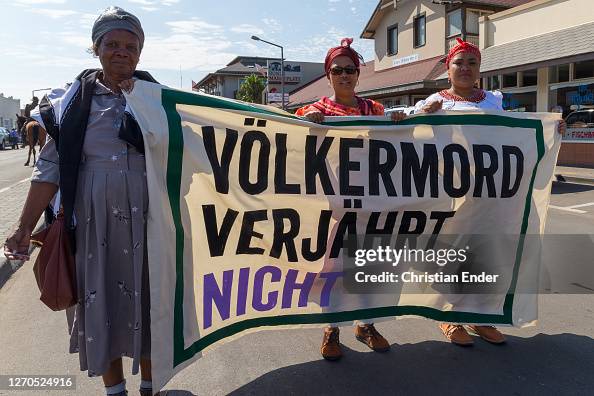

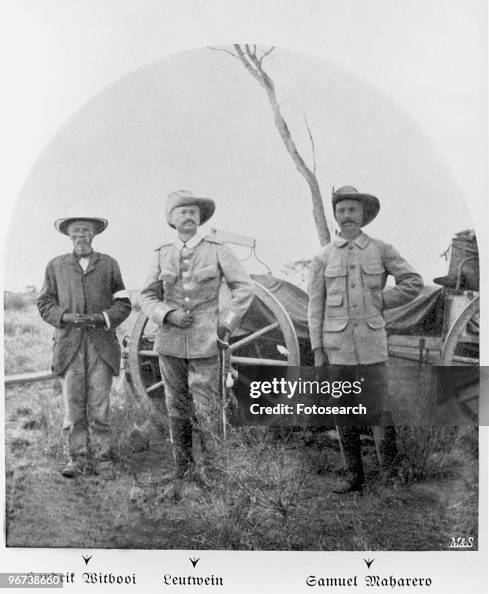
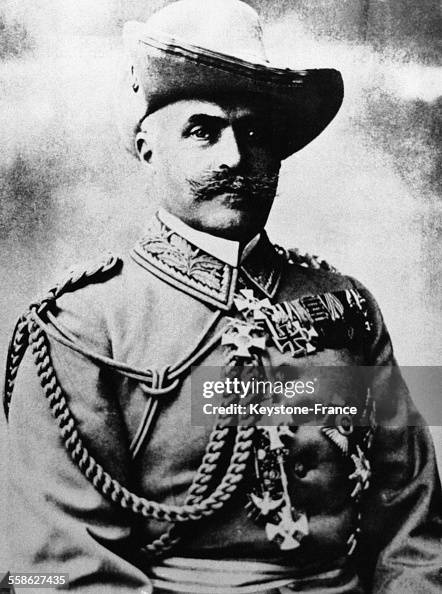
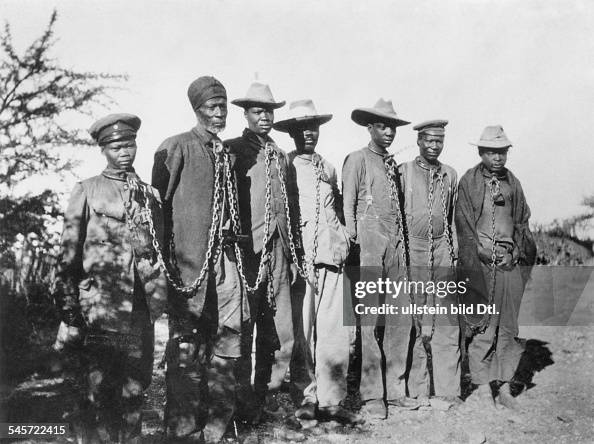
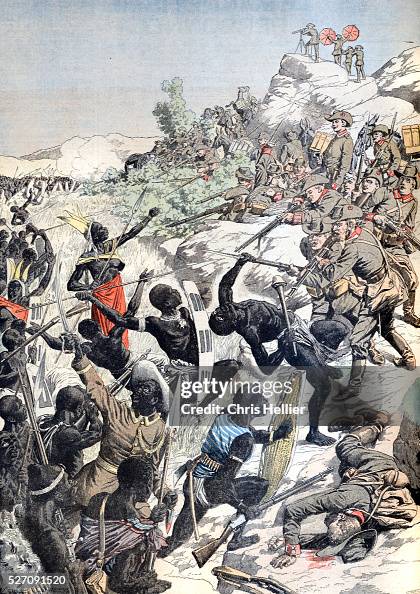
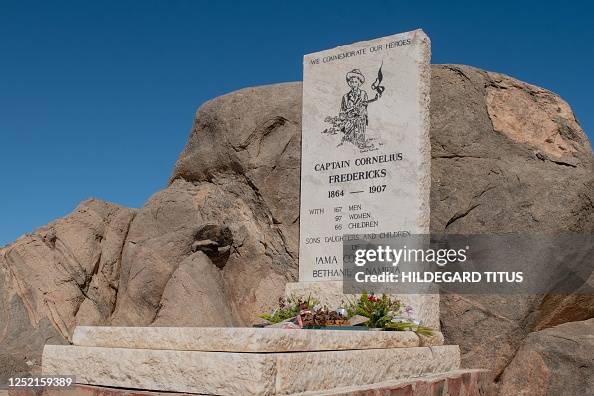



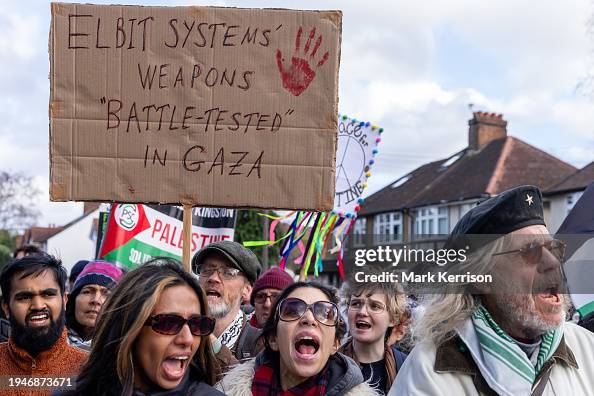
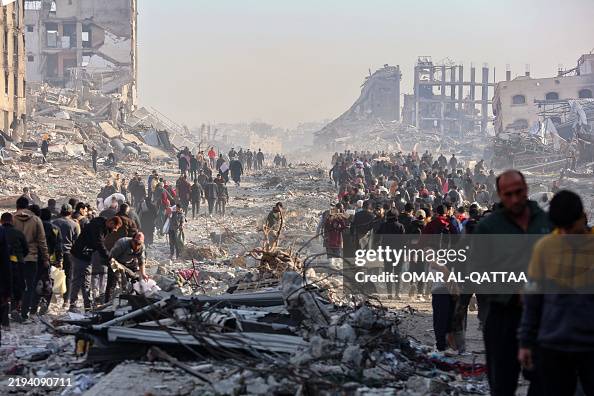


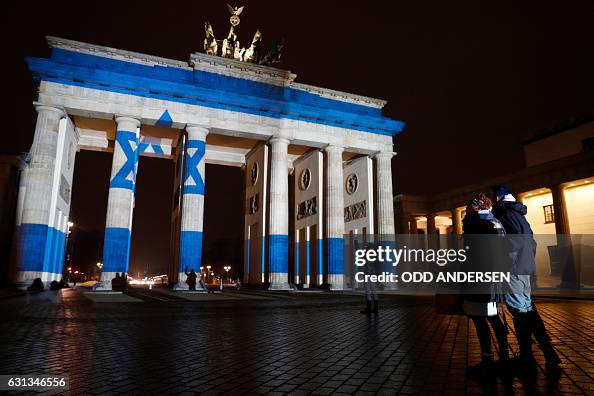
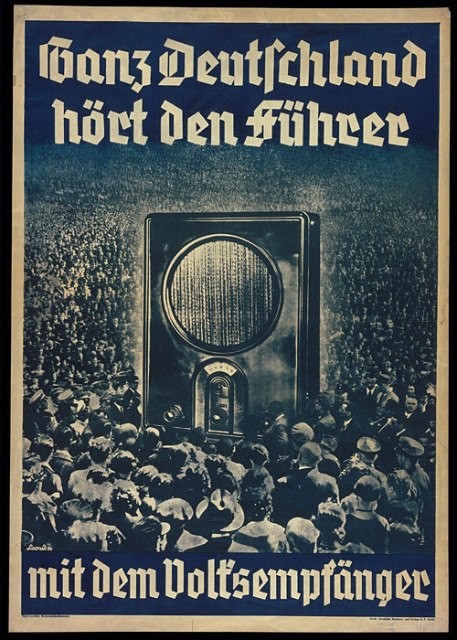
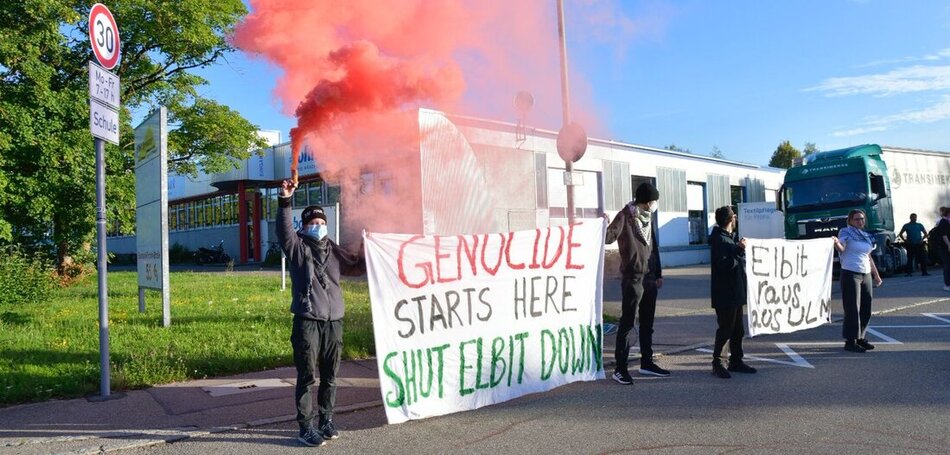
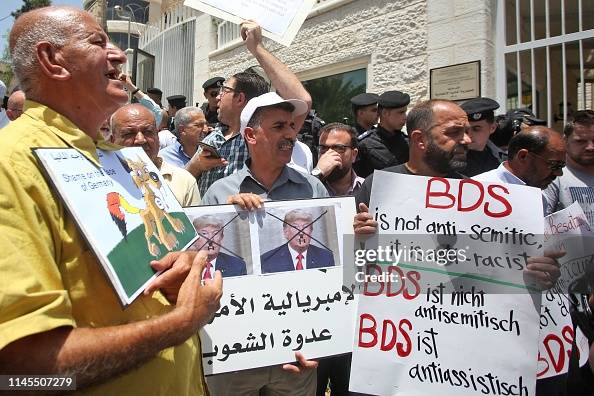

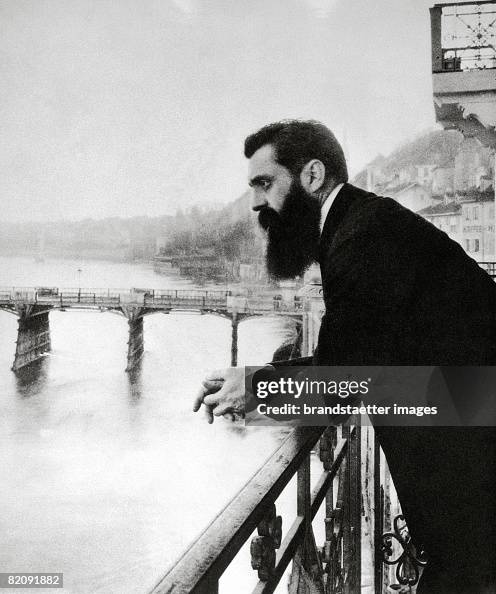
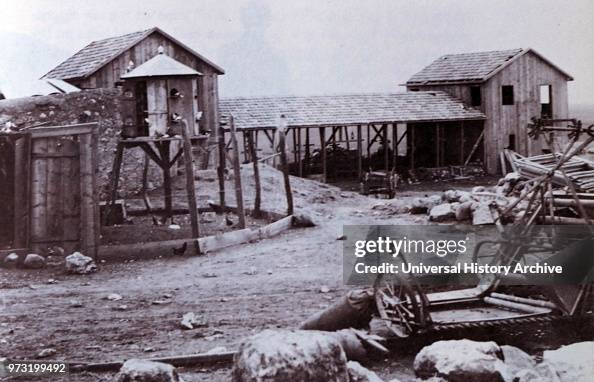

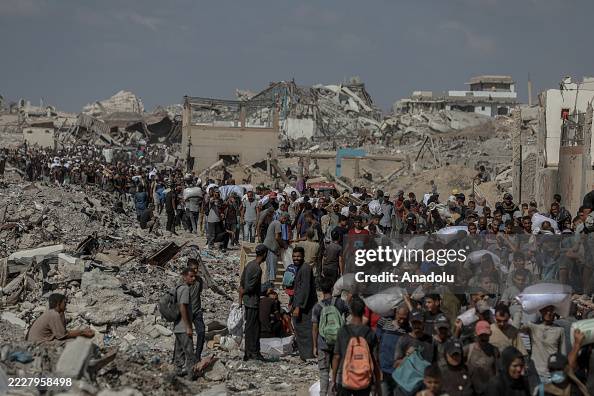
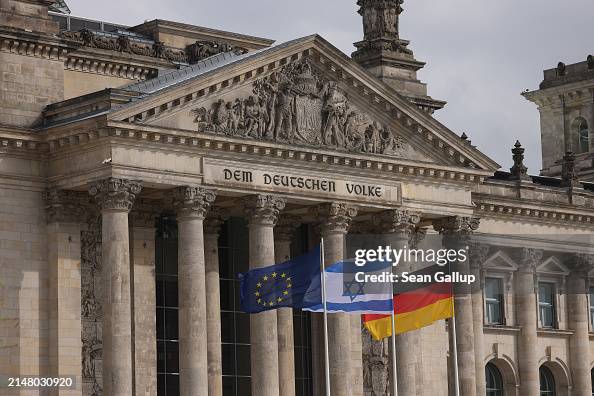

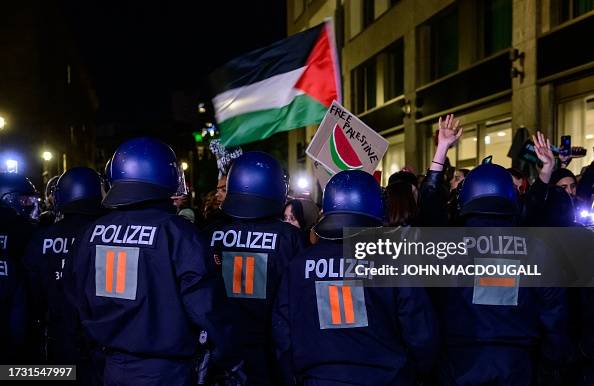

 tadamun