
Race seems self-explanatory until someone asks you to define it. Try it. You’ll find yourself reaching for a loose bundle of things that don’t obviously belong together: skin tone, ancestry, phenotype, culture, and the administrative categories that follow people around — “security risk,” “criminal profile,” “illegal.”
What holds all of that together?
The thinkers collected here share one refusal: they won’t explain race away as ignorance or personal prejudice. Race is not a mistake that better education fixes. It is a mechanism. It produces outcomes. And it keeps running.
This piece moves through four interconnected frames — class, time, state, and space. They overlap constantly in practice. The aim here is simply to offer an entry point, providing tools you can pick up and use for further inquiry.
Race and Class
Stuart Hall, Alana Lentin, and Alexander Weheliye
Here’s an argument you’ve probably heard: inequality isn’t really about race — it’s about class. Or the reverse: it’s really about race, and class is a distraction. Stuart Hall thought the question itself was broken.
In Race, Articulation, and Societies Structured in Dominance, Hall argues that race and class don’t sit on opposite sides of a debate. They’re articulated — tangled together in ways that are specific to particular histories, never determined in advance: “Race is the modality in which class is lived.” Nobody experiences economic life in a race-neutral form. Class arrives already racialized.
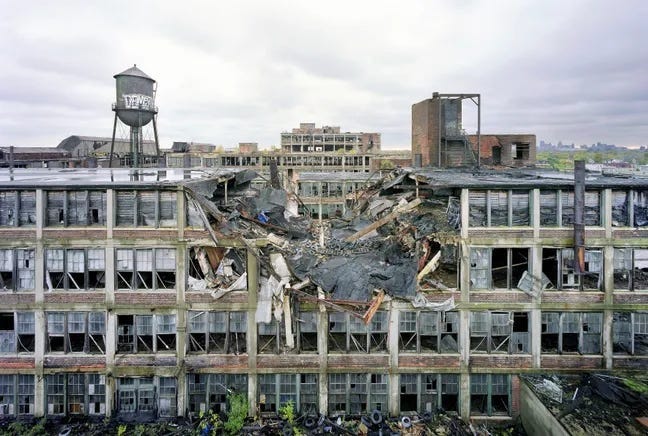
A factory closing makes this concrete. It’s tempting to call that a “class” event — capital leaving, jobs disappearing. But it never lands evenly. The communities hit hardest were already positioned by decades of racialized policy: redlining, hiring discrimination, disinvestment. The closure doesn’t add race to a class story. Race was already inside the story, shaping who lived where, who had savings, who had opportunities.
In The Fateful Triangle, Hall asks how formal equality and systematic exclusion coexist without the contradiction becoming unbearable. Racism provides the rationale. Universal rights survive alongside structural exceptions because race supplies the logic that makes the exception seem reasonable. The body carries this logic — not because biology determines hierarchy, but because the body is where control and differentiation become visible and enforceable.
Alana Lentin calls race a technology. In Why Race Still Matters, she’s foregrounding design and maintenance rather than misunderstanding. A technology is developed, calibrated, recalibrated and operated. It does something, and it does it consistently.
She also issues a warning. The phrase “racial capitalism” is everywhere now, and Lentin worries it’s losing its edge. The value of connecting racial ordering to political economy depends on keeping the connection specific — showing, in particular times and places, exactly how racial logics and economic logics produce one another. When it becomes a slogan, it stops doing analytical work.
But technologies need maintenance. Alexander Weheliye’s concept of racializing assemblages, developed in Habeas Viscus, is about exactly that: race isn’t a fixed category that sorts bodies into permanent groups. It’s an ensemble of practices and discourses that continuously adjusts distinctions — deciding who belongs, who gets protection, who is disposable. This is why “post-racial” claims never quite land. The vocabulary can shift from biology to culture to security threat, but the assemblage keeps running. New precariousness flows out behind it.
Hall would say the question “where do you intervene first?” is already broken — you take the articulation apart wherever it actually holds, not in the abstract. But Lentin’s warning stands: letting the concept soften carries real political cost.
Race and Time
Geraldine Heng and Cedric Robinson
The standard story goes something like this: race was invented in the eighteenth century. Enlightenment taxonomy, colonial hierarchy, biological classification — that’s where it starts. Everything before that was religion, or culture, or tribalism. Not race.
Geraldine Heng thinks that story costs us something important.
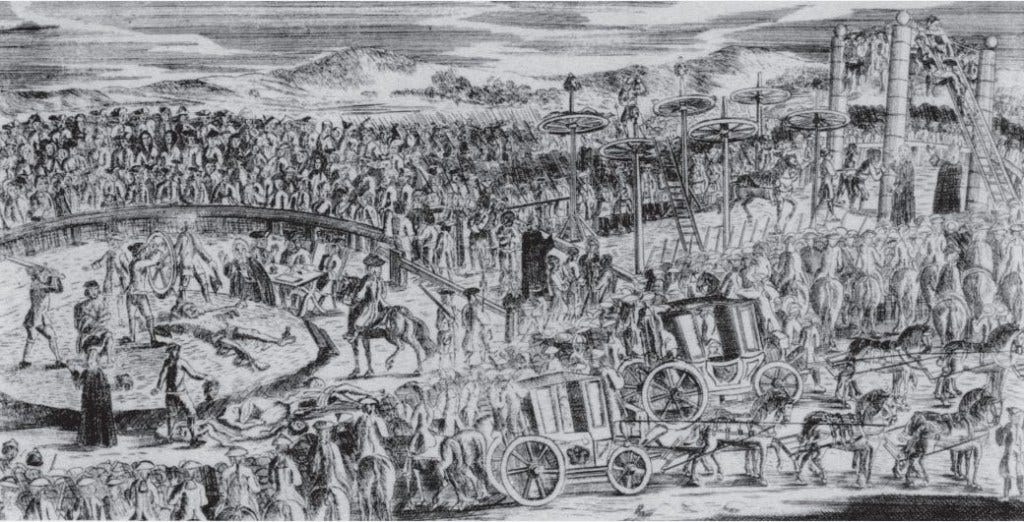
In The Invention of Race in the European Middle Ages, she isn’t denying the significance of Enlightenment-era racial science. She’s asking a sharper question: what happens to everything that came before it? If race only “counts” once there’s a scientific vocabulary attached, then medieval systems that sorted humans, restricted property, controlled movement, and distributed violence get reclassified as something else — as if they had no structural afterlife, as if the communities they targeted carried no lasting consequences.
Her definition is deliberately procedural. Race is what happens when a society takes specific human differences, treats them as absolute and inheritable, and uses them to distribute power, rights, and physical vulnerability. The specific words used to justify the boundary — God, nature, national security — don’t change the work the boundary performs.
What about the objection that “race isn’t genetic”? True, and almost always beside the point. Race functions perfectly well as law, policy, housing, and everyday common sense. Heng’s framework makes that visible by refusing to let biology set the agenda.
Think about the category of the “terrorist” in the twenty-first century. It often operates as a racial category without ever mentioning skin color. By treating a specific group as having an inherent, quasi-inheritable inclination toward violence, the state can justify surveillance, detention, and the suspension of rights — performing the same work as the racial science of the 1800s, just with an updated vocabulary.
Race doesn’t need its scientific passport to travel across centuries. Something else carries it.
In Forgeries of Memory and Meaning, Robinson traces how racial regimes are built and maintained through cultural production — specifically through American theater and film. His concept names something broader than any single medium: social systems that justify power relations by presenting them as memory, tradition, or simply how things have always been. They’re never seamless. They’re stitched together from available stories and symbols, patched over contradictions, until they appear inevitable. And that appearance of inevitability is precisely the source of their power. It’s not biological truth that makes race durable. It’s the capacity to look ancient.
Black Marxism reverses a familiar narrative. The story that capitalism invented race as a useful tool gets it backwards, or at least out of order. Racialism is a deep inheritance in Western culture, and capitalism grew through it rather than grafting it on after the fact. The racial regime stays flexible, constantly reframing old hierarchies in new languages, because it needs to. The hierarchy is the point. The vocabulary is expendable.
Race and State
Michel Foucault and Achille Mbembe
In The History of Sexuality, Vol. 1 and in Society Must Be Defended, Foucault describes a transformation in how power works. The old sovereign model operated through spectacular repression — the right to kill. Modern power works differently: through the quiet management of conditions — shaping environments, incentives, and norms. This is governance as administration, what Foucault calls biopolitics. Formal individual rights can remain formally intact while the material conditions that make those rights livable are managed at the population level. You keep the rights on paper. You adjust everything around them.
But if the modern state governs by protecting life, where does it find authorization to kill? Or to let people die?
Foucault’s answer: racism creates a break inside the biological continuum of the population. It fragments the human into categories so that some deaths can be recast as protection — necessary sacrifices that secure the health and safety of the “real” population. Without racism, biopolitical governance has no mechanism to reactivate the sovereign right to kill while still speaking entirely in the language of life and welfare.
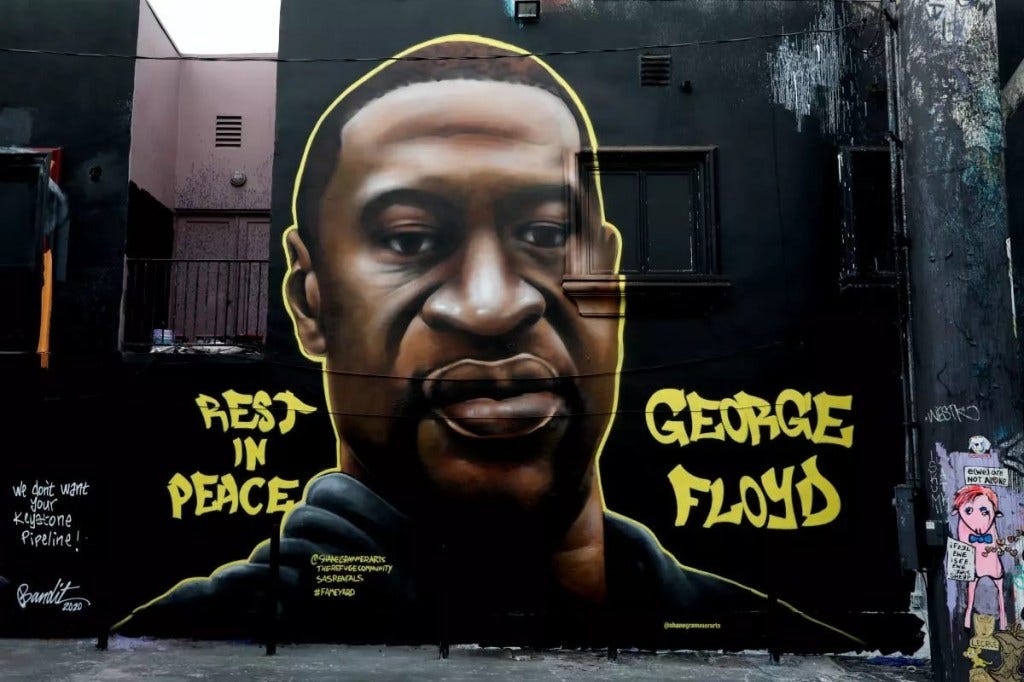
Achille Mbembe’s Critique of Black Reason extends the analysis from who dies to what counts as harm in the first place. Race is a vocabulary that organizes value, extraction, and recognition across entire domains of social life. It decides what can be harmed without scandal, taken without calling it theft, exhausted without calling it murder.
His concept of the “Becoming-Black of the World” names something specific: neoliberalism generalizes the conditions of disposability that were historically concentrated on enslaved and colonized populations. Precarity spreads outward. But anti-Blackness remains the template — the benchmark that determines whose safety gets public investment and whose doesn’t.
In Necropolitics, Mbembe shifts the frame from life to death entirely. He describes zones of exception — refugee camps, prisons, occupied territories, militarized borders — where the question is not how to live well but whether to survive at all. These are not spaces the state has abandoned. They are spaces the state has engineered. Exposure to death is not negligence. It is policy.
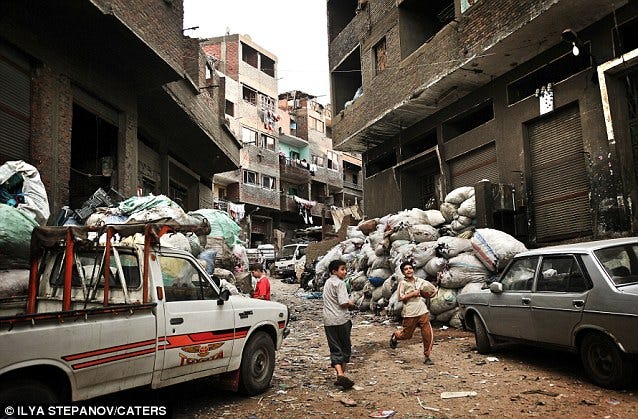
The slum is a feature of the postcolonial city — Lagos, Dhaka, Karachi, Nairobi, Cairo — where clean water, sanitation, electricity, medical access, and human dignity are privileges. On the other side, abundance. Necropolitical governance is visible not in the absence of the state but in its presence: ensuring these communities remain isolated, policed, and exposed to harm. The refugee camp is another such place, where temporary conditions have turned permanent, and its isolation is a political campaign ad.
“Making live” and “letting die” are not contradictions within modern governance — they are complementary techniques inside the same framework. The production of death worlds is what makes the livable spaces livable. The protected zone is stabilized by producing its opposite.
Race and Space
Frantz Fanon and Patrick Wolfe
Fanon is direct. In The Wretched of the Earth, colonial society is cut in two, and the cut is spatial. One zone is lit, resourced, and treated as the norm. The other is cramped, policed, and extracted from. What separates them is not a metaphor. It is checkpoints, soldiers, and the daily presence of possible violence.
But Fanon’s deeper point is about what sustained domination doesn’t require.
Violence doesn’t need to be constant. The divided space does most of the work itself — it trains perception, dictates movement, teaches the colonized what they can claim and what punishment awaits if they claim too much. Violence is not only the episodic crackdown. It is the background condition that makes the border hold. The ordinary reproduction of that space — its architecture, its infrastructure, its routines — keeps extraction stable and “normality” protected on the other side of the line.
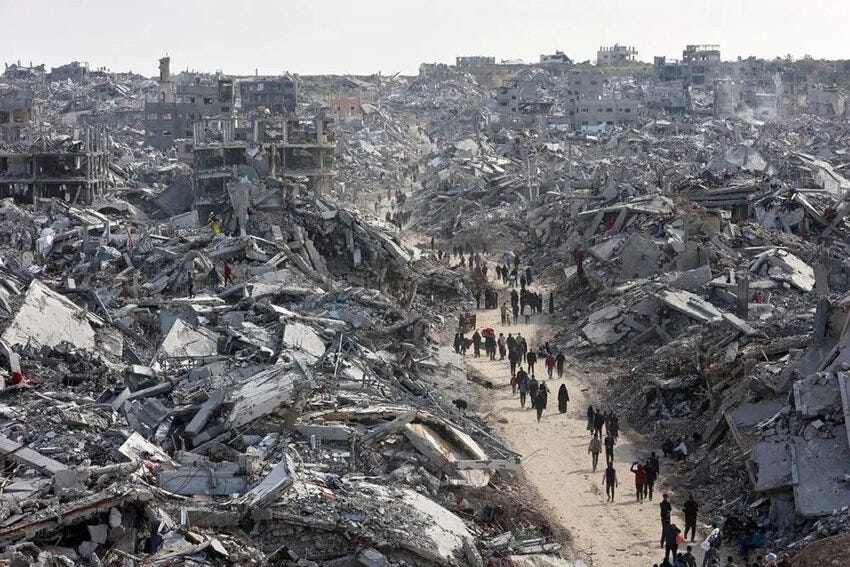
Prior to the genocide, Gaza was already one of the most densely populated places on earth — two million people compressed under blockade. On the other side, the West Bank is maintained through the apartheid wall of separation — its territory fragmented by checkpoints, settlements, and military roads that dictate where Palestinians can move, what they can build, and how long any journey takes.
Patrick Wolfe inverts the usual relationship between race and colonial violence. In Settler Colonialism and the Elimination of the Native, he argues that settler colonialism is not a historical event that concluded. It is an ongoing structure. And race is not a given — it is produced through the targeting itself. Methods of elimination, displacement, containment, and assimilation sort populations into racial categories as they go. Race is a tool for securing land and organizing labor, and it gets made and remade in the process.

In Traces of History, Wolfe tracks this over the long term. Colonized populations remain racialized in ways that reproduce the unequal relationships forced upon them, even as the specific forms shift. Racial identities stay versatile, adapting to new configurations rather than settling into fixed types. “Race is socially constructed” is where the inquiry begins, not where it ends. The real questions are: constructed how, in which location, and in whose interest?
Because racial domination must keep adapting, it is never finished. Wolfe’s insight is that this incompleteness is also a vulnerability — the point where resistance can find purchase. For Fanon, the violence required to build and maintain a racialized space is what reveals it as an ongoing project, not a natural fact.
What was made can be unmade — though Fanon is under no illusions about what that costs.
Race and Resistance
Arun Kundnani and Angela Davis
If race is structural — woven into housing, policing, borders, labor markets, the shape of cities — then what does opposition to it actually look like?
Arun Kundnani’s What Is Antiracism? is most useful as a corrective to two tendencies that keep weakening the left. The first reduces politics to an identity checklist — representation without redistribution. The second treats race as a distraction from “real” class politics, which just replays the false choice Hall already dismantled. Kundnani argues that lasting unity comes from connecting movements — not by ranking whose harm is worst or flattening differences into a false universal, but by identifying how different struggles reinforce each other toward shared goals.
Angela Davis’s Freedom Is a Constant Struggle insists that racialized violence — through prisons, policing, land seizure, occupation — doesn’t stay in national boxes. The connections are material, not metaphorical, and they have to be understood that way if opposition is going to be effective.
Freedom is not a legal status you arrive at. It is a practice. Building organization. Refusing disposability. Expanding the material conditions in which people can live without constant exposure to harm.
What both resist is the idea that antiracism can be accomplished through recognition alone. If capitalism, policing, and colonial power reinforce each other structurally, the movements against them have to work in actual coordination — not symbolic solidarity. And specific histories aren’t obstacles to that coordination. They’re resources for it.
Read More
This is not a reading list meant to be worked through in order. Pick up what’s useful for the question you’re facing:
Race and Class: Stuart Hall, Race, Articulation, and Societies Structured in Dominance · The Fateful Triangle · Policing the Crisis (with others) | Alana Lentin, Why Race Still Matters · The New Racial Regime | Alexander Weheliye, Habeas Viscus
Race and Time: Geraldine Heng, The Invention of Race in the European Middle Ages | Cedric Robinson, Black Marxism · Forgeries of Memory and Meaning
Race and State: Michel Foucault, Society Must Be Defended · The History of Sexuality, Vol. 1 | Achille Mbembe, Critique of Black Reason · Necropolitics
Race and Space: Frantz Fanon, The Wretched of the Earth | Patrick Wolfe, Traces of History · Settler Colonialism and the Elimination of the Native
Race and Resistance: Arun Kundnani, What Is Antiracism? | Angela Davis, Freedom Is a Constant Struggle

Hinterlasse einen Kommentar