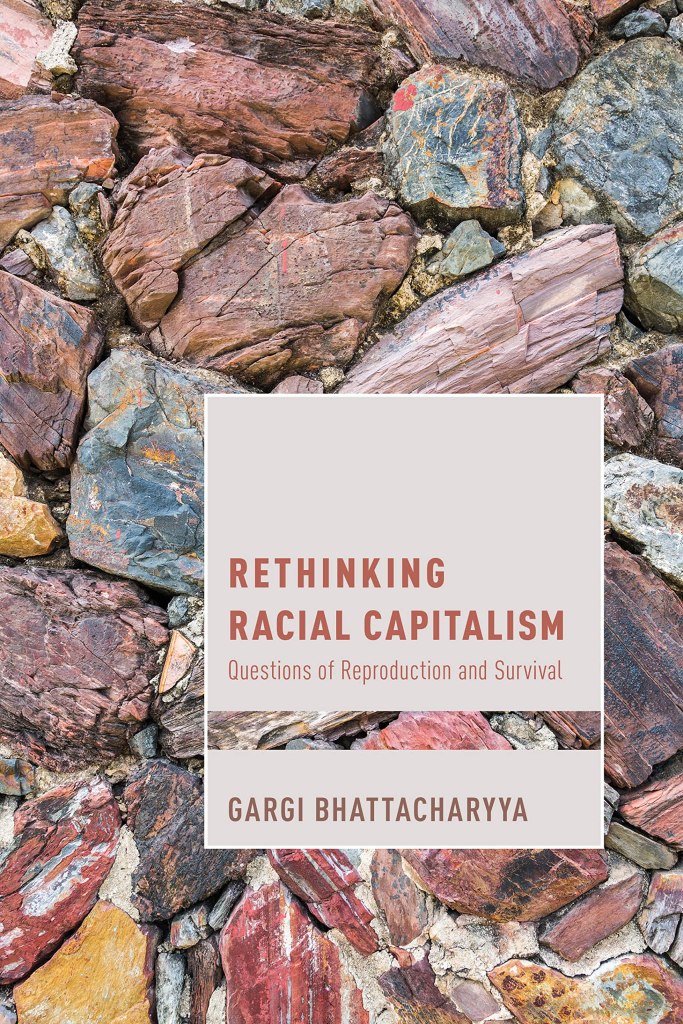
Coming from the global South, the promises that surrounded independence and “development” now feel hard to recognizse. It is not that development did not happen, but that it arrived as poverty rather than a “kingdom of abundance.” This should not be taken to mean that “our” capitalist elites are simply backward or corrupt; rather, this is what capitalist development looks like. If underdevelopment is not accidental but integral to capitalist development itself, then replacing one set of capitalist elites with another will only reproduce disappointment.
This becomes clearer once we take seriously that the world has limits—both by nature and by capitalism’s own crises. The promise of an endlessly expanding capital that draws everything into its rules of production and reproduction meets a reality check. There is neither enough growth nor enough space for everyone to be absorbed into a stable “industrial” working class, and the impending ecological catastrophe makes this even more acute. From this angle, dispossession no longer reliably turns people into wage workers. Dispossession can become “dispossession and nothing else”: people lose land, resources, or livelihoods without being absorbed into stable work, because capitalism still needs access to resources while limiting expansion. The book tracks this through three linked processes, the “three ex’s.”
Exploitation means taking value from people’s work (for example, low wages for long hours).
Expropriation means taking resources without a fair return (for example, land grabs, stolen wealth, or unpaid care work being treated as “natural”).
Expulsion is the further step: people are treated as surplus and pushed out of work, rights, and even viability—an outcome that becomes more likely under crisis for those already worn down by exploitation or expropriation.
The book develops its arguments through three accounts:
Cedric Robinson’s claim that capitalism is racial “all the way down” foregrounds how racial division is not incidental but foundational to capitalist formation.
Kalyan Sanyal’s account shifts attention to capitalism’s production of zones of non-capitalism or almost-capitalism—spaces marked as non-productive yet still necessary to accumulation and governance.
A Frankfurt School emphasis adds another layer: capitalist subjectivity—how people learn to desire, fear, and identify.
The book treats “race” less as a fixed identity than as a technology: a set of practices that sort people, allocate vulnerability, and normalize unequal treatment. In this view, hierarchies organized through race, gender, sexuality, disability, or age are produced through struggles over land, resources, labor, and wealth. They help stabilize the system by managing who belongs, who partially belongs, and who is excluded. “Racial capitalism” is shorthand for a pattern in which capitalism produces spaces set apart—within, alongside, or at the edge of the “proper” economy—and secures that separateness through racial common sense.
Racial capitalism is not a claim that “race is primary.” It names techniques of sorting and exclusion that rely on racial logics, while also being shaped through gender, sexuality, disability, or age. Under ecological crisis, the “myth of expendability”—the assumption that some peoples and regions can be used up and never included—becomes a driver of development: some places become “sacrifice zones,” and harms from extraction, pollution, dispossession, war, or neglect are rendered acceptable by attaching them to populations already marked as less worthy.
This divides workers, almost-workers, and non-workers by offering uneven privileges that encourage competition rather than solidarity, so that even exploitation can appear as a relative advantage while exclusion becomes an ever-present threat. Once racialization is understood as a technology, it also becomes clear that privilege is not an essence and not a guarantee: groups can be reclassified as conditions shift. The lesson, then, is solidarity with those made vulnerable—because our interests and risks place us closer to them than to the elites.
Work and Non-Work
The book insists that to understand racial capitalism we must rethink what counts as “work” and what is dismissed as “non-work.” Essential labor that sustains life—care, cleaning, cooking, raising children, and maintaining households and communities—is rendered invisible by being treated as “natural,” and therefore as non-work. It argues that this boundary sits at the center of racial capitalism because it is a mechanism for differentiating populations for exploitation and expropriation.
The book also describes a division between an accumulation economy—formal production organized for accumulation—and a need economy—informal (re)production organized to meet need and sustain life. The need economy is not outside capitalism in any pure sense; it exists alongside it, shaped by capitalism’s reach and by the histories and constraints through which people secure daily life.
In this framework, “proletarianization” is not a straightforward movement into stable wage work. For many, there is no entry to formal employment at all, or only intermittent and precarious entry. The expansion of wage work runs alongside the appropriation of non-waged work for accumulation through social reproduction: the everyday labor that sustains life and makes waged work possible, effectively subsidizing capitalism. The book pushes the for the shift: instead of treating reproductive labor as a supplement to the “real” economy, it treats productive work as a supplement to a wider reproductive economy.
The perceived capacity to produce and reproduce “proper” workers becomes a marker of status, and allegations of being unfit for productive work echo colonial tropes about “improper” ways of relating to nature and labor. The book describes a “differentiated labor force,” in which differentiation involves not only unequal positions within work but also unequal chances of being counted as part of any formal labor force at all. This helps explain why simply asserting proletarian unity can miss how capital sorts people into factions that compete, or barely recognize one another. The global trend has not been toward stable, formal, full-time employment, but toward widespread informality, precarity, and blurred boundaries around what counts as work.
Borders and the Edge
Even in a time of uncertainty, displacement, and war, the book stresses that most people do not move far, and they do not form a readily available labor pool for richer economies. Mobility is blocked by violence, poverty, and border regimes; meanwhile, the economies that concentrate jobs, welfare, and rights are not expanding in ways that “need” large new supplies of labor. Financial crisis and ecological crisis intensify this.
The book therefore raises an unsettling question: can it be that some populations have no “utility” for capital? To be surplus is to be excluded—subject to abandonment and exposure to injury and death, and at times rendered “nature”: available for exploitation and dispossession without the protections attached to recognized social membership.
Bordering, in this account, is a set of practices that produces an “edge” to the world economy by trapping populations in forced immobility. Border control may generate a small pool of highly precarious workers for semi-formal and informal sectors, but it also consolidates the exclusion of the larger mass of the world’s poor. At the same time, bordering generates its own economies: shadow markets that grow around restriction and waiting, and a formal “border business” of surveillance, detention, logistics, and security services. In this sense, the border is wherever an “undesirable” is identified and must be kept apart.
Those who are negatively racialized are disproportionately targeted by policing and imprisonment, and the public staging of punishment has a disciplining effect: a warning about the consequences of becoming surplus, and sometimes a grim reassurance for those granted relative privilege. Prisons can function as instruments for disciplining labor and communities, while the containment of people in transit works by separating targeted populations from meaningful access to the productive economy and to social goods.
Consumption and Debt
Exclusion from productive work does not necessarily mean exclusion from capitalist civilization. Consumer society offers a route to recognition, often mediated through debt, so that people denied secure work can still be disciplined and drawn into value extraction indirectly. In a landscape of waged and unwaged, formal and informal, “free” and coerced labor, the status of “non-worker” remains a tool of erasure and subordination even as people are incorporated through consumption.
Alongside the differentiations that sort people into workers, almost-workers, and surplus populations, the book argues that capitalism also pushes in the opposite direction: it seeks to make everyone a consumer. Consumer culture does not simply follow production as reward or leisure; it is itself a site of extraction. Attention, desire, aspiration, and identity are organized around commodities, and the work of wanting, curating, and displaying becomes productive for capital. This makes consumer life a form of subordination that can include people as consumers—and sometimes intermittently as insecure workers—while still denying them rights, recognition, and secure entry into what looks like full “capitalist citizenship.” That “almost included” position, the book suggests, is a key mechanism of contemporary racialization.
Through debt, people become bound because future value creation is pledged in advance. Where earlier capitalism often sought “spatial fixes” for crisis—new territories, markets, and populations—debt can function as a “temporal fix,” drawing value from future time when expansion is constrained; in this sense, “our future selves become the new colony.” Debt also integrates people into capitalist consumption without stable work, since credit pulls them into obligation, monitoring, and pressure to accept whatever work is available.
Yet ecological limits undermine the promise of universal inclusion through expanding production and consumption: when resources are finite and the costs of sustaining life rise, not all populations can be maintained as viable consumer markets, and strategies in affluent regions shift toward preserving relative privilege rather than widening inclusion. The book frames this as an intensification of proletarianization on two fronts—of producers and of consumers—driving a broader loss of autonomy that feeds the present crises of capitalism.
Conclusion and Verdict
It is not the province of one people to be the solution… But for now we must be as one.
Robinson, Black Marxism
After tracing how racial capitalism repeatedly remakes divisions—between workers, almost-workers and non-workers—the book warns against the search for a single “solution people” or a pure revolutionary subject. Racialised status is not fixed: it can shift with circumstance, and groups can be partially reclassified, sometimes even admitted into a managed space of “celebratory diversity.” The system continues to require some population, somewhere, to be pushed into lesser status—less protected and more exposed—because capitalism cannot consistently value all forms of humanity equally without undermining the mechanisms through which it allocates scarcity and secures accumulation.
The book does not offer a manifesto or a guaranteed path from shared hardship to solidarity. Instead, it clarifies the path we must face: racial capitalism divides people while keeping them materially intertwined, and it works through coercion and desire—through borders and policing, but also through the pressures of inclusion, consumption, and status. If unity is necessary, it is not because history promises it, but because the alternative is a politics organised around competition for protection and for access to shrinking resources. The lesson, then, is solidarity with those made vulnerable—because our interests and risks place us closer to them than to the elites.
If you enjoyed this article, please consider to like and subscribe!


 tadamun
Hinterlasse einen Kommentar